organized a one-day workshop on "Next-Generation Biosecurity" at the Emerging Infectious Diseases)
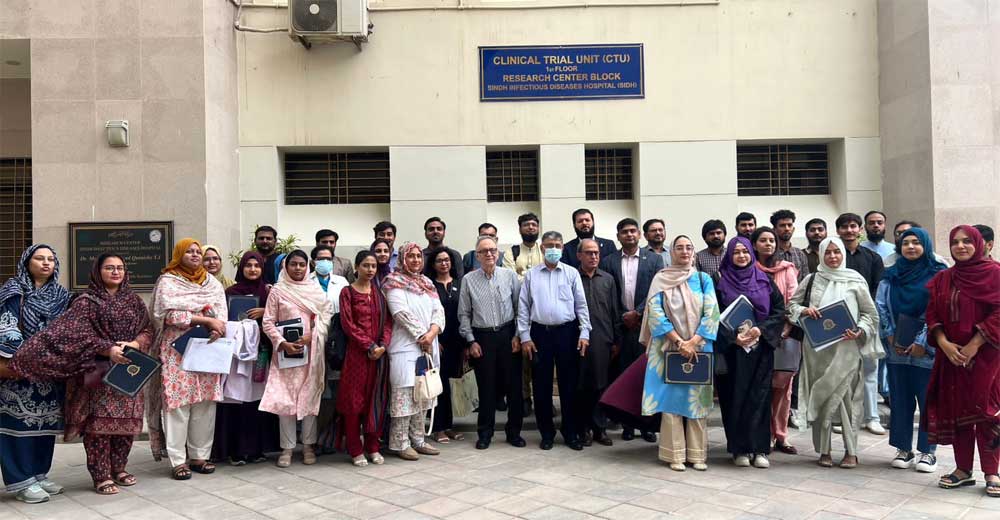
KARACHI: Dow University of Health Sciences (DUHS) organized a one-day workshop on “Next-Generation Biosecurity” at the Emerging Infectious Diseases Research Laboratory (EIDRL), Sindh Infectious Diseases Hospital & Research Centre (SIDH&RC), bringing together experts and participants from science, public health, national security and laboratory risk management to exchange perspectives on preparing for an evolving landscape of biological threats.
Held under the theme “Safeguarding Science, Protecting Innovation and Preventing Biological Threats,” the workshop focused on the rapidly changing biosecurity environment shaped by advances in biotechnology, artificial intelligence, genomic technologies and increasingly interconnected laboratories. While these developments are creating unprecedented opportunities for scientific progress, they are also giving rise to new and complex biosecurity challenges.
The workshop was inaugurated by Vice Chancellor DUHS Professor Dr. Nazli Hossain, while participants were welcomed by Medical Superintendent, SIDH&RC, Dr. Abdul Wahid Rajput.
Addressing the participants, Professor Dr. Nazli Hossain said that technology was advancing at an extraordinary pace, making it essential to anticipate future biosecurity challenges and prepare for them before they emerge.
“As a public-sector university, Dow University of Health Sciences remains committed to promoting knowledge sharing and strengthening the capacities of institutions and professionals,” she said. “We must stay ahead of emerging developments, assess their potential security implications and prepare our scientific and public health communities to respond effectively.”
She emphasized the important role of universities in preparing scientists, researchers and public health professionals to understand and address the security implications of rapidly advancing biological technologies.
The opening session, titled “Biosecurity Landscape in Pakistan and the Global Biosecurity Framework,” was addressed online by Dr. M. Adil, Deputy Director, ACDIS-II, Ministry of Foreign Affairs. He placed Pakistan’s biosecurity system within the broader international framework and highlighted the interconnected roles of the Biological Weapons Convention (BWC), International Health Regulations, biosafety and export control systems.
The session also discussed Pakistan’s evolving national biosecurity framework, with particular emphasis on the Biological Weapons Convention Implementation Act, 2026, and the importance of its effective implementation, inter-agency coordination and science-based regulation.
A key message emerging from the discussion was that modern biosecurity challenges cannot be effectively addressed by a single institution or regulatory system alone. Instead, they require coordinated collaboration among government, public health institutions, research organizations, security agencies, trade and the wider scientific community.
The workshop also highlighted the growing convergence of artificial intelligence, biotechnology and other emerging technologies, which is increasing the need for proactive risk assessment and responsible governance to identify and address potential future threats.
In another session, “From Biosafety to Biosecurity: Insider Threats and Biosecurity Controls,” Assistant Professor and Principal Scientist for Virology at EIDRL, SIDH&RC and DUHS, Dr. Bilal Ahmed Khan, explained the distinction between biosafety and biosecurity.
He emphasized the importance of protecting biological materials, information, equipment and expertise from loss, theft, misuse, unauthorized access and unauthorized transfer.
The presentation drew particular attention to insider threats, noting that biosecurity risks do not always arise from individuals with deliberate malicious intent. Weak security culture, inadequate training, negligence, poor documentation and failures in the effective accountability of biological materials can also create significant vulnerabilities.
Participants were also introduced to practical aspects of biosecurity controls, including physical protection, personnel reliability, biological material control and accountability, transportation security and information security.-PR
DUHS Holds Workshop on Next-Generation Biosecurity
Previous article

Next article