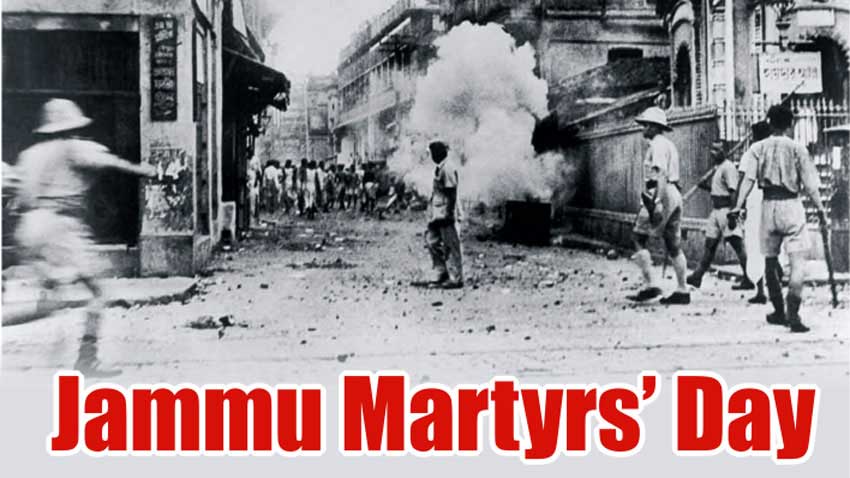
KARACHI: Pakistan on Thursday observed Jammu Martyrs’ Day to commemorate one of the darkest chapters in the history of Indian Illegally Occupied Jammu and Kashmir (IIOJK), when more than 237,000 Kashmiri Muslims were brutally massacred on November 6, 1947, in a state-backed genocide carried out by the forces of Maharaja Hari Singh, the Indian Army, and the Hindu extremist organization Rashtriya Swayamsevak Sangh (RSS).
Nationwide prayers, rallies, and seminars were held to honor the victims of the massacre and to reaffirm Pakistan’s unwavering support for the Kashmiri people’s right to self-determination. Leaders across the political spectrum, including President Asif Ali Zardari and Prime Minister Muhammad Shehbaz Sharif, paid glowing tributes to the martyrs and condemned India’s continued human rights violations in the occupied territory.
In his message, President Zardari said the people and government of Pakistan stood in solidarity with their Kashmiri brothers and sisters, who have continued their decades-long struggle for freedom in the face of brutal repression. He lauded the resilience and sacrifices of the Kashmiri people, stressing that their courage remains a source of inspiration for all who believe in justice and human dignity.
Prime Minister Shehbaz Sharif, in his message issued by the PM Office, described November 6 as the “darkest day” in the history of Jammu and Kashmir. He said the 1947 massacre was a premeditated attempt to alter the region’s demography by exterminating its Muslim population. “In utter denial of United Nations Security Council resolutions and in violation of international law, India has maintained its illegal usurpation and illegitimate occupation of Kashmir,” he said.
The prime minister said that India’s illegal actions of August 5, 2019 – which stripped Kashmir of its special status – were a continuation of the same colonial policy designed to suppress the Muslim majority and erase the region’s identity. “Kashmiris have shown extraordinary courage in their pursuit of freedom,” he said. “Generations have passed, yet they remain steadfast in their demand for their inalienable right to self-determination.”
He reaffirmed Pakistan’s commitment to extending political, diplomatic, and moral support to the oppressed people of Indian Illegally Occupied Jammu and Kashmir until their aspirations for freedom are realized in line with the UN Security Council resolutions.
“The Government of Pakistan and the people of Pakistan pay heartfelt tribute to the sacrifices of our Kashmiri brothers and sisters,” he said. “We will continue to raise the Kashmir issue on all international platforms and hold India accountable for its continued defiance of international law.”
The prime minister also urged the international community to take cognizance of India’s ongoing human rights abuses, extrajudicial killings, and efforts to alter the demographic composition of the disputed region. He emphasized that the Kashmir issue must be resolved in accordance with the UN resolutions and the will of the Kashmiri people.
Public rallies were held across Pakistan and Azad Jammu and Kashmir to mark the day, where participants carried banners and placards inscribed with messages of solidarity with the Kashmiri people and condemnation of Indian atrocities. Special prayers were offered for the martyrs, while speakers at various events highlighted that peace in South Asia could not be achieved without a just settlement of the Kashmir dispute.
Observers noted that the commemoration of Jammu Martyrs’ Day this year carried renewed significance amid rising global concern over human rights violations in the occupied valley. Pakistan reiterated that it would continue to expose India’s actions before the international community and support the Kashmiri people’s legitimate struggle until justice and freedom prevail.
November 6, 1947, remains etched in history as a grim reminder of India’s earliest and bloodiest attempt to change the demographic identity of Jammu and Kashmir – a wound that continues to bleed, and a cause that continues to inspire the quest for justice.