


TFD Report
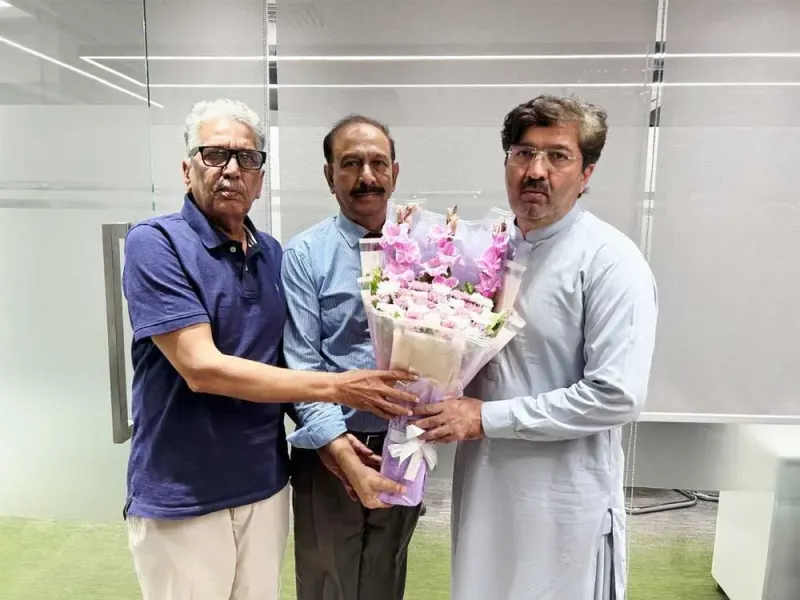
KARACHI: Sindh Minister for Auqaf and Religious Affairs Syed Riaz Hussain Shah Shirazi held a meeting with Brigadier (R) Karrar Hussain Abidi, Senior Vice President of the Zaireen Khidmat Committee (ZKC), at the latter's office to discuss ongoing development work, administrative arrangements and facilities for pilgrims at the historic shrine of Masooma-e-Sindh, Hazrat Syeda Bibi Khadija Maham (SA), daughter of Imam Musa Kazim (AS), situated at Agham Kot, Sindh.
Manzar Naqvi, Secretary General of the Karachi Editors Club (KEC), also attended the meeting, during which several proposals were presented to improve the shrine's infrastructure, preserve its religious and historical significance, and provide better facilities to visiting devotees.
Speaking on the occasion, Brigadier (R) Karrar Hussain Abidi appreciated the efforts of the Sindh Auqaf Department in undertaking construction, renovation and development projects at religious shrines across the province, particularly the ongoing development of Roza Masooma-e-Sindh.
He also praised the extensive development and beautification work carried out at the shrine of Hazrat Lal Shahbaz Qalandar in Sehwan Sharif, describing such initiatives as important contributions to the preservation of Sindh's rich spiritual and cultural heritage.
Manzar Naqvi, while acknowledging the efforts of Minister Syed Riaz Hussain Shah Shirazi, observed that it was a matter of great honour and distinction for the minister that the development and construction of the sacred shrine of the daughter of Imam Musa Kazim (AS) at Agham Kot were being undertaken during his tenure.
He said the project represented not only an important religious undertaking but also a significant contribution towards preserving a historic spiritual landmark of Sindh for future generations.
During the meeting, detailed discussions were held on several important matters concerning the development, management, security and maintenance of the shrine.
A major proposal concerned fixing a suitable date for the transfer of the ancient, historically significant and sacred inscribed stone from the shrine's underground chamber (Sardab) to a designated public viewing area, enabling devotees to pay their respects while ensuring its preservation and security.
The participants also discussed establishing officially designated opening and closing hours for the shrine to ensure proper management of visitors and the smooth conduct of religious activities.
Another important matter was ensuring the regular attendance and availability of female attendants appointed at the shrine to facilitate women pilgrims. The establishment of separate entrance gates for male and female visitors was also proposed to improve convenience, privacy and crowd management.
Considering the religious sanctity and historical importance of the underground chamber, the participants suggested that the Sardab should ordinarily remain closed to the general public, except on specifically designated religious occasions or under authorised arrangements.
The meeting further reviewed the need to establish a clear timeline for commencing construction on the remaining undeveloped portions of the shrine premises.
Discussions also covered additional development works identified during the minister's earlier visit to the shrine, particularly the construction and improvement of the main entrance, approach roads and other essential infrastructure.
Special attention was given to cleanliness and sanitation facilities. The participants proposed appointing a permanent sanitation worker on a contractual basis to ensure regular cleaning and proper maintenance of the washrooms for pilgrims.
The growing issue of encroachments around the shrine, particularly along its main entrance and construction areas, was also raised. It was pointed out that more than ten temporary cabins and commercial stalls had already appeared near the premises, with their number continuing to increase.
Concern was expressed that unchecked encroachments could eventually develop into permanent unauthorised occupations, obstructing access to the shrine and affecting its surroundings.
As a practical and sustainable solution, it was proposed that the Sindh Auqaf Department consider constructing properly planned commercial shops at suitable designated locations and leasing them through legal rental agreements. Such an arrangement could help regulate commercial activity, prevent illegal encroachments and generate revenue for the maintenance and development of the shrine.
The participants also highlighted complaints from pilgrims regarding the inadequate availability of drinking water, particularly during periods of increased religious visitation.
They proposed that the Auqaf Department establish a permanent drinking-water facility (Sabeel) within the shrine premises to ensure a reliable supply of clean drinking water for devotees throughout the year.
The meeting emphasised that the continued development of Masooma-e-Sindh's shrine should be accompanied by effective administrative arrangements, proper maintenance, improved access, preservation of sacred historical objects and adequate facilities for pilgrims.
Brigadier (R) Karrar Hussain Abidi and Manzar Naqvi expressed appreciation for the attention being given by the Sindh government and its Auqaf Department to the development of religious and historical shrines.
They expressed hope that the proposals discussed during the meeting would receive due consideration and contribute towards transforming the shrine at Agham Kot into a well-maintained, accessible and spiritually significant destination for pilgrims from across Pakistan and abroad.