The call for unity across the Muslim world has acquired renewed significance at a time when the Islamic Ummah is confronted by conflicts, geopolitical rivalries, economic pressures and persistent instability. In his message marking the birth anniversary of Prophet Mohammad (PBUH) and Islamic Unity Week, Leader of the Islamic Revolution Ayatollah Sayyid Mojtaba Hosseini Khamenei placed Muslim solidarity at the centre of his appeal, describing unity, friendship and cooperation as essential to the future strength and progress of Islamic societies.
The message is significant because it moves the discussion of unity beyond ceremonial expressions of fraternity. It presents solidarity as a strategic requirement for Muslim countries and societies. According to the Iranian Leader, the life and teachings of the Holy Prophet (PBUH) offer lessons not only in faith and spirituality but also in justice, honesty, dignity, knowledge, mercy, social ethics, brotherhood and unity. These principles remain deeply relevant to the political and social challenges confronting the Muslim world today.
Despite possessing enormous human, geographical, economic and natural resources, Muslim countries remain divided on many regional and international questions. Political disagreements, sectarian tensions, competing strategic interests and external rivalries have repeatedly prevented the Islamic world from transforming its collective potential into effective influence.
Ayatollah Khamenei’s warning against allowing differences to become instruments of division therefore deserves serious reflection. He argued that racial, cultural, social, economic, political and geographical differences can all be exploited to create discord within Islamic societies. Whatever one’s political perspective, history demonstrates that fragmented regions are more vulnerable to external pressure, conflict and instability than those capable of establishing mechanisms for dialogue and collective action.
The continuing Palestinian tragedy provides perhaps the most compelling illustration of this weakness. The Iranian Leader questioned whether Palestinians would have remained so vulnerable had Muslims acted with greater unity. The question extends beyond Palestine. From humanitarian crises and economic instability to security challenges and technological dependence, the Muslim world faces problems that individual states cannot always address effectively in isolation.
At the same time, unity should not be interpreted as political uniformity. The Muslim world encompasses diverse governments, cultures, schools of thought and national interests. Differences between states are inevitable and legitimate. Genuine unity therefore requires neither the abandonment of national sovereignty nor complete agreement on every geopolitical question. Rather, it requires the ability to prevent disagreements from becoming permanent hostility and to identify areas where common interests make cooperation possible.
This is particularly important when considering Ayatollah Khamenei’s criticism of the United States and Israel, which he described as opponents of Islamic unity. Such assertions reflect Iran’s established geopolitical perspective and will inevitably be viewed differently across Muslim capitals, many of which maintain varying strategic relationships with Washington and different approaches toward Israel. Yet these differences themselves demonstrate why intra-Muslim dialogue is essential. Islamic countries should be capable of determining their priorities through consultation and cooperation rather than allowing external rivalries to deepen internal divisions.
The most constructive element of the message is its emphasis on cooperation extending beyond politics. Ayatollah Khamenei identified security, wealth, science and progress among the areas where greater synergy among Muslims could produce meaningful results. This deserves particular attention.
The Muslim world needs stronger cooperation in education, scientific research, artificial intelligence, healthcare, food and energy security, trade, climate resilience and technological development. Greater economic integration, academic exchanges, joint research programmes and regional infrastructure could give practical meaning to the concept of Muslim solidarity. Unity becomes meaningful when it improves people’s lives.
Pakistan has an important role to play in such an endeavour. As a major Muslim country with longstanding relationships across the Middle East, Central Asia and the wider Islamic world, Pakistan has consistently advocated dialogue and peaceful resolution of disputes. Islamabad can continue encouraging bridges between Muslim states while maintaining constructive relations with the wider international community.
Islamic Unity Week should therefore serve as more than an annual commemoration. It should encourage serious introspection about why divisions continue to weaken societies that share so many historical, cultural and spiritual bonds.
The enduring message of the Holy Prophet (PBUH) provides a foundation of compassion, justice, brotherhood and human dignity. Translating those principles into contemporary international relations requires wisdom, tolerance and sustained cooperation.
At a moment of profound geopolitical uncertainty, Muslim countries have a choice: allow disagreements to define their relationships or build cooperation around their common interests. Unity does not require the disappearance of differences. It requires the maturity to manage them peacefully.
For the Islamic world, that may be one of the most important strategic lessons of our time.
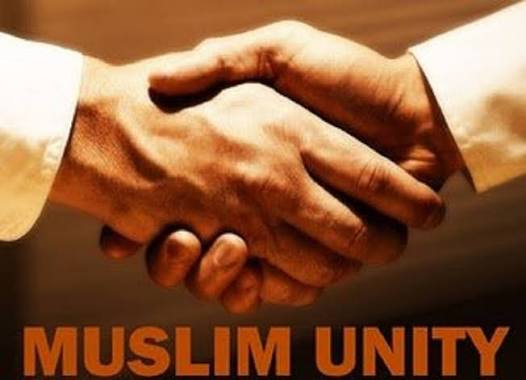
Muslim unity: A strategic imperative in an era of division
Previous article
Next article")