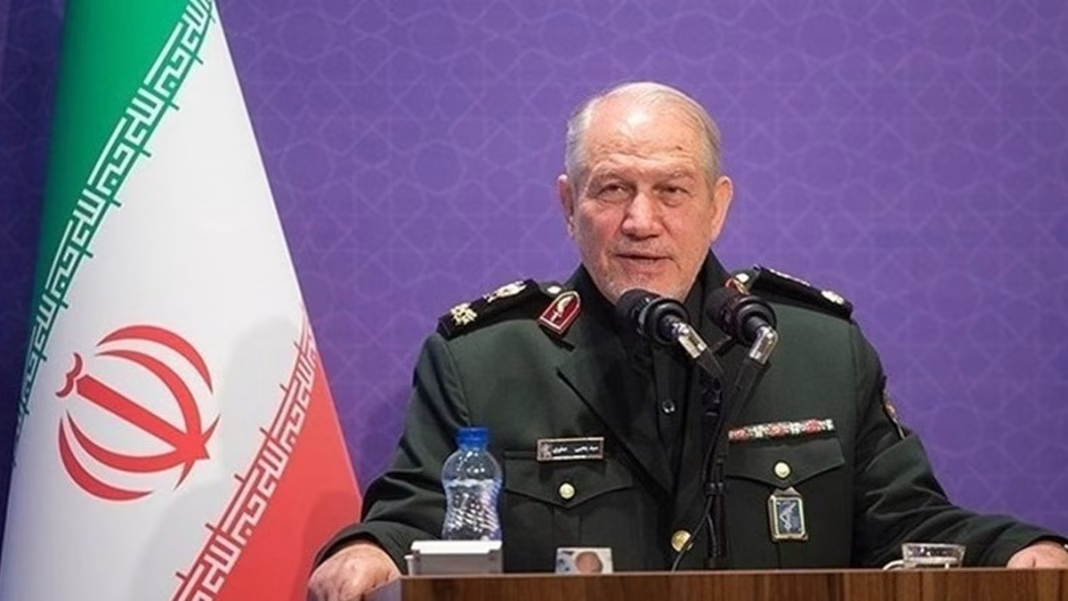
TEHRAN: Major General Yahya Rahim Safavi, a senior military adviser to Iran’s Supreme Leader Ayatollah Seyyed Mojtaba Khamenei, has said Tehran expects to play a leading role in shaping West Asia’s future security order, arguing that the United States will not be able to maintain its regional presence indefinitely.
Speaking at a ceremony marking Sacred Defense Week on Sunday, Safavi said Washington had spent hundreds of billions of dollars in the region without achieving its strategic objectives. He expressed hope that regional countries could establish lasting peace through cooperation without relying on a US presence.
Hormuz a Powerful Strategic Lever
Safavi placed particular emphasis on the Strait of Hormuz, describing the strategic waterway as one of Iran’s most important sources of geopolitical leverage.
He said a significant share of global oil and gas supplies passes through West Asia and the Strait of Hormuz, giving developments in the waterway potentially far-reaching consequences for international energy markets.
Safavi claimed Iran’s management of the strait had helped counter US maritime pressure and affected energy production and exports from several Gulf countries, including Saudi Arabia and Qatar. He described Hormuz as a strategic instrument “more dangerous than a nuclear weapon.”
His remarks come amid severe disruption to commercial shipping through the waterway. Independent reporting cited by GlobalSecurity said maritime traffic through Hormuz had fallen sharply from pre-crisis levels in September.
Tehran Signals Readiness for Further Conflict
Safavi also reiterated that Iran’s armed forces remained prepared for the possibility of renewed military confrontation.
In separate remarks last week, he warned that another US attack could broaden the geographical scope of the conflict beyond the Persian Gulf and Red Sea and potentially towards the Indian Ocean.
He maintained that Iran had withstood previous military pressure and said national unity, government policy and military preparedness would be important in preventing another escalation.
Safavi also highlighted the strategic importance of the Bab al-Mandab Strait, linking developments there to the wider balance of power in the region. His comments reflect Tehran’s view of Hormuz and Bab al-Mandab as central to the evolving regional security environment.
Tehran Pushes Regional Security Model
Safavi’s remarks also underscored Iran’s preference for a security framework centred on regional states rather than Washington.
Recent reports indicate that Safavi has argued that any regional security arrangement should rest principally on cooperation between Iran and Gulf countries. At the same time, diplomatic contacts between Tehran and Washington have continued amid disagreements over the Strait of Hormuz, sanctions and the wider conflict
The comments come as control of strategic waterways, energy security and the future US military presence remain central issues in the evolving confrontation between Washington and Tehran.