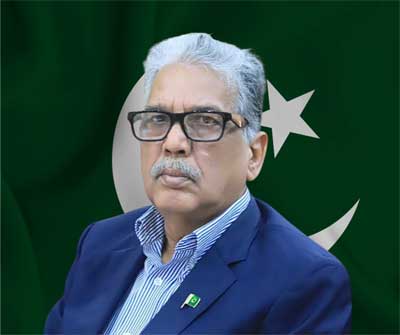
An In-Depth Conversation with Hiroshi Kawamura
Managing Director, Pak-Suzuki Motor Company Ltd
Panel Interview by Mubasher Mir and Naeemuddin
Photography: Muhammad Noman
Co-ordination: Ikhlaq Ahmed Virk
Profile: Leadership at the Intersection of Strategy and Change
At a time when the global automotive industry is undergoing a profound structural transformation-driven by electrification, digitalization, sustainability imperatives, and shifting consumer expectations-leadership is no longer defined by operational oversight alone. It requires a nuanced understanding of global trends, the ability to navigate volatile economic environments, and the foresight to align long-term strategy with local realities.
Hiroshi Kawamura exemplifies this evolving model of leadership.
As Managing Director and Chief Executive Officer of Pak Suzuki Motor Company Limited, he stands at the helm of one of Pakistan’s most influential industrial enterprises. His academic foundation in economics from Hitotsubashi University, combined with more than two decades of experience within Suzuki Motor Corporation, has shaped a leadership philosophy rooted in analytical precision, strategic adaptability, and global perspective.
Since assuming charge in May 2023, Kawamura has led Pak Suzuki through a challenging macroeconomic landscape marked by currency volatility, regulatory complexities, supply chain disruptions, and changing consumer behavior. Yet, under his stewardship, the company has maintained its relevance, reinforcing its legacy while adapting to new realities.
In this exclusive and comprehensive panel conversation, Mubasher Mir and Naeemuddin engage Kawamura on critical themes shaping Pakistan’s automotive sector – from pricing structures and localization to sustainability, exports, and the future of mobility.

Q1: Pak Suzuki has remained a cornerstone of Pakistan’s automotive industry for over four decades. How do you assess its journey and enduring legacy?
Hiroshi Kawamura:
Pak Suzuki’s journey is inseparable from Pakistan’s broader industrial narrative. Since the early 1980s, our presence in the country has evolved from a manufacturing operation into a comprehensive industrial ecosystem.
From the very beginning, our vision extended beyond the production of vehicles. We recognized that sustainable growth required the development of an integrated ecosystem-one that would support localization, foster vendor development, and contribute to technological advancement.
Over the decades, we have made consistent progress in localization. Today, a substantial portion of our vehicles is assembled using locally sourced components. This has significantly reduced reliance on imports while simultaneously strengthening Pakistan’s vendor base.
The importance of this development cannot be overstated. The automotive sector is inherently interconnected, and its growth stimulates activity across multiple industries, including steel, plastics, electronics, and logistics. By supporting the vendor ecosystem, we have contributed to the emergence of small and medium-sized enterprises that form the backbone of industrial development.
Employment generation is another critical dimension of our contribution. Pak Suzuki’s operations support tens of thousands of livelihoods-directly and indirectly. From engineers and technicians to workers across dealerships and vendor facilities, the company has played a role in developing a skilled workforce aligned with modern industrial standards.
From a macroeconomic perspective, our contributions extend to import substitution, revenue generation, and industrial output. By manufacturing locally, we help conserve foreign exchange while contributing to national economic stability.
However, beyond these measurable contributions, I believe our most significant achievement lies in trust. For generations, Suzuki vehicles have been an integral part of daily life in Pakistan. This trust-earned over decades through consistency, reliability, and accessibility-is the foundation upon which our future will continue to be built.
Q2: Consumers frequently question why vehicle prices in Pakistan are higher than in neighboring countries. What explains this disparity?
Hiroshi Kawamura:
This is a very important question, and it is often misunderstood. Vehicle pricing in Pakistan cannot be analyzed in isolation-it must be viewed within the broader fiscal and regulatory framework.
The automotive sector in Pakistan is subject to multiple layers of taxation. These include General Sales Tax, Federal Excise Duty, customs duties on imported components, regulatory duties, and withholding taxes. When combined, these taxes can account for 30 to 40 percent-or even more-of the vehicle’s base cost.
This significantly impacts the final price paid by consumers.
In contrast, neighboring countries often benefit from more streamlined tax structures. They also operate at larger scales of production, which enables economies of scale and reduces per-unit costs. Additionally, deeper localization in these markets further lowers dependency on imported components.
Another critical factor is exchange rate volatility. Since certain components must still be imported, fluctuations in currency directly affect production costs. These costs are then reflected in the final price of the vehicle.
It is essential to recognize that manufacturers operate within these constraints. Pricing is not solely determined by corporate decisions-it is largely shaped by external factors.
If the fiscal structure were rationalized, and if there were greater policy continuity, there would be considerable scope to reduce vehicle prices. Lower prices would stimulate demand, increase production volumes, and ultimately generate greater economic activity.
A balanced fiscal approach-one that supports industrial growth while maintaining government revenues-can create a more sustainable environment for both consumers and manufacturers.
Q3: The global automotive industry is moving toward energy efficiency and advanced technology. How is Pak Suzuki adapting to these changes?
Hiroshi Kawamura:
The transformation of the automotive industry is driven by the convergence of efficiency, sustainability, and technological advancement. At Pak Suzuki, we align closely with the global direction of Suzuki Motor Corporation in responding to these changes.
Energy efficiency begins at the design and engineering level. By utilizing high-tensile steel and advanced lightweight materials, we can reduce vehicle weight without compromising structural integrity. This directly contributes to improved fuel efficiency and reduced emissions.
In addition, we focus on optimizing engine performance, enhancing aerodynamics, and integrating technologies that improve overall efficiency. These measures are particularly relevant in markets like Pakistan, where fuel economy remains a key consideration for consumers.
Safety is another critical priority. Modern vehicles are being designed with enhanced structural frameworks and advanced safety features that meet international standards. Our objective is to ensure that customers receive vehicles that are not only efficient but also safe and reliable.
Technology is also reshaping the driving experience. While the adoption of advanced features varies across markets, we are continuously evaluating opportunities to introduce innovations that align with local conditions and consumer expectations.
Ultimately, our approach is to strike a balance-adapting global advancements to meet the specific needs of the Pakistani market.
Q4: Sustainability and climate responsibility are now central to industrial strategy worldwide. What steps has Pak Suzuki taken in this regard?
Hiroshi Kawamura:
Sustainability is no longer an optional consideration-it is a fundamental responsibility. At Pak Suzuki, environmental responsibility is deeply embedded in our long-term strategy.
One of our key initiatives has been the installation of a solar power system with a capacity of approximately 920 kilowatts at our production facilities. This initiative has significantly reduced our reliance on conventional energy sources and lowered our carbon footprint.
We are also exploring the integration of biofuel-compatible technologies as part of our transition toward cleaner energy solutions. These efforts are aligned with global trends and reflect our commitment to sustainability.
Beyond industrial measures, we are actively engaged in community-oriented environmental initiatives. Plantation drives and awareness campaigns in Karachi and Lahore are part of our broader effort to promote environmental responsibility and improve urban air quality.
It is important to understand that sustainability is not a single initiative-it is a continuous process. It requires consistent investment, innovation, and integration across all aspects of operations.
Our vision is clear: sustainable mobility must be achieved through a combination of efficient production, cleaner energy, and responsible corporate behavior.
Q5: Pakistan has often been described as having the potential to become an automotive export hub. What is your assessment of this possibility?
Hiroshi Kawamura:
Pakistan certainly has the foundational capacity to become a competitive automotive export hub. However, realizing this potential requires addressing several structural challenges.
Cost competitiveness is one of the primary concerns. Pakistan’s path to global competitiveness lies in expanding domestic market volumes, developing a reliable local raw-material base, and facilitating technology transfer between foreign and local parts suppliers. With larger market size and predictable long-term policy framework, the country can attract foreign investment in high technology auto parts manufacturing, improve cost efficiency, and build a sustainable, export-oriented industry.
Policy consistency is equally important. The automotive sector requires long-term planning horizons-often spanning 10 to 15 years-to justify investments in localization, technology transfer, and capacity expansion. Frequent policy changes create uncertainty and discourage investment.
Localization remains a critical factor. Increasing the proportion of locally manufactured components can reduce costs and improve supply chain resilience. This is essential for building a reliable export base.
Infrastructure and logistics also play a decisive role. Efficient port operations, competitive freight costs, and streamlined customs procedures are necessary to support exports.
With the right policy framework, Pakistan can transition from a consumption-driven market to a production and export hub. This transformation would contribute not only to industrial growth but also to foreign exchange earnings and overall economic stability.
Unlocking Potential Through Policy and Partnership
The discussion with Hiroshi Kawamura highlights a central reality: Pakistan’s automotive sector stands at a critical juncture.
The foundations are strong-industrial capacity, human capital, and market demand are all present. However, unlocking the sector’s full potential requires alignment between policy, industry, and long-term strategic vision.
Under Kawamura’s leadership, Pak Suzuki continues to demonstrate resilience and adaptability. Its focus on localization, sustainability, and operational excellence reflects a broader commitment to Pakistan’s economic future.
As global trends continue to reshape the automotive landscape, Pakistan has a unique opportunity to redefine its role-not merely as a consumer market, but as a competitive manufacturing and export base.
The path forward will require consistency, collaboration, and strategic clarity. If these elements come together, the future of Pakistan’s automotive sector will not only be sustainable-it will be transformative.