



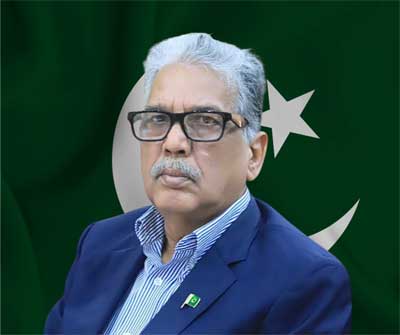
At a moment when global fault lines appear increasingly volatile, President Asif Ali Zardari’s remarks at the reception marking the 47th anniversary of Iran’s National Day carried weight far beyond ceremonial diplomacy. His message was clear and urgent: military escalation involving Iran would not remain confined to one theatre. It would ripple across the Gulf, destabilize South Asia and Western Asia, and send shockwaves through an already fragile global economy.
The President’s warning was neither rhetorical nor abstract. The Middle East today stands at a precarious crossroads. Prolonged conflicts, unresolved regional disputes, terrorism, and patterns of external interference have created a combustible environment. In such circumstances, any attempt to resolve complex political disagreements through force would risk widening the arc of instability. Energy corridors, trade routes, and financial markets are intricately interconnected; disruption in one node reverberates globally. The stakes, as President Zardari rightly observed, are far too high for confrontation.
Pakistan’s position, articulated with clarity, rests on three interlinked principles: opposition to unilateral sanctions, rejection of coercive measures, and unwavering support for dialogue. These are not merely diplomatic talking points but reflect a broader philosophy shaped by Pakistan’s own experience in navigating regional turbulence. History has repeatedly demonstrated that sanctions and isolation rarely produce durable solutions. Instead, they entrench divisions, harden positions, and complicate prospects for peaceful engagement.
Equally significant was the President’s gesture of requesting a moment of silence for the victims of the recent blast in Islamabad and the tragedies in Iran. In that solemn pause lay a reminder of the human cost of violence. “Let’s pray that wars never come to us,” he said-a sentiment that resonates deeply in a region that has witnessed decades of upheaval. It was a call not only for diplomatic prudence but for moral reflection.
Pakistan and Iran share more than a border; they share history, culture, and civilizational memory. President Zardari’s reference to Persian’s influence on Pakistan’s intellectual and cultural fabric was more than symbolic. For centuries, Farsi shaped the administrative, literary, and spiritual discourse of this region. The enduring reverence in Pakistan for poets such as Rumi, Hafiz, Saadi, and Ferdowsi underscores a shared philosophical inheritance. Allama Iqbal’s extensive writings in Persian further embody this deep interconnection. These cultural bonds provide a reservoir of goodwill that contemporary diplomacy must nurture.
However, cultural affinity alone cannot substitute for practical cooperation. The President’s emphasis on joint responsibilities in border management, counter-terrorism, and transforming the shared frontier into a zone of lawful trade and development is a pragmatic roadmap. A stable and economically vibrant border region would serve as a buffer against militancy and illicit activity while fostering mutual prosperity. In a region too often defined by security anxieties, economic integration offers a constructive alternative.
Ambassador Dr. Reza Amiri Moghaddam’s remarks complemented this narrative. He highlighted Iran’s resilience amid external pressures and reiterated that Tehran does not seek war but reserves the right to defend its sovereignty if conflict is imposed. His acknowledgment of recent high-level engagements, including the Prime Minister’s visit and the signing of agreements and memorandums of understanding, indicates that bilateral relations are moving toward structured cooperation. Such institutionalized engagement is essential in insulating ties from the volatility of broader geopolitics.
President Zardari’s broader assertion that Pakistan values balanced global relations and is ready to play a constructive role in promoting restraint reflects Islamabad’s longstanding aspiration to serve as a bridge rather than a battleground. In an era of shifting alliances and emerging multipolarity, middle powers like Pakistan can contribute meaningfully by encouraging de-escalation and dialogue among rival actors.
The global economy, already strained by conflicts, supply chain disruptions, and financial uncertainty, cannot withstand another major conflagration. The Gulf region remains central to global energy security. Any instability involving Iran would have immediate implications for oil markets, shipping lanes, and investor confidence. The cascading effects would be felt from Asia to Europe and beyond. Thus, calls for restraint are not only regional imperatives but global necessities.
The reception commemorating Iran’s National Day was a moment of diplomatic celebration, but it also became a platform for a sober reflection on regional realities. President Zardari’s message-firm yet conciliatory-underscored Pakistan’s belief that force cannot resolve entrenched disputes and that unilateralism undermines collective security.
In a world increasingly tempted by brinkmanship, the insistence on dialogue may appear modest. Yet it is precisely this commitment to engagement that prevents crises from spiraling into catastrophe. The path forward demands patience, mutual respect, and sustained communication among all relevant parties.
As President Zardari extended warm congratulations to the leadership and people of Iran, he also articulated a broader hope: that the region may move toward security, stability, and shared prosperity. Achieving that vision will require courage-not the courage of confrontation, but the courage of restraint.


