PART I – From the Streets of Rawalpindi to the Uniform: The Making of Asim Munir
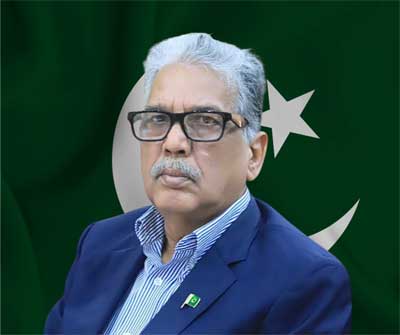
History rarely announces in advance the individuals whom it intends to place at the centre of great events. Long before the command of one of the world’s largest armies, before the intelligence assignments, the challenges of national security, the rank of Field Marshal and the diplomatic engagements that would take him from Islamabad to important capitals of the world, Syed Asim Munir was a young man growing up in Rawalpindi in a family where education and religion formed an important part of everyday life.
The story of Field Marshal Syed Asim Munir therefore does not begin at General Headquarters. Nor does it begin with the political controversies that would surround his later career. It begins much more quietly-in Rawalpindi, in a household shaped by modest circumstances, education, religious learning and discipline.
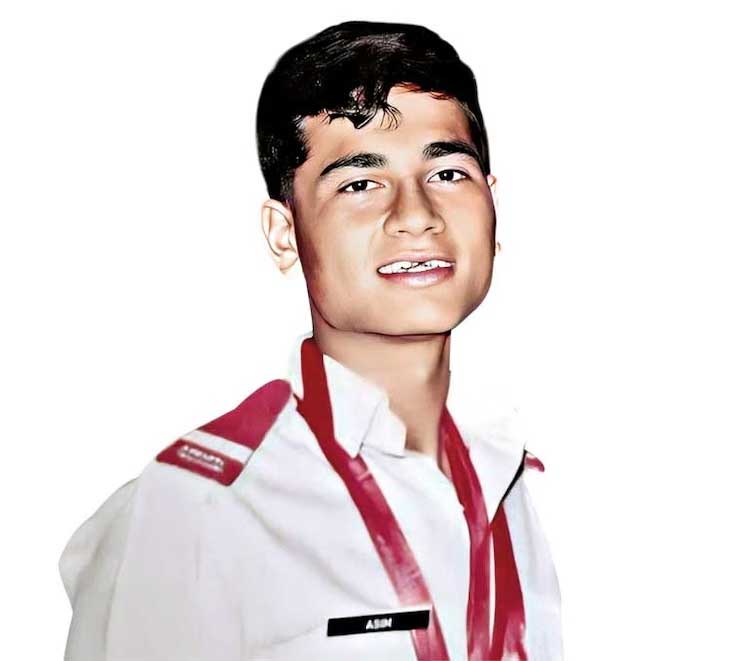
Available biographical accounts place his birth in Rawalpindi, reportedly in 1968. His family’s roots went back to Jalandhar, from where his family migrated to Pakistan following Partition. His father, Syed Sarwar Munir, was associated with education and also served his local community in a religious capacity as an imam. Some accounts describe him as a school principal, while others refer to him more generally as a teacher. What is consistent across these accounts is the combination of education and religious service that characterised the family environment in which Asim Munir grew up.
It is an important background to understanding the man who would emerge decades later at the pinnacle of Pakistan’s military hierarchy.
A childhood shaped by faith and education
Rawalpindi has always had a special relationship with Pakistan’s armed forces. The city is home to the General Headquarters of the Pakistan Army and generations of military families, soldiers and officers have lived in and around it. Yet there was nothing inevitable about young Asim Munir eventually reaching the highest levels of military command.
His early education included religious instruction at Markazi Madrasa Dar-ul-Tajweed in Rawalpindi. Faith would remain an important part of his personal identity throughout his life.
In later years he became a Hafiz-e-Quran, having memorised the Holy Quran. Public accounts differ about precisely when he completed that journey, with some reporting that it occurred during a later military posting in Saudi Arabia. What is clear, however, is that his religious education had roots extending back to his formative years.
That distinction is important. The objective in examining his childhood should not be to manufacture signs of future greatness with the benefit of hindsight. Rather, it is to understand the environment from which his personality developed: education, religious instruction, personal discipline and the experience of growing up in Rawalpindi.
These characteristics would later accompany him into a profession where discipline is not simply valued but demanded.
Choosing the life of a soldier
For many young Pakistanis, joining the armed forces represents much more than choosing an occupation. It means accepting a life governed by discipline, hierarchy, physical endurance, separation from family and, ultimately, the possibility of making the greatest sacrifice for the country.
Asim Munir chose that path.
But there is an interesting feature of his entry into the Pakistan Army. He did not begin his commissioned career through the conventional long-course route at the Pakistan Military Academy, Kakul, through which many of Pakistan’s future generals have traditionally passed.
Instead, he entered officer training through the Officers Training School at Mangla.
He became part of the 17th Officers Training Course.
This would prove to be the first major test of the young man’s military potential.
The Officers Training School demanded academic ability, physical fitness, leadership qualities, endurance and the capacity to perform under pressure. Cadets were being prepared not merely to wear a uniform but to command soldiers.
Among them, Asim Munir distinguished himself.
The Sword of Honour
When the course concluded, the young cadet achieved an honour that would remain an important distinction throughout his career: the Sword of Honour.
It is awarded to the outstanding cadet of a course and symbolises excellence across the demanding combination of leadership, training, discipline and overall performance expected of a future officer.
For Asim Munir, the Sword of Honour was much more than an award at the beginning of a military career.
Looking back four decades later, it appears almost symbolic.
The young man entering the Army through Mangla had demonstrated an ability to distinguish himself among his peers before receiving his first operational responsibility.
Pakistan’s official record confirms that Syed Asim Munir was commissioned in April 1986 into the 23rd Frontier Force Regiment, one of the Pakistan Army’s distinguished infantry formations.
The transition was complete.
The young man from Rawalpindi was now an officer of the Pakistan Army.
The Frontier Force tradition
Joining an infantry regiment carries a particular meaning in military life. Infantry officers serve alongside soldiers in some of the most physically demanding environments, and the relationship between an officer and the men under his command is forged through shared hardship.
For a newly commissioned officer, this is where textbooks begin to meet reality.
The young Asim Munir would have to learn the responsibilities of command: looking after soldiers, maintaining discipline, mastering military skills and understanding that an officer’s decisions can ultimately affect human lives.
No young lieutenant can know where his career will eventually take him.
There was no certainty in 1986 that the Sword of Honour recipient from the 17th OTS Course would one day command his own regiment, lead formations in some of Pakistan’s most sensitive areas, head both Military Intelligence and the Inter-Services Intelligence, command a corps, become Quartermaster General and ultimately rise to Chief of Army Staff.
There certainly could have been no expectation that almost four decades later Pakistan would confer upon him the rank of Field Marshal.
Those chapters belonged to a future still unwritten.
The foundations of a remarkable journey
There is a temptation when writing about powerful figures to interpret every childhood experience as evidence of the person they would eventually become. History is rarely that simple.
What can reasonably be said about Asim Munir’s formative period is more meaningful.
He came from a family where education and religion mattered. His early years were spent in Rawalpindi. Religious education became an enduring part of his life. He chose military service and entered through the Officers Training School at Mangla rather than the more familiar PMA long-course route. And when confronted with his first major competitive military test, he emerged with the Sword of Honour.
That was the beginning.
The significance of these beginnings becomes clearer only when viewed against what followed.
The officer commissioned into the 23rd Frontier Force Regiment in April 1986 would spend the coming decades passing through command, staff, instructional and intelligence assignments. He would serve in difficult terrain, command troops in strategically sensitive areas and acquire experience extending beyond Pakistan’s borders.
Eventually, he would achieve something unprecedented for a future Pakistani Army Chief: experience at the head of both of Pakistan’s principal military intelligence organisations-Military Intelligence and the Inter-Services Intelligence.
But before the intelligence chief, before the general, before the Army Chief and before the Field Marshal, there was a young officer carrying the Sword of Honour and beginning his service in the Frontier Force Regiment.
His journey had started not with political power or international diplomacy, but with training, discipline and the responsibilities entrusted to a newly commissioned officer.
Nearly four decades later, that journey would place him at the centre of some of the most consequential events confronting Pakistan and its region.
To understand how he reached there, however, we must first understand how the young infantry officer developed into an intelligence professional.
That is where the next chapter begins.
(To be continued)