PM Shehbaz's COP31 appeal highlights widening gap between global climate promises and financial assistance; experts warn mounting debt, repeated floods and inadequate adaptation funding threaten developing economies
KARACHI: Pakistan's renewed demand for grant-based international climate financing at the COP31 summit in Antalya has brought into sharp focus one of the most critical challenges confronting the developing world: how climate-vulnerable countries can protect their populations from increasingly destructive natural disasters without falling deeper into debt.
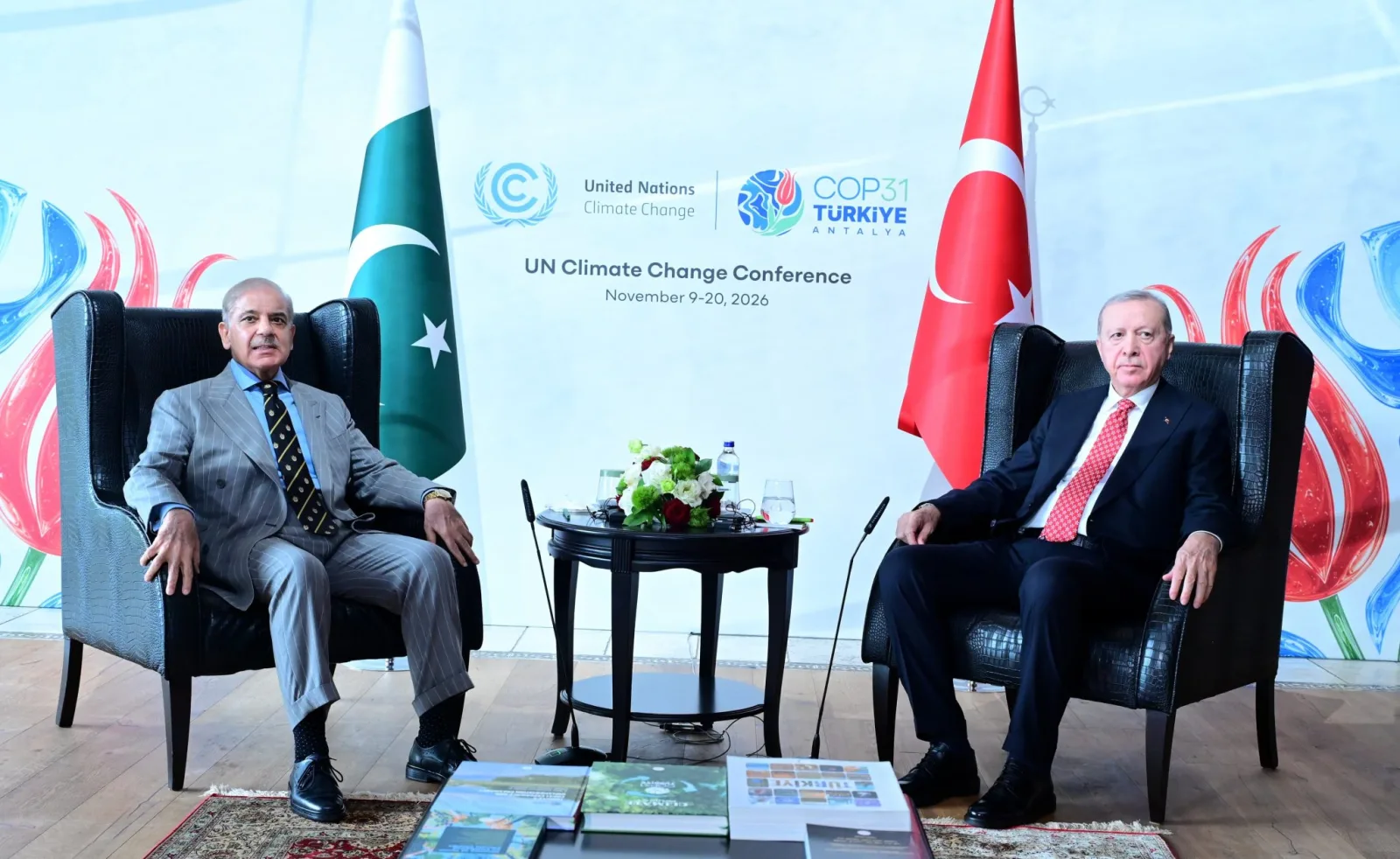
Prime Minister Shehbaz Sharif's appeal to world leaders for substantial increases in adaptation and resilience financing reflects not only Pakistan's painful experience with devastating floods but also the growing frustration among developing nations over the slow delivery of promised international climate assistance.
The issue has acquired particular significance as climate-related disasters increasingly threaten economic stability, infrastructure, agricultural production and human security in countries already struggling with fiscal constraints, external financing requirements and development challenges.
Addressing the Antalya Leaders Summit of the 31st United Nations Climate Change Conference (COP31), the prime minister emphasised that climate financing should primarily take the form of grants rather than loans, enabling vulnerable economies to strengthen disaster preparedness and rebuild damaged infrastructure without accumulating additional financial liabilities.
His call for greater international cooperation, including public-private partnerships, reflects a fundamental concern that the global climate financing framework has yet to adequately address the needs of countries bearing disproportionate consequences of climate change.
Pakistan presents a compelling example of this imbalance.
Despite contributing less than one percent of global greenhouse gas emissions, the country remains highly vulnerable to extreme weather events, including catastrophic floods, prolonged heatwaves, glacial melting, droughts and increasingly unpredictable rainfall patterns.
The devastating floods of 2022 exposed the scale of this vulnerability when approximately one-third of Pakistan was submerged, affecting 33 million people, claiming more than 1,700 lives and causing economic damage and losses exceeding $30 billion.
The disaster destroyed homes, roads, bridges, schools, healthcare facilities and agricultural infrastructure, creating enormous reconstruction requirements and placing additional pressure on government finances.
The economic impact extended beyond immediate destruction, disrupting food supplies, reducing agricultural output, damaging livelihoods and increasing the need for public expenditure at a time when Pakistan was already confronting serious fiscal pressures.
The August 2025 flash floods in Buner further demonstrated that the country continues to face recurring climate emergencies, with vulnerable communities frequently exposed to sudden and devastating disasters.
Analysts believe such repeated shocks create a cycle in which developing economies are forced to divert already limited financial resources from productive investment and social development towards emergency relief and reconstruction.
The result is a persistent development dilemma: countries require additional resources to protect themselves against climate disasters, yet borrowing those resources can deepen financial vulnerabilities and reduce their ability to invest in future economic growth.
This contradiction lies at the centre of Pakistan's demand for grant-based financing.
Unlike conventional development expenditure, climate adaptation investments are often necessary to protect existing economic assets and prevent future humanitarian catastrophes. Flood-resistant infrastructure, early-warning systems, improved drainage networks, water conservation facilities and climate-resilient agriculture can significantly reduce future losses.
However, their benefits frequently extend across entire communities rather than producing immediate commercial returns, making them less attractive to conventional private investors.
Consequently, international grants and concessional public financing remain essential for ensuring that climate-vulnerable countries can undertake adaptation projects on the required scale.
The Financial Daily, in its editorial on Friday, stressed that climate financing should serve as an instrument of survival and sustainable development rather than become another source of indebtedness for economically distressed nations.
The editorial highlighted the historical responsibility of industrialised economies, which have contributed the largest share of accumulated greenhouse gas emissions, to support countries suffering disproportionately from the consequences of global warming.
It also emphasised that international commitments must be accompanied by predictable financial resources, transparent implementation mechanisms and measurable outcomes.
Pakistan's position raises broader questions regarding the effectiveness of international climate diplomacy.
While successive climate conferences have produced declarations, funding commitments and frameworks for cooperation, vulnerable countries continue to encounter difficulties in accessing resources quickly enough to address urgent adaptation requirements.
Complicated application procedures, project preparation requirements, institutional capacity limitations and delays in disbursements can prevent financial assistance from reaching affected communities when it is most urgently needed.
For countries such as Pakistan, where floods can destroy decades of infrastructure investment within days, the difference between timely and delayed assistance can be measured in human lives and long-term economic losses.
The prime minister's emphasis on public-private partnerships also reflects the need to mobilise additional investment for climate-resilient infrastructure and clean-energy development.
Nevertheless, such partnerships cannot fully replace grant-based support, particularly for projects involving flood protection, community rehabilitation and essential public services that may not generate sufficient commercial returns.
Pakistan's own clean-energy transition provides another important dimension to the debate.
The prime minister highlighted the addition of more than 20 gigawatts of distributed solar capacity over two years, alongside the growing contribution of cleaner energy sources to the country's electricity mix.
The development of the Chashma-5 Nuclear Power Plant, expected to contribute approximately 1,200 megawatts of low-carbon electricity upon completion, also forms part of Pakistan's efforts to diversify its energy resources.
However, expanding clean-energy capacity alone will not be sufficient without corresponding investments in transmission infrastructure, electricity distribution, grid modernisation and affordable financing.
The country's transition towards electric mobility and its stated ambition to reduce projected greenhouse gas emissions by up to 50 percent by 2035 will similarly require substantial financial resources, technological cooperation and sustained policy implementation.
Beyond energy, water security has emerged as another critical component of Pakistan's climate vulnerability.
The prime minister's warning against weaponising water underlined the importance of protecting downstream populations and ensuring compliance with international water-sharing arrangements.
Climate change is intensifying pressure on regional water systems, making cooperation over shared resources increasingly important for food security, agricultural productivity and long-term economic stability.
For Pakistan, where agriculture remains a major source of employment and rural livelihoods, disruptions to water availability could have serious consequences for economic development and social welfare.
Nevertheless, international support must be accompanied by stronger domestic institutional accountability.
Pakistan needs better coordination between federal and provincial governments, improved urban planning, effective enforcement of environmental regulations, stronger disaster-response institutions and transparent utilisation of climate-related funds.
Investment in early-warning systems, floodplain management, climate-resilient housing and agricultural adaptation must become an integral part of national economic planning rather than remain confined to emergency responses following disasters.
The challenge before COP31 is therefore considerably greater than announcing new commitments.
The conference must help establish financing arrangements that deliver meaningful assistance to vulnerable countries, strengthen adaptation capacity and reduce the economic consequences of climate-related disasters.
For Pakistan, successful climate diplomacy would mean securing reliable international support while simultaneously improving domestic preparedness and ensuring that available resources produce measurable public benefits.
Prime Minister Shehbaz Sharif's appeal from Antalya has reinforced a central reality of the global climate debate: countries that have contributed the least to the climate crisis cannot reasonably be expected to bear its heaviest financial burden alone. Unless international climate commitments are translated into accessible grants, effective adaptation programmes and sustained collective action, vulnerable nations will continue paying for environmental damage through mounting debts, economic disruption and human suffering.
The ultimate test of COP31 will therefore not be the declarations adopted by world leaders, but the practical protection delivered to communities facing the accelerating consequences of climate change.