TFD Monitoring Desk
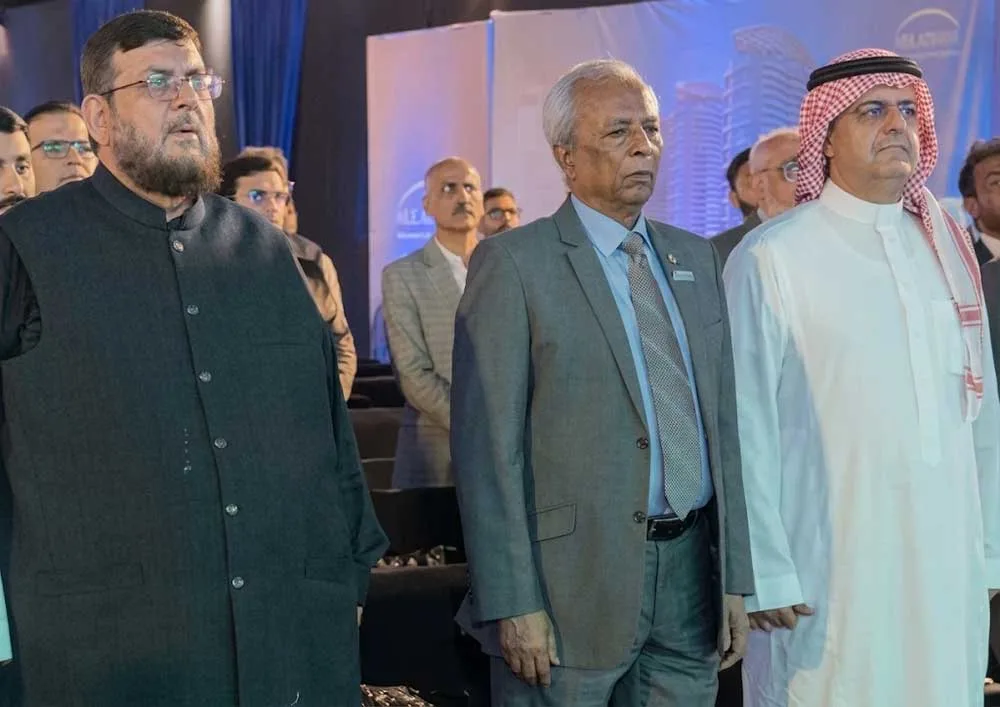
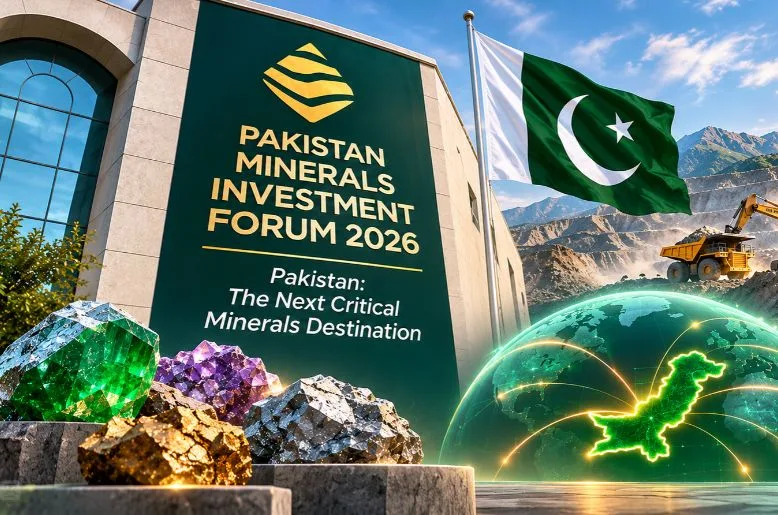
ISLAMABAD: Pakistan has intensified efforts to attract domestic and international investment in its mineral resources sector as the two-day Pakistan Minerals Investment Forum 2026 commenced in Islamabad on Thursday, bringing together investors and representatives from more than 60 countries to explore opportunities in mineral exploration, mining, processing and industrial development.
Organised in collaboration with the Special Investment Facilitation Council (SIFC), the forum aims to position Pakistan as a competitive destination for mineral investment while encouraging the development of value-added industries, export-oriented manufacturing and sustainable economic growth.
Deputy Prime Minister and Foreign Minister Senator Mohammad Ishaq Dar, addressing the inaugural session, described Pakistan's mineral wealth as a major opportunity for economic transformation and reaffirmed the government's commitment to creating a transparent, competitive and investor-friendly environment.
He said the development of mineral resources had been elevated to a strategic national economic priority under Prime Minister Shehbaz Sharif's vision of building a productive, export-driven and investment-led economy.
Dar emphasised that Pakistan's extensive mineral reserves offered significant opportunities for international investors seeking access to raw materials and industrial resources essential for modern manufacturing, infrastructure development and emerging clean energy technologies.
He maintained that the government's economic strategy focused not merely on extracting natural resources but also on strengthening domestic processing capabilities, encouraging technology transfer, creating employment and expanding exports.
The deputy prime minister said the National Minerals Policy provided an important foundation for coordinated development, enabling federal and provincial authorities to work together in facilitating exploration and investment.
He stressed that cooperation among government institutions, private investors and local communities would be essential to ensuring that Pakistan's mineral wealth translated into sustainable economic benefits.
Balochistan Central to Pakistan's Mineral Development Strategy
Highlighting regional opportunities, Ishaq Dar described Balochistan as central to Pakistan's mineral future because of its extensive deposits of copper, gold and other commercially valuable resources.
He reaffirmed the federal government's commitment to ensuring that development projects contribute directly to the province's economy and improve the living standards of its population.
Dar also pointed to significant mineral resources in Khyber Pakhtunkhwa and the northern regions, while acknowledging the industrial and mining potential of Punjab and Sindh.
He emphasised that local communities must remain active participants in mineral development, with their livelihoods, traditions and cultural heritage fully respected.
The deputy prime minister said responsible investment would require balancing commercial opportunities with environmental sustainability, community welfare and long-term regional development.
He described the participation of representatives from more than 60 countries as evidence of growing international interest in Pakistan's mineral sector.
The forum, he observed, also reflected Pakistan's ambition to become an important participant in global supply chains supporting clean energy technologies and advanced industrial manufacturing.
Reko Diq Project Expected to Become Operational by 2029
Balochistan Chief Minister Mir Sarfraz Bugti highlighted the province's enormous mineral and energy potential, assuring international investors that the government was taking comprehensive measures to provide a secure investment environment.
He announced that an additional security division had been established to protect the mineral corridor and strengthen security arrangements for companies operating in the province.
The chief minister said the Reko Diq copper and gold mining project was expected to become operational by 2029, describing it as a major opportunity for investment, employment and long-term economic development.
Reko Diq is regarded as one of Pakistan's most strategically important mineral projects, with the potential to strengthen export earnings and attract substantial international capital.
Bugti also highlighted the energy potential of Balochistan's Sarona area, claiming that its oil and gas reserves could exceed those associated with Sui.
He further disclosed plans to develop a fertiliser city in Sui, aimed at supporting industrial growth and creating additional economic opportunities in the province.
The provincial government, he maintained, was determined to encourage responsible mineral exploration and ensure that local communities received tangible economic benefits from resource development.
Sindh Identifies 27 Minerals, Highlights Thar Coal Potential
Sindh Chief Minister Syed Murad Ali Shah told the forum that the province had identified 27 minerals offering significant investment opportunities across different parts of Sindh.
He highlighted the province's established mining regulatory framework and reaffirmed the government's readiness to facilitate local and international investors.
Murad Ali Shah particularly emphasised the importance of Thar coal reserves, describing the project as an important component of Pakistan's energy development strategy.
He said electricity generation from Thar coal had demonstrated the economic value of developing indigenous energy resources and reducing dependence on imported fuels.
The chief minister maintained that Sindh possessed considerable opportunities for further investment in mineral exploration, industrial processing and supporting infrastructure.
He also underscored the importance of an enabling regulatory environment, infrastructure development and effective coordination between public institutions and private investors.
The province's mineral resources, combined with its industrial facilities, ports and transport networks, provide opportunities for expanding value-added production and export-oriented industries.
Punjab Reports Rs40 Billion Revenue from Mines and Minerals
Punjab Chief Minister Maryam Nawaz Sharif highlighted the province's growing mining sector, announcing that revenue generated by the Mines and Minerals Department had increased to approximately Rs40 billion over the past two and a half years.
She said the provincial government was pursuing reforms to improve resource management, encourage investment and maximise the economic value of locally available minerals.
The chief minister drew attention to placer gold deposits in Punjab's rivers, saying surveys and technical studies were being conducted to determine the quantity and commercial potential of these resources.
She also highlighted Chiniot's iron ore reserves, estimated at 261.5 million tonnes, describing them as a significant opportunity for developing domestic steel production and reducing dependence on imported industrial materials.
Maryam Nawaz said the government wanted to encourage investment in processing facilities that could convert iron ore into finished steel products, creating employment and supporting downstream industries.
She further pointed to the commercial importance of Punjab's internationally recognised pink salt, emphasising that greater value addition and improved processing had helped increase revenue from the resource.
The provincial administration, she said, remained committed to promoting mineral-based industries through improved infrastructure, investment facilitation and regulatory reforms.
KP, Gilgit-Baltistan and AJK Invite International Investors
Governor Khyber Pakhtunkhwa Faisal Karim Kundi described the province as a region of substantial untapped mineral opportunities and assured investors of the government's commitment to providing a secure business environment.
He announced that a provincial Mines and Minerals Company would soon become operational to facilitate investment and promote the structured development of mineral resources.
Kundi said Khyber Pakhtunkhwa offered attractive opportunities across several mineral categories and encouraged investors to explore the province's commercial potential.
Gilgit-Baltistan Chief Minister Amjad Hussain Azar highlighted the region's mineral resources and said institutional arrangements had been introduced to facilitate exploration and investment.
He maintained that the regional government was working to establish mechanisms that would simplify investment procedures and encourage responsible mineral development.
Azad Jammu and Kashmir Prime Minister Syed Iftikhar Ali Gilani also invited investors to explore mineral deposits in the territory, highlighting opportunities for economic activity and industrial development.
The regional leaders emphasised that improved infrastructure, investment facilitation and appropriate security arrangements could help unlock mineral resources that had remained largely underdeveloped.
Mineral Sector Seen as Major Driver of Economic Growth
The Pakistan Minerals Investment Forum 2026 comes as the government seeks to diversify exports, attract foreign direct investment and reduce the economy's dependence on traditional industries.
Mineral development has emerged as a priority because of increasing global demand for copper, industrial metals and other resources used in renewable energy systems, electric vehicles, construction and advanced manufacturing.
Pakistan's geographical position, extensive mineral reserves and access to regional markets offer potential advantages for companies seeking new sources of industrial raw materials.
However, industry development will require considerable investment in geological surveys, modern mining technology, transport infrastructure, electricity supplies and skilled human resources.
Experts also emphasise the importance of transparent licensing procedures, environmental safeguards, policy continuity and fair participation by communities located near mining projects.
Greater domestic processing and value addition could allow Pakistan to capture a larger share of the economic benefits associated with its mineral reserves rather than relying primarily on exports of unprocessed raw materials.
The SIFC is expected to play a facilitating role in coordinating federal and provincial institutions, addressing investment-related obstacles and supporting the implementation of major projects.
The forum also provides an opportunity for provincial governments to present investment prospects directly to international companies, financial institutions and technology partners.
With representatives from more than 60 countries participating, the event reflects the government's efforts to strengthen Pakistan's international economic partnerships and promote mining as an important contributor to future export growth.
As the forum continues, attention will focus on whether investment discussions can be converted into commercially viable projects supported by clear regulatory arrangements, reliable infrastructure and long-term development commitments.
For Pakistan, the successful development of mineral resources could strengthen foreign exchange earnings, stimulate industrial activity and create employment across multiple regions.
The ultimate measure of success, however, will be the country's ability to translate investor interest into sustainable projects that generate lasting economic benefits for both the national economy and the communities where these resources are located.
Source attribution: This report has been independently rewritten, reorganised and expanded for The Financial Daily, based on statements delivered during the Pakistan Minerals Investment Forum 2026 in Islamabad, including remarks by Deputy Prime Minister Ishaq Dar and provincial and regional leaders. Project timelines, mineral reserve estimates and investment claims are attributed to the respective officials.