Humaira Motala
On 17th October 1998, Karachi lost a healer, Pakistan lost a visionary, and Eastern medicine lost its greatest ambassador. Hakim Mohammed Said was martyred, but he did not die. Because what he built – Hamdard, Madinat-ul-Hikmah, and the institutional foundation of Eastern medicine in Pakistan – still heals millions every single day.
Some men build buildings. Some build institutions. Hakim Mohammed Said built a philosophy – that our own Eastern medicine, our own hikmat, is not backward, it is our heritage. When the world was running towards synthetic drugs, one man in Karachi was building a city of wisdom for desi dawa. Hakim Mohammed Said did not just practice Eastern medicine, he gave it a constitution, a university, a laboratory, and respect.
“Amanat Hai, Jaedad Nahi”
The Custodians of the Mission
Shaheed Hakim Mohammed Said did not just leave behind Hamdard, he left behind a custodian raised in his own values. His daughter, Ms. Sadia Rashid – President, Hamdard Foundation Pakistan, Chairperson Hamdard Pakistan and Chancellor, Hamdard University – was groomed not as an heiress, but as a khadima of Tibb.
She grew up watching her father run free clinics, write for children, and build Madinat-ul-Hikmah brick by brick. He taught her that Hamdard is not property, it is “amanat”. That upbringing is why after his martyrdom on 17th October 1998, she held the institution together and took it forward – from Hamdard Laboratories to Hamdard University – protecting her father’s mission while giving Eastern medicine a modern, global future.
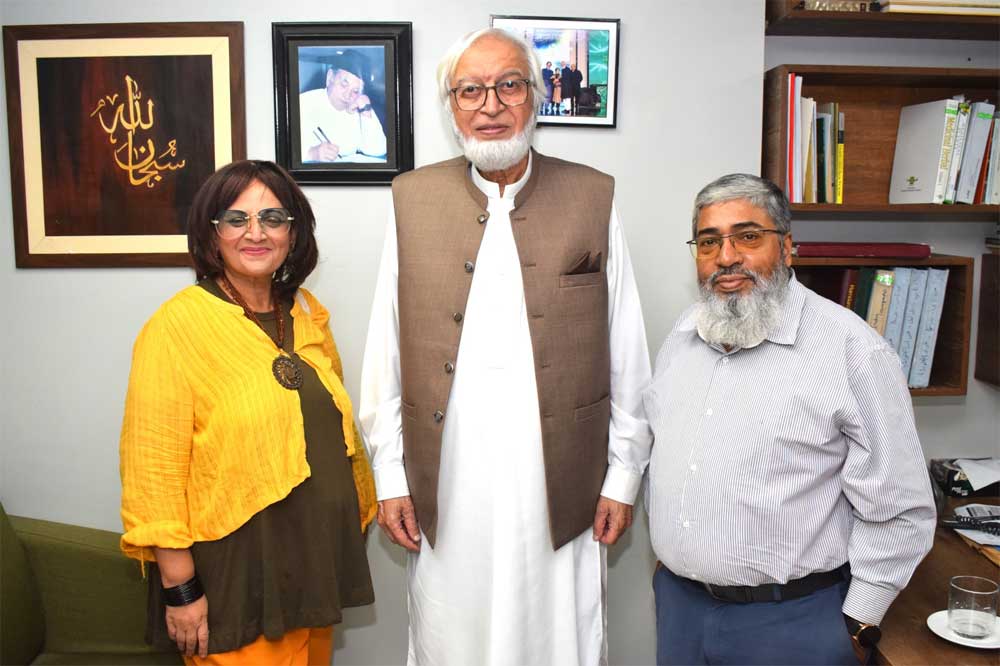
Among those who carried Shaheed Hakim Mohammed Said’s mission from a matab to a university was Prof Dr Hakim Abdul Hannan, Director Clinical Science Division and former Vice Chancellor, Hamdard University. He did his Bachelor’s in Unani Medicine and Surgery in 1966 from Aligarh Muslim University, India. When he came to Pakistan in 1970 and joined Hamdard, Hakim Said welcomed him with words that stayed with him forever: “Idare ko aap jese logon ki zaroorat hai.”
When Hamdard Tibb College was first established and later merged into Hamdard University, he was at the center of it. BEMS was introduced, and in 1988 as Hamdard University started its 5-year graduation programme of Eastern Medicine, he served as Vice Principal and later as Dean of Faculty.
He was part of the committee that designed the complete curriculum of Eastern Medicine – including Basic Sciences and Unani Tibb – which was later approved by the HEC. At a time when practitioners of Eastern Medicine were few, he built a fully qualified faculty from scratch. In 2012, he was appointed Vice Chancellor of Hamdard University.
Beyond the privilege of working closely with a man of rare foresight like Hakim Said and carrying his legacy forward, Prof Abdul Hannan has several distinctions to his name. At the 3rd World Traditional Medicine Congress – 3rd Traditional & Alternative Medicine Congress 2025, Japan, his paper was certified as the Best Paper on Alternative Medicine. In 2025, he was awarded the Shaheed Hakim Mohammed Said Award – the first Tabib to receive it, where awards are distributed in 20 faculties including Science, Art, Research, Sports and Journalism.
“50 Years Ahead of Alma-Ata”
Nigah-e-Mard-e-Momin se Badal Jati Hai Taqdeeren
Discussing the importance of Unani medicine and the roadmap of Hamdard, Prof Dr Hakim Abdul Hannan referred to the historic International Conference on Primary Health Care, Alma-Ata 1978, which declared the inclusion of traditional and alternative medicine in primary healthcare. “This is something Hakim Said had pursued 50 years ago,” he asserted.
Unani medicine and hikmat, he highlighted, is universal by its very origin – it has travelled across civilizations. Even allopathy is rooted in Unani. Ibn Sina’s encyclopaedic work Al-Qanun fi al-Tibb (The Canon of Medicine) remained the standard medical textbook in European universities for over six centuries, from the 12th to the 17th century.
The scientific revolution initially was not in conflict with this heritage, because early medicines were still derived from botanical and natural sources. However, with industrialization, the pharmaceutical model shifted towards synthetic molecules – driven by cost-effectiveness, scalability and commercial profitability. While this accelerated mass production, synthetic formulations are today increasingly associated with adverse drug reactions and long-term side effects. Unani, by contrast, continues to offer time-tested, herb-based, holistic formulations with a much safer therapeutic profile.
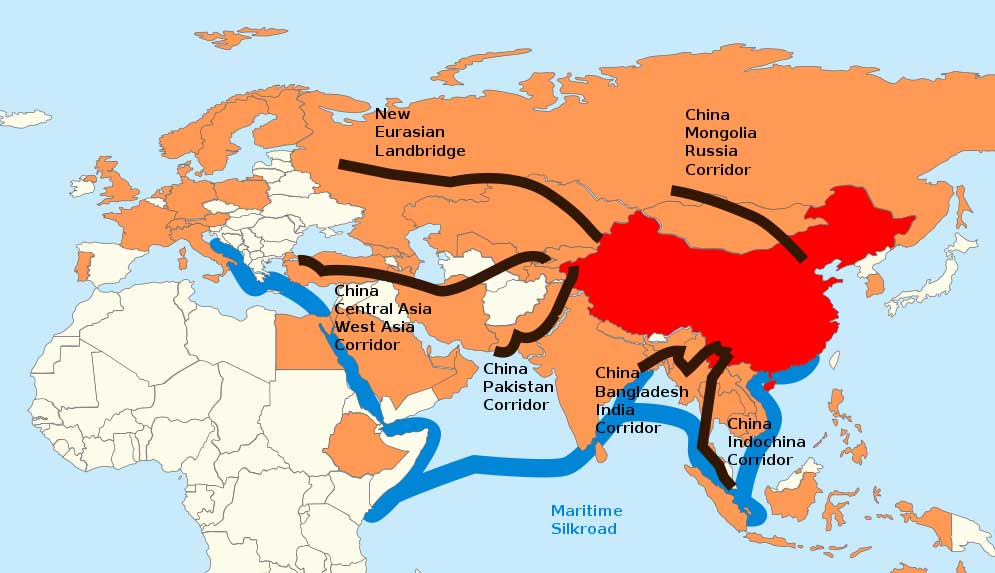
Prof Dr Hannan observed that “today the entire world is shifting towards alternative medicine – the very shift Hakim Said had envisioned nearly 50 years ago. China, India and Bangladesh are now leading this movement, with structured policies, universities and healthcare systems dedicated to their traditional systems.”
Every system of medicine, he emphasized, has its own merits and demerits. Allopathy has undoubtedly progressed remarkably in diagnostics, emergency care and surgical interventions. Unani, on the other hand, does not yet have a fully developed hospital network and modern healthcare infrastructure at par with allopathy.
However, in the management of several chronic and lifestyle-related diseases, Unani has proven more effective, with holistic and long-term outcomes. Despite this, a deliberate misconception continues to be spread regarding Unani medicine, undermining its many documented benefits.
Prof Dr Abdul Hannan pointed out the contrast in institutional support: India established formal education in Ayurveda as early as 1929, while Pakistan’s first formal degree programme in Eastern Medicine was established by Hamdard University in 1995 – a gap that reflects the need for greater policy focus and investment in this field.
From Matb to Modern Hospital: A New Hakim
Degree at Par with MBBS
Speaking about the landmark achievements of Hamdard University graduates, Prof Dr Hakim Abdul Hannan said that to improve the perception of Eastern Medicine practitioners, Hamdard has continuously upgraded its qualifications. The 5-year degree programme in Eastern Medicine is now at par with MBBS in terms of academic rigour, clinical training and professional standing.
“Our curriculum includes house job training in modern hospitals for patient treatment and management, so that graduates are not confined to theoretical knowledge but are fully equipped for real-world clinical practice,” he explained.
“We offer full scholarships to deserving students and try to accommodate as much as possible,” he stressed, reaffirming Hamdard’s commitment to accessibility and merit.
He further shared that Hamdard has built a network of franchise matabs across the country, where its qualified Hakims are appointed. These practitioners carry both academic qualification and field experience, ensuring standardized, authentic and accessible Unani healthcare to the community.
“Dawa Bhi Hai, Dua Bhi Hai, Ab Bas Sune Koyi;
Healing is an Art, Not Just an Industry”
Stressing the need for government support, Prof Dr Hakim Abdul Hannan noted that India has a completely dedicated Ministry of AYUSH – Ministry of Ayurveda, Yoga & Naturopathy, Unani, Siddha and Homoeopathy – with separate policy, budget and regulatory framework. In Pakistan, however, the Ministry of Health and the Drug Regulatory Authority of Pakistan (DRAP) remain largely influenced by the allopathic pharmaceutical industry.
Appreciating the efforts of the present Federal Minister for Health, Mr. Mustafa Kamal, he said that “the Minister is receptive to our suggestions and is focusing on the long-standing issues of the Eastern Medicine sector.”
Globally, alternative medicine is receiving strong government patronage. “We could become a great exporting industry,” he asserted. “Hamdard Laboratories has a complete Quality Control department – no other Unani manufacturer maintains this standard of quality. We have a full-fledged department for Research and Product Development. We are on the edge of constant improvement in our medicines. All our drugs are approved by DRAP.”
He cited products like Icterene, Safi, Migrix, and many others, which have proven greatly effective and are trusted by millions.
He then raised a simple question: “After spending billions in the pharmaceutical industry, why has no pharmaceutical company in Pakistan been able to produce an original, organic medicine that is made in Pakistan and acknowledged worldwide?”
“All Hamdard requires is government support to encourage this industry – a listening ear to our suggestions and recommendations,” he concluded.
In conclusion, Prof Dr Hakim Abdul Hannan reaffirmed that Hamdard University and Hamdard Laboratories remain steadfast in their mission to keep the practice of Unani medicine alive – through academic excellence, clinical training, quality manufacturing and community service. From modernizing the curriculum to establishing franchise matabs and offering scholarships to deserving students, Hamdard is building the foundation for a stronger, credible and globally competitive Eastern Medicine sector.
However, this mission cannot reach its full potential without active government support. What is needed now is a dedicated policy framework, a separate regulatory pathway for Unani and herbal medicines, and institutional recognition at par with other systems. With the right patronage, Pakistan’s Unani heritage – rooted in the vision of Shaheed Hakim Mohammed Said – can not only serve its own people but also emerge as a proud export of the country to the world.