The world’s worst uses language as consent for warfare.
Ever wonder why a picture is wort h a thousand words? It may be a common metaphor, used in everyday speech, yet have you thought about it in depth? Just out of curiosity, even though it did kill the cat. Anyway, we regress.
A picture is worth a thousand words, because words have the power to convey and influence just as much as the visual does. Each and every one of those words is open to interpretation, meaning one person perceives it differently, based on the context in which the word (or sentence) is framed. But here we are talking about a proverbial picture, mind you.
The actual picture, or let us say, a particular scenario, can also be changed by language or the choice of words used to frame it. How? In exactly the same way. One word has the power to redirect an entire narrative, remove accountability, or rewrite current events. Is it any wonder why most Western media outlets use language to weaponize their narrative to justify violence done against a people? Language, if used correctly, can become a weapon due to its emotional weight and targeted accuracy.
Should Media Outlets Be Held Accountable?
Who better to know about the power of their words than journalists and news media outlets, who are responsible for the very important work of relaying events as they happen, with indisputable facts. The discussion over terminology, especially when drafting an article that will undoubtedly influence the populace, has long been debated. The question here is: Is there a line between deception and persuasion? At what point does the line begin to blur, or is it intentionally toed to see how far they can go?
Perhaps the biggest example of this, especially in the modern world, is the ‘war’ in Gaza by Israel.
“The only Arab is a dead Arab.”
It is now a well-known fact that media (especially churned by Hollywood) has always been weaponized against people of color, especially in the context of creating stereotypes and ‘tropes’ that ridicule or dehumanize a race. In the same vein, news media (print or electronic) can also be used to spread bias and hatred against a people.
The words chosen to describe global events matter. Terminology is never neutral; it carries meanings, assumptions, and emotional weight that can influence public opinion, evoke specific images, and shape how events are understood. A single word can amplify the perceived severity of a situation, soften its impact, or obscure its reality altogether. In this way, language does not merely report events-it helps define them.
Since the latest war in Gaza began on October 7th, there has been growing attention on the language used by news organizations, commentators, and reporters in their coverage of the conflict.
The words chosen in headlines, articles, and broadcasts do more than simply describe events. They can shape how people feel about a situation, influence how they understand it, and ultimately affect the opinions they form.
Critics argue that many Western media outlets frame their headlines and opening paragraphs through a particular lens, often presenting the conflict in a particular way. According to this view, such framing can contribute to a perception that Gaza and its population are closely associated with militancy. As a result, military actions, including widespread bombardment and civilian deaths, may appear more justified or acceptable to audiences consuming that coverage.
This highlights the power of language in journalism. The way a story is told can influence not only what people know but also how they interpret and respond to what is happening.
An example is in the article published by the Wall Street Journal, which reads: “Hamas starts planning for end of war with Israel.”
Although the headline has been edited long since, the underlying message it wanted to convey is clear. The headline indirectly supports Israel’s narrative that Hamas started the war on October 7th, and Israel has the right to defend itself.
Another major issue is how the mainstream media uses the passive voice in its coverage of events. This not only dehumanizes Palestinians but also takes away their autonomy. On the other hand, news about Israeli casualties is reported in the active voice.
The intentional use of vague language when describing events is also a significant concern. In many instances, vague language has been used deliberately when describing the attacks on Gaza; however, clear and descriptive words are used to describe the Hamas-led attacks on Israel.
Many still insist on calling the Israeli attacks on Gaza a ‘war’, which suggests Israel or Gaza is equal in power. Since that is not the case, news publications the world over should not hesitate to call this for what it is – an Israeli-powered genocide.
Even Oxford English agrees. According to the dictionary, the definition of war is:
“Armed conflict between nations, states, or rulers, or between groups in the same nation or state (cf. civil war n.), typically characterized by a campaign or series of campaigns conducted over a period of time; involvement in such conflict, or the activities associated with it.”
Still hesitating to call a ‘spade a spade’?
According to an Axios report, Israel allocates more than $20bn to its annual military budget. Additionally, it can also access some of the most advanced US military hardware, while keeping tight control and surveillance of the sky and much of the sea (around its territory).
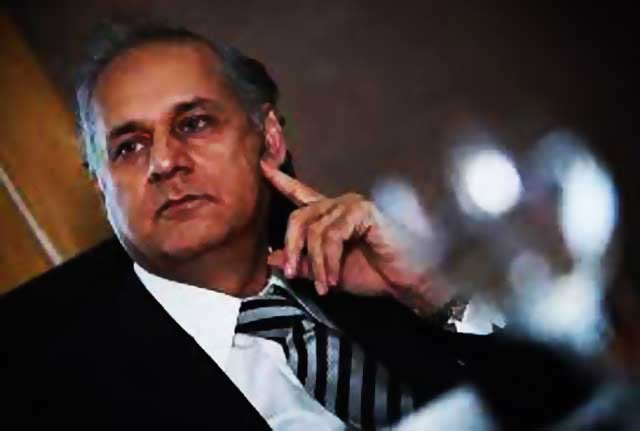
To better understand this, we sat down with a senior journalist, Mubasher Mir, Resident Editor, newspaper Daily Pakistan, who was kind enough to answer some of our questions.
How can journalists maintain fairness and accuracy when reporting on highly polarized international issues?
There should be a clear distinction between personal beliefs/opinions and factual coverage. Reporting needs to be done with discipline. Journalists need to understand that stories cannot be reported from their own viewpoint or interpretation of events.
In your opinion, what are the most important ethical responsibilities of a journalist when covering wars and international conflicts?
Oftentimes, governments, military institutions, advocacy groups and political parties dictate or influence certain narratives. It is essential that journalists report events while maintaining professional credibility and keeping verified facts in mind. Fact-checking from diverse sources is a practice that falls under ethical journalism.
The role of the journalist is neither that of a propagandist nor an activist.
Have you observed any changes in journalistic ethics over the course of your career, particularly in conflict reporting?
There have been a significant number of changes in three decades of reporting, largely due to the digital revolution. Now, the profession is more than just delivering information from the front lines of conflict. There is now an emphasis on preserving truth during a time when multiple narratives compete against each other amidst pressure and a large volume of information.
Yes, the digital revolution has helped make reporting easier; however, it has also become difficult. As already shown above, misinformation, propaganda, and content manipulation can influence public sentiments and views, sometimes days before verified facts can be reported.
Despite the challenges facing the profession, there are reasons for optimism. A new generation of journalists is entering the field with a strong commitment to ethical reporting, investigative rigor, and public accountability. Their willingness to question assumptions, challenge misinformation, and engage with complex realities reflects the enduring values that have long defined quality journalism.
As the media landscape continues to evolve, the core mission remains unchanged: to pursue facts, provide context, and serve the public interest. In an age of information abundance and growing uncertainty, that mission is Morehead important than ever.