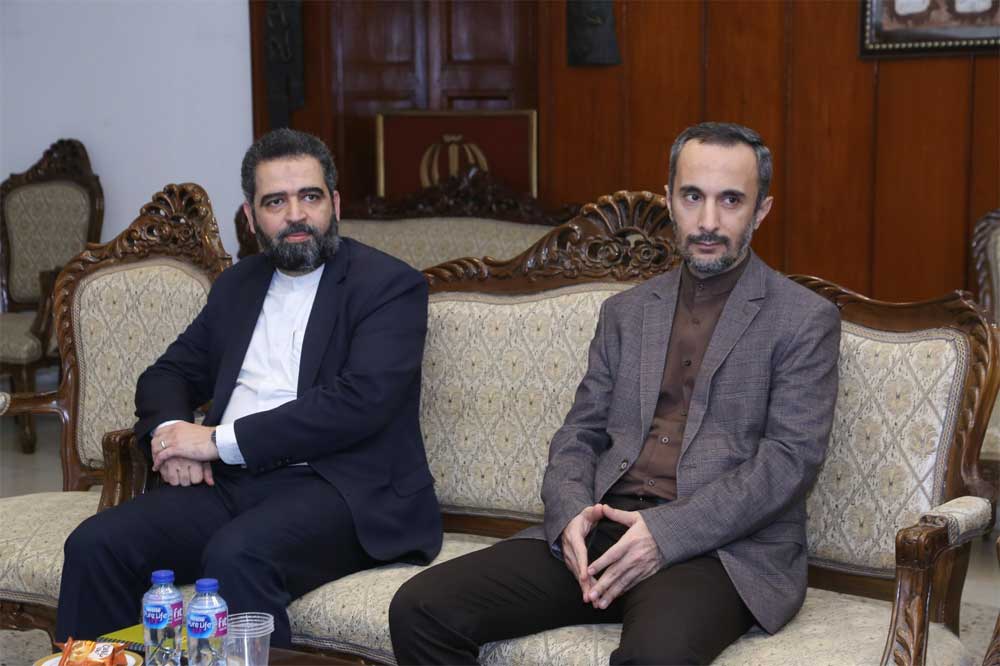
KARACHI: Iran’s newly appointed Consul General in Karachi, Akbar Essa Zadeh, has reaffirmed Iran’s commitment to strong, principled, and enduring relations with Pakistan, underscoring the importance of mutual support, regional stability, and enhanced cooperation between the two neighboring countries. He emphasized that Iran-Pakistan relations are anchored in shared history, geography, culture, and faith, and are not shaped by temporary regional developments.
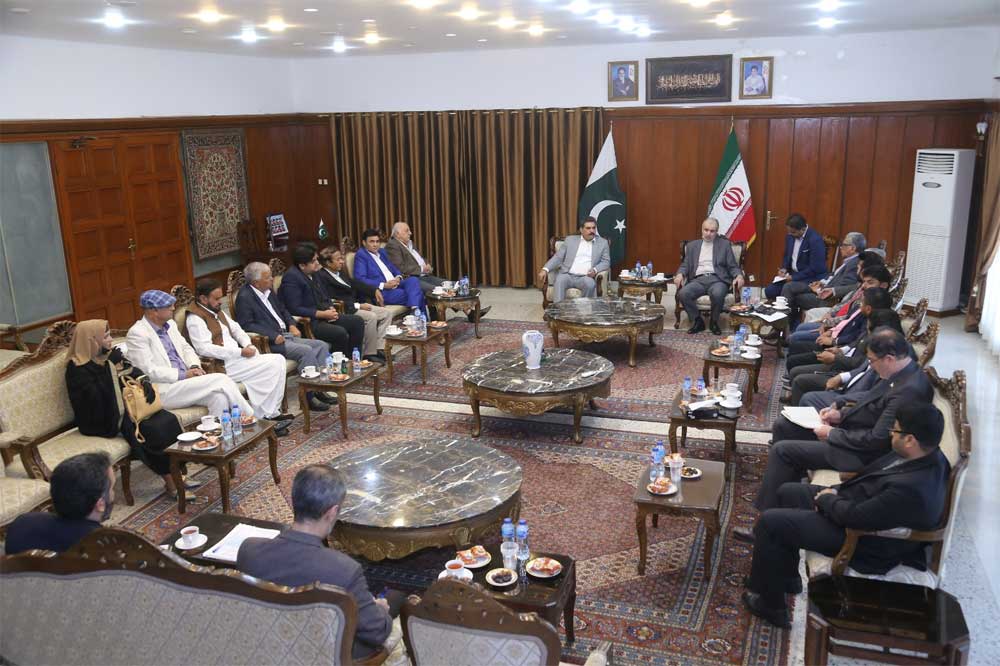
The Consul General made these remarks during an extensive interaction with a delegation of the Karachi Editors Club (KEC) at the Iranian Consulate in Karachi, highlighting the importance of sustained diplomatic engagement and people-to-people contact.
High-Level Interaction with Karachi Editors Club
The KEC delegation was led by President Mubasher Mir and included Secretary General Manzar Naqvi, Senior Vice President Mukhtar Ahmed Butt, Finance Secretary Naeemuddin, and senior journalists Mansoor Bokhari, Naeem Tahir, Humair Anwer, Javed Malik, Agha Shirazi, Iqbal Jameel, Mazhar Abbas, Z. H. Khurram, Ahmed Khan Malik, Tazmeen Javed, Sabir Ali, Ms. Noori, Nadeem Hashmi, Syed Mustjab Zaidi, and others.
The meeting focused on bilateral relations, regional developments, media cooperation, economic prospects, and diplomatic priorities, reflecting a shared commitment to constructive dialogue.
Mutual Support During Regional Challenges
Recalling recent regional tensions, the Iranian Consul General noted that Iran had openly and unequivocally supported Pakistan during difficult periods, particularly during heightened tensions involving India. He conveyed Iran’s deep appreciation for Pakistan’s expressions of solidarity and cooperation during Iran’s own recent challenges.
“Pakistan’s assurance of support during difficult moments has been deeply valued by the Iranian leadership and people,” he said, adding that Iran remains equally committed to standing with Pakistan whenever circumstances require mutual understanding and cooperation.
Dialogue Over Confrontation in Regional Affairs
Emphasizing a diplomatic approach to regional challenges, Akbar Essa Zadeh stressed that developments in the region must be viewed through dialogue and diplomacy rather than confrontation. He observed that selective reporting, misinformation, and external propaganda have increasingly complicated regional perceptions and public understanding.
He warned against the growing misuse of international media platforms to project distorted narratives and called for responsible journalism rooted in facts and context.
Strengthening Media Cooperation to Counter Disinformation
In this regard, the Consul General underlined the need for institutional collaboration between Pakistani and Iranian media organizations. He said enhanced engagement between journalists, editors, and media institutions of both countries could help ensure accurate, balanced, and responsible reporting.
“Closer cooperation between our media communities can counter misinformation, reduce misunderstanding, and strengthen people-to-people relations,” he noted, describing media as a bridge between societies rather than a tool of division.
Iran’s Internal Situation and Social Stability
Providing an overview of Iran’s internal situation, the Consul General explained that recent pressures stem largely from economic constraints and long-standing international sanctions. Despite these challenges, he said, social cohesion has remained intact and public institutions continue to function within constitutional and legal frameworks.
He pointed out that broad segments of Iranian society continue to support the country’s political system, a reality that, according to him, has not always been adequately reflected in international media coverage.
Call for Regional and Islamic Cooperation
Reiterating Iran’s broader regional vision, Akbar Essa Zadeh emphasized that regional challenges require collective solutions, particularly through cooperation among Muslim and neighboring countries.
“The long-term stability of the region depends on political maturity, economic collaboration, and respect for sovereignty,” he said, adding that closer alignment among Islamic countries in education, trade, culture, and diplomacy could significantly reduce external pressures and foster regional resilience.
Pakistan’s Central Place in Iran’s Foreign Policy
Speaking on Iran’s diplomatic priorities, the Consul General said that strengthening relations with neighboring countries remains central to Iran’s foreign policy framework. Pakistan, he noted, occupies a particularly important position due to its strategic significance, shared border, and longstanding brotherly ties.
He emphasized that Iran seeks to deepen cooperation with Pakistan across diplomatic, economic, academic, and cultural domains.
Media Regulation and Freedom of Expression
Responding to questions on media regulation and freedom of expression, the Consul General clarified that any temporary controls imposed during sensitive periods were intended solely to prevent the spread of misinformation and safeguard national stability.
He assured the delegation that Iranian media institutions operate independently within legal boundaries, and that restrictions are lifted once circumstances normalize. Measures taken, he said, are guided by national security considerations rather than suppression of legitimate expression.
Economic Outlook and Future Prospects
Addressing economic prospects, Akbar Essa Zadeh expressed optimism about Iran’s outlook, stating that 2026 is expected to bring tangible economic and financial improvements, with positive implications for ordinary citizens.
He highlighted Iran’s interest in strengthening trade ties, implementing taxation reforms, and enhancing economic coordination with regional partners, including Pakistan, to promote shared growth and stability.
Strategic Issues and Peaceful Nuclear Program
On strategic matters, the Consul General reiterated that Iran’s nuclear program is peaceful, transparent, and civilian in nature, focused on medical, industrial, and energy needs. He emphasized that Iran continues to cooperate with international monitoring mechanisms in line with its commitments.
Principled Stance on Regional Humanitarian Issues
The Consul General also reaffirmed Iran’s principled position on regional humanitarian issues, particularly Palestine, calling for international responsibility, humanitarian protection, and long-term political solutions to ongoing crises.
Karachi Editors Club’s Role and Perspective
From the Pakistani side, KEC President Mubasher Mir briefed the Consul General on the Karachi Editors Club’s evolution over the past decade as a media think tank. He highlighted the club’s engagement with government institutions, universities, and diplomatic missions to promote informed debate on national and regional issues.
He acknowledged the historical depth of Pakistan-Iran relations and noted that both countries, despite facing distinct regional pressures, have consistently demonstrated mutual support. He stressed the importance of deeper media cooperation to improve transparency and counter disinformation.
Appreciation for Diplomatic Engagement
KEC Secretary General Manzar Naqvi thanked the Iranian Consulate for its openness and constructive engagement with the media. He observed that informed dialogue plays a vital role in shaping responsible narratives and expressed hope that such interactions would continue regularly.
Strategic Agreements and Diplomatic Prudence
In response to a question regarding the possibility of future defense or strategic agreements between Pakistan and Iran, the Consul General stated that such matters fall within the purview of relevant state authorities and policy institutions. He reaffirmed Iran’s preference for diplomacy, dialogue, and regional stability as guiding principles.
Untapped Potential in Bilateral Relations
The meeting concluded with a shared understanding that Pakistan-Iran relations possess significant untapped potential. Both sides agreed that sustained diplomatic engagement, supported by responsible media collaboration and people-to-people exchanges, can play a meaningful role in promoting peace, development, and long-term stability in the region.