Aslam Shah
KARACHI: An investigation has revealed that buildings constructed under the World Bank-funded Karachi Water and Sewerage Services Improvement Project (KWSSIP) have become some of the most expensive public-sector structures ever built in the city, raising serious questions about governance, procurement practices, and misuse of international development funds.
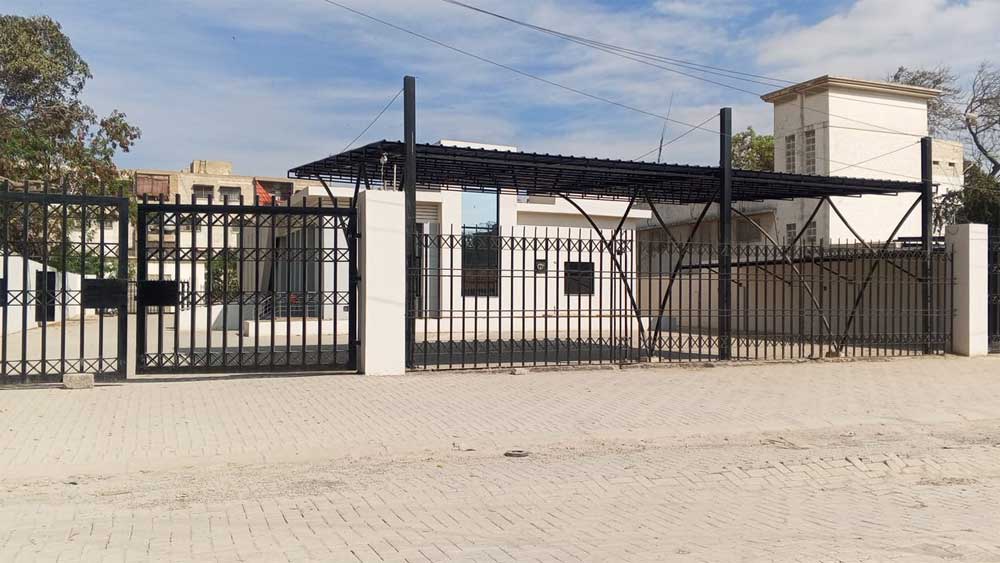
According to official and internal briefings, a single Consumer Service Centre constructed at the Water Corporation’s Karsaz headquarters has reportedly cost Rs1.2 billion, while similar centres at Sakhi Hassan (Rs41 crore), Haroonabad (Rs40 crore), and another facility at Haroonabad (also Rs40 crore) have been developed at extraordinarily high costs. Cumulatively, expenditures on just four centres have reportedly crossed Rs2.5 billion, with some officials privately placing the figure closer to Rs5 billion.
Construction Costs Far Exceed Market Reality
Sources within the construction industry challenge KWSSIP’s claimed per-square-foot costs. While project officials have cited figures as high as Rs60,000 per square foot, industry experts state that even luxury, high-end finishes in elite areas such as DHA do not exceed Rs10,000-12,000 per square foot. Standard commercial construction in Karachi typically ranges between Rs3,400 and Rs4,000 per square foot.
Adding to concerns, the land for all these buildings was provided free of cost by the Karachi Water and Sewerage Corporation (KWSC), making the final construction costs even harder to justify.
Non-Technical Oversight and Questionable Appointments
Instead of being supervised by qualified technical officers such as Chief Engineers or Superintending Engineers, the project’s construction phase was overseen by a non-technical Project Director, Usman Muazzam, a move that has alarmed engineering professionals.
Usman Muazzam remained Project Director for most of the project before being recently replaced by a Grade-20 officer, Ayesha Hameed, who, according to multiple sources, is allegedly related to him-raising further concerns about conflict of interest and governance failures.
The project consultant is NESPAK, while Hawthorn Builders is reportedly the primary contractor.
Procurement at the Centre of the Alleged Scam
Multiple sources allege that the Director Procurement of KWSSIP is the mastermind behind these irregularities, playing a central role in inflated tenders, opaque contractor selection, and cost escalations. Insiders insist that the procurement wing must be formally interrogated by relevant accountability agencies, and particularly by the Managing Director and Chief Restructuring Executive (CRE) of KWSC, to prevent further embezzlement of World Bank funds.
NAB Intervention Sought
The controversy has now reached accountability forums. Sindh Assembly member Adil Askari, backed by the MQM, has formally written to the Chairman of the National Accountability Bureau (NAB), urging immediate intervention and a comprehensive investigation into KWSSIP expenditures.
Sources warn that “horrible disclosures” are expected once formal inquiries begin.
Political Interest Grows Amid Financial Chaos
As revelations mount, political actors have reportedly begun eyeing KWSSIP, viewing it as a high-value project already mired in financial mismanagement. Analysts warn that continued wasteful spending will further burden the public, who will ultimately repay the World Bank loan through taxes over the next 40 years.
Billions Spent, Little to Show
KWSSIP was launched with a World Bank loan of Rs342 billion (approximately $1.4 billion) to improve Karachi’s water supply, sewerage systems, institutional reforms, infrastructure investment, and service delivery. However, despite claims that nearly Rs200 billion (around 50%) of the loan has already been spent, there has been no visible improvement in:
Water supply reliability
Sewerage and drainage systems
Flood mitigation during monsoons
Upgrading of informal settlements (katchi abadis)
Institutional reforms within KWSC
Even critical components such as surveys of non-tax-paying areas, informal settlements, and goth abadis remain incomplete.
Lavish Spending and Restricted Oversight
Sources further allege that senior KWSSIP officials have used project funds for frequent foreign trips, luxury purchases, expensive vehicles, offices, and residences. Delegations have reportedly traveled repeatedly to Germany, China, the UK, and the US, ostensibly for procurement of heavy machinery, though outcomes remain unclear.
Meanwhile, media personnel and independent observers raising questions about the project have allegedly been barred from entering KWSSIP offices, deepening concerns over transparency.
A Debt Without Development
Karachi’s 35 million residents have effectively been turned into debtors for a massive World Bank loan, yet remain deprived of basic water and sanitation services. Observers warn that unless accountability is enforced swiftly, KWSSIP risks becoming a textbook case of how international development financing can be squandered through weak oversight, politicised appointments, and compromised procurement systems.