
The address delivered by Chinese Consul General Yang Yundong at the 2026 Chinese New Year Media Reception in Karachi was far more than a festive New Year message. It was a carefully articulated statement of confidence, continuity, and strategic clarity at a time when global uncertainty has become the defining feature of international relations. Framed through the symbolism of the Year of the Horse-representing vitality, courage, and forward momentum-the speech offered a broad yet coherent narrative of where China stands today, how it views its relationship with Pakistan, and what role key stakeholders, particularly the media, are expected to play in the journey ahead.
One of the most notable elements of the address was its explicit recognition of the media as an active stakeholder in bilateral relations. By describing journalists as a “mirror” of China-Pakistan relations and a bridge of mutual understanding between the two peoples, the Consul General acknowledged the evolving nature of diplomacy in the modern age. In an era defined by narratives, perceptions, and information flows, the media is no longer a passive chronicler of events. It shapes public discourse, influences policy debates, and either strengthens or weakens the foundations of international partnerships. This acknowledgment carries both appreciation and responsibility: appreciation for the role Pakistani media has played in projecting positive stories of cooperation, and responsibility to continue doing so with accuracy, balance, and strategic awareness.
The speech also placed China-Pakistan relations within a wider geopolitical and economic context. The Consul General’s reflections on China’s economic performance during 2025-the final year of its 14th Five-Year Plan-were particularly instructive. Despite facing a global economic slowdown, rising unilateralism, and disruptions to international trade, China managed to sustain stable growth while advancing reforms, innovation, and green transition. This was not presented as a triumphalist claim, but as evidence of institutional resilience, long-term planning, and governance continuity. For Pakistan, which continues to grapple with economic volatility, this model of strategic planning and policy consistency offers important lessons.
Equally important was the forward-looking emphasis on China’s 15th Five-Year Plan, which begins in 2026. The priorities outlined-innovation-driven growth, artificial intelligence, green and low-carbon transition, and high-quality Belt and Road cooperation-signal an evolution in China’s engagement with the world. The focus is shifting from sheer scale to quality, from traditional infrastructure to technology, sustainability, and governance. For Pakistan, this shift presents both opportunity and challenge. While it opens doors to collaboration in advanced sectors such as AI, agriculture technology, and renewable energy, it also demands domestic preparedness, institutional reform, and skilled human capital to fully benefit from these opportunities.
The speech’s reference to the “AI Plus” initiative and improved AI governance is particularly relevant in today’s rapidly transforming global economy. As artificial intelligence reshapes industries, labor markets, and state capacity, cooperation in this domain could redefine the contours of China-Pakistan engagement. However, such cooperation will require more than agreements and memoranda; it will require serious investment in education, research, and regulatory frameworks within Pakistan to ensure that technological collaboration translates into inclusive and sustainable development.
Another key theme of the address was people-to-people connectivity, especially through media exchange programs. The Consul General’s emphasis on journalist visits to China highlights the belief that firsthand experience is irreplaceable in building genuine understanding. Seeing development on the ground, interacting with local communities, and engaging with institutions allows journalists to move beyond stereotypes and abstract narratives. In a world increasingly prone to misinformation and selective storytelling, such exchanges serve as an antidote to superficial analysis and help ground reporting in lived reality.
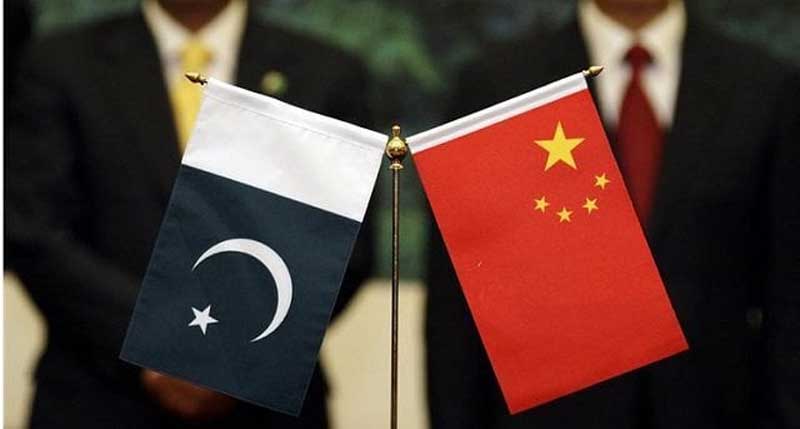
The year 2026 holds exceptional symbolic and strategic importance for bilateral relations as it marks the 75th anniversary of the establishment of diplomatic ties between China and Pakistan. The Consul General rightly framed this milestone not as a ceremonial checkpoint but as an opportunity for reflection and renewal. Enduring partnerships cannot rely solely on historical goodwill; they must continuously adapt to changing circumstances. The call to imbue the China-Pakistan All-Weather Strategic Cooperative Partnership with greater contemporary relevance, deeper social foundations, and broader development prospects is therefore both timely and necessary.
High-level diplomatic engagements, including recent strategic dialogues, reinforce the perception that political trust between Beijing and Islamabad remains strong. Yet, as the speech subtly implied, the future strength of the relationship will increasingly depend on how deeply it is rooted within societies themselves. Economic corridors, strategic projects, and diplomatic statements gain real meaning only when they translate into improved livelihoods, shared knowledge, and mutual respect among ordinary citizens.
Perhaps the most striking aspect of the speech was its tone of certainty in an uncertain world. While acknowledging global disorder and external challenges, China projected confidence in its development path and governance model. This certainty, coupled with an expressed willingness to share development opportunities and innovation dividends, positions China as a stabilizing force in a fragmented international system. For Pakistan, which faces both internal challenges and external pressures, such stability in a key partnership carries undeniable strategic value.
The metaphor of the galloping horse, used to conclude the address, was therefore more than poetic symbolism. It conveyed motion, strength, and direction-but also implied the need for guidance and coordination. Momentum without strategy can lead to exhaustion or misdirection. As China and Pakistan enter this milestone year, the task ahead is to channel this momentum into outcomes that are inclusive, forward-looking, and resilient.
In this context, the role of the media becomes even more critical. As the “first rough draft of history,” journalism will help shape how this phase of China-Pakistan relations is remembered and understood. Balanced reporting, informed analysis, and constructive critique will be essential in ensuring that the partnership continues to evolve in a manner that genuinely benefits both nations and contributes to regional stability. The Year of the Horse thus offers not only celebration, but an invitation-to move faster, think deeper, and work together toward a shared and sustainable future.
China-Pakistan ties in the Year of the Horse
Previous article

Next article