Part VII: PIA’s new flight: Rebuilding a national icon

The experiences of British Airways, Japan Airlines, Turkish Airlines and Singapore Airlines demonstrate that successful airline transformation is never accidental. It results from deliberate strategy, disciplined execution and an unwavering commitment to excellence.
Yet the global aviation industry offers additional examples that deserve careful attention.
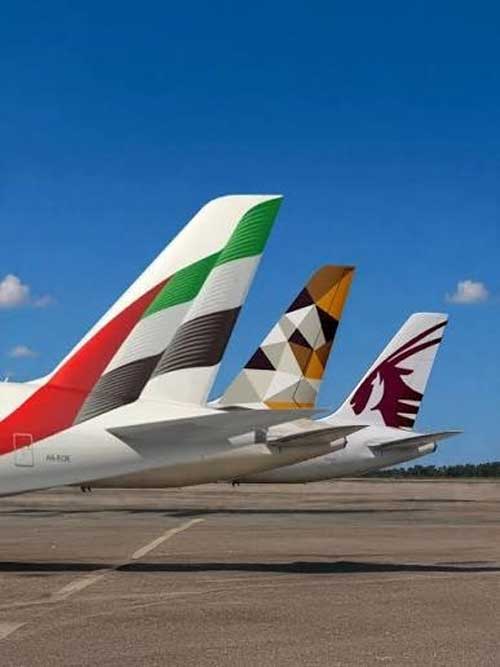
Among them are Emirates and Qatar Airways-two airlines that, within a relatively short period, transformed themselves into internationally admired brands. Their journeys illustrate how visionary leadership, strategic geography and customer-focused innovation can redefine an airline’s position in the global marketplace.
Although Pakistan’s economic circumstances differ significantly from those of the Gulf States, many of the management principles behind their success remain highly relevant.
Emirates: Building a Global Brand
When Emirates began operations in 1985, few could have imagined that it would become one of the world’s most recognizable airlines.Its remarkable growth was not based solely on financial resources. Instead, the airline pursued a clear and consistent long-term strategy.It invested continuously in modern aircraft.It built one of the youngest and most fuel-efficient fleets in commercial aviation. It focused relentlessly on customer experience. It embraced technology before many competitors.
Most importantly, Emirates developed a globally recognized brand associated with reliability, innovation and premium service. Rather than competing on price alone, it competed through value.
Passengers came to trust the airline because the quality of service remained consistently high regardless of destination.
The Lesson for PIA
Every successful airline eventually becomes more than a transportation company. It becomes a brand. PIA once enjoyed exactly that status. Its green-and-gold livery represented Pakistan across the world. Its cabin crew symbolized hospitality. Its engineers were internationally respected.Its pilots trained aviation professionals from other countries.
Rebuilding this brand identity should become one of the highest priorities of the new management.
Qatar Airways: Excellence through Consistency
Qatar Airways offers another valuable lesson.
Operating from a relatively small domestic market, the airline successfully positioned itself as a leading global carrier through disciplined expansion and uncompromising service standards.
Its success was built on consistency. Passengers knew what to expect. Modern aircraft. Professional crews. Excellent in-flight service. Reliable schedules.Strong digital platforms.Continuous investment in staff training.
The airline also demonstrated the importance of responding quickly to changing market conditions. Instead of resisting innovation, it embraced it.
Whether introducing new aircraft technologies, expanding destination networks or improving digital customer services, Qatar Airways consistently sought to remain ahead of industry trends.
The Lesson for PIA
Consistency builds credibility. Passengers may forgive occasional delays. They rarely forgive uncertainty. A predictable, reliable airline gradually earns customer loyalty.
For PIA, rebuilding confidence will depend upon delivering the same high standard of service every day-not occasionally.
A Shared Formula for Success
Although these airlines operate in different regions and under different ownership structures, they share several fundamental characteristics.
First, they invested heavily in professional management. Second, they insulated commercial decisions from unnecessary external influence. Third, they recognized that employees represent their greatest competitive advantage. Fourth, they modernized their fleets while simultaneously investing in digital technology and customer experience.
Finally, they pursued growth through careful planning rather than rapid expansion alone. None attempted to become global leaders overnight. Each built success gradually through consistent execution.
Can Pakistan Apply These Lessons?
The answer is yes-but with realistic expectations.
Pakistan does not need to replicate Emirates or Singapore Airlines exactly. Every airline develops within its own economic, geographic and regulatory environment.
Instead, Pakistan should adapt the principles that made these airlines successful.
Professional governance. Commercial independence. Operational discipline. Investment in people. Customer-focused service. Technology-driven management. Long-term planning.These principles are universal.
Pakistan already possesses several important advantages. Its strategic location connects South Asia, Central Asia, the Middle East and Western China. It has a large overseas Pakistani community generating substantial travel demand. Domestic tourism continues to grow.
The country’s export sector offers significant opportunities for air cargo.Most importantly, PIA already enjoys international brand recognition built over seven decades.Unlike a new airline beginning from scratch, PIA inherits history, identity and emotional goodwill.
The challenge is to transform these intangible assets into commercial strength.
Ten Strategic Lessons for PIA
The experiences of the world’s leading airlines suggest ten priorities that should guide PIA’s transformation.
1. Governance before growth.
Strong institutions begin with transparent governance and accountable leadership.
2. Leadership before investment.
Capital alone cannot transform an organization without capable management.
3. Customers before competition.
Passenger satisfaction should remain the airline’s foremost priority.
4. Merit before influence.
Professionalism must become the foundation of recruitment, promotion and decision-making.
5. Fleet modernization with financial discipline.
Aircraft acquisitions should support long-term sustainability rather than short-term expansion.
6. Digital transformation as a strategic priority.
Modern airlines compete through technology as much as through aircraft.
7. Cargo as a growth engine.
Pakistan’s export economy provides enormous opportunities beyond passenger traffic.
8. Continuous investment in human capital.
Training and professional development must become permanent institutional priorities.
9. Build the PIA brand again.
An airline’s reputation is one of its most valuable assets.
10. Think beyond quarterly results.
Successful airline transformation requires patience, consistency and a long-term vision.
A Flight toward Renewal
History demonstrates that airlines can recover. Some have emerged stronger than ever after periods of crisis. The difference has never been geography alone, nor has capital alone. The difference been leadership. Pakistan’s national airline now stands at a similar crossroads.
Its new owners have inherited an institution rich in history but burdened by decades of accumulated challenges.Yet they also inherit extraordinary opportunities.
If they combine professional governance with strategic vision, restore operational excellence and place passengers once again at the center of every decision, there is every reason to believe that PIA can reclaim its position as one of the region’s respected airlines.
The journey will demand patience. It will require discipline. It will require courage. But history suggests that such journeys are possible. For Pakistan, there could be no better destination.
Looking Ahead
In Part VIII of this special series, “PIA Vision 2035: Building a World-Class Airline for a New Pakistan,” we will present a forward-looking roadmap for the national carrier. The article will outline how fleet modernization, digital transformation, cargo expansion, artificial intelligence, sustainability, customer experience, strategic alliances and human capital development can shape a modern PIA capable of competing confidently in the global aviation industry over the next decade.