


Aslam Shah
KARACHI,: Pakistan’s commercial capital has evolved into what urban governance experts describe as one of the world’s most fragmented metropolitan administrations, with more than 21 agencies delivering municipal services, 23 authorities exercising land control, and three separate development authorities operating simultaneously, often with overlapping mandates and little institutional coordination.
The complex administrative structure has renewed calls from urban planners, civil society and governance specialists for a single-command metropolitan system and meaningful devolution of powers to the local government level.
With an estimated population exceeding 35 million, Karachi remains mired in an institutional turf war where responsibility for even the most routine civic functions is divided among numerous federal, provincial, military and local government bodies.
Whether responding to heavy rainfall, urban flooding, emergency relief, drainage maintenance, solid waste management or rehabilitation works, multiple institutions frequently operate in parallel, with critics arguing that the absence of a unified command has contributed to chronic administrative paralysis.
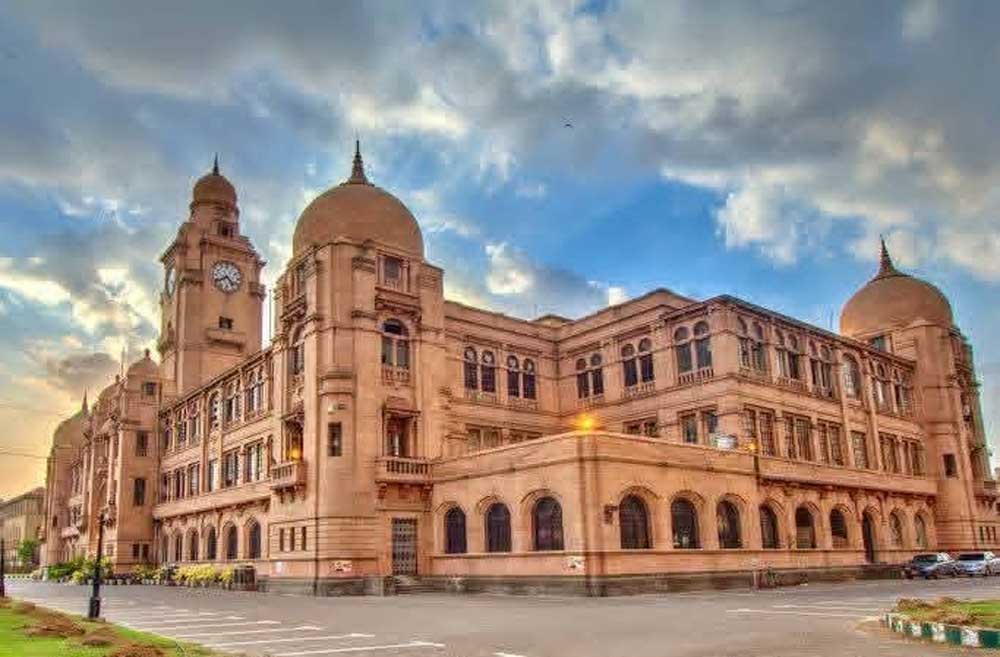
Besides the Karachi Metropolitan Corporation (KMC), the city is simultaneously administered by the Karachi Water and Sewerage Corporation (KWSC), the Commissioner Karachi, seven deputy commissioners, dozens of additional commissioners, the Sindh Disaster Management Authority, the Board of Revenue, Katchi Abadi authorities, Goth Abad schemes, police, cantonment boards and several federal agencies.
Although Mayor Murtaza Wahab exercises authority over only about 32 per cent of Karachi’s land, the office of the mayor historically served as the city’s principal administrative authority before successive legal and institutional changes gradually transferred powers to numerous provincial and federal entities.
Shrinking Municipal Authority
Critics argue that rather than strengthening metropolitan governance, successive governments have progressively weakened local institutions.
Following the enactment of the Sindh Local Government Act, 2013, and subsequent amendments in 2021, significant administrative, financial and planning powers were shifted away from KMC, leaving the city’s oldest civic institution with limited operational autonomy.
Established nearly 148 years ago, KMC now faces increasing restrictions over financial management, land administration and revenue generation, with several of its traditional functions reportedly transferred to provincial departments.
Officials familiar with municipal affairs claim that even KMC’s anti-encroachment operations have suffered setbacks after town administrations allegedly assumed control over portions of major roads previously managed by the metropolitan corporation.
Questions Over Service Delivery
Despite provincial agencies collectively controlling annual budgets running into tens of billions of rupees, critics maintain that Karachi’s basic civic indicators continue to deteriorate.
Among the concerns repeatedly raised are delayed payments to retired municipal employees, inadequate maintenance of hundreds of storm-water drains, recurring urban flooding and poor coordination among service providers.
Officials associated with KMC’s anti-encroachment operations allege that control over 22 major roads has shifted to town administrations, further complicating municipal management.
Master Plan Largely Unimplemented
Urban planners also point to Karachi’s long history of abandoned master plans.
The city’s first comprehensive master plan, prepared in 1974, reportedly failed to secure the financial backing required for implementation. A second master plan, prepared in 2009 during the tenure of former city nazim Mustafa Kamal, projected Karachi’s development needs until 2050, including proposals for new transport hubs, relocation of wholesale markets and major infrastructure upgrades.
However, critics say that none of the flagship proposals has been implemented over the past 17 years, leaving many strategic projects on paper.
Concerns have also been expressed over the gradual weakening of the city’s Master Plan Department, with planning responsibilities increasingly shifted to provincial agencies. Urban experts warn that weakening professional planning institutions could accelerate unregulated development and illegal occupation of valuable public land.
Land Administration Under Scrutiny
Questions have also been raised over land management across Karachi, where multiple agencies exercise jurisdiction over different areas.
Apart from KMC, land ownership and regulatory authority are divided among the Karachi Development Authority (KDA), Malir Development Authority (MDA), Lyari Development Authority (LDA), Defence Housing Authority, Pakistan Railways, Karachi Port Trust, Port Qasim Authority, cantonment boards, cooperative housing societies, industrial estates, the Board of Revenue and several other federal and provincial institutions.
Critics argue that this fragmented structure has complicated planning, delayed infrastructure projects and weakened accountability.
Allegations have also surfaced regarding financial transactions involving municipal land, including claims that compensation received from K-Electric over land matters has yet to reach KMC’s accounts, prompting demands for an independent inquiry.
Incomplete Drainage Projects
Questions have likewise been raised over major drainage rehabilitation schemes involving Gujjar Nullah, Mahmoodabad Nullah, Manzoor Colony Nullah and Orangi Nullah.
According to critics, while large-scale relocation and infrastructure works were initiated, several complementary components-including roads, footpaths, bridges, street lighting and green belts-remain incomplete.
Observers note that despite repeated public concern over flooding and urban resilience, neither federal nor provincial authorities have publicly addressed delays in completing these projects.
A City Governed by Dozens of Authorities
Karachi’s administrative landscape extends well beyond municipal institutions.
Federal and military establishments-including six cantonment boards, Defence Housing Authority, Pakistan Air Force, Pakistan Navy, Civil Aviation Authority, Pakistan Railways, Karachi Port Trust, Port Qasim Authority, Pakistan Steel Mills and the Export Processing Zone Authority-exercise varying degrees of administrative control over substantial portions of the metropolitan area.
Urban governance experts argue that while such institutional diversity reflects Karachi’s strategic importance, it has also created overlapping jurisdictions that complicate planning, infrastructure development and service delivery.
As demands for metropolitan reforms gain momentum, planners increasingly argue that Karachi requires a unified metropolitan command structure, clearer institutional responsibilities and stronger coordination among agencies if Pakistan’s largest city is to overcome decades of fragmented governance and mounting civic challenges.


, the city is simultaneously administered by the (KWSC))