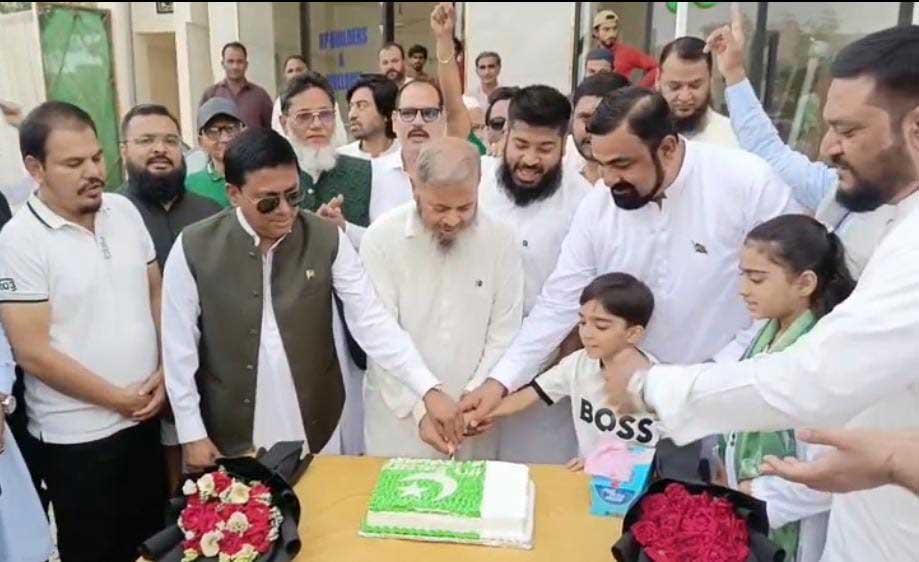
August is a month of profound significance for both Pakistan and Indonesia. For Pakistan, August 14 marks the birth of an independent nation. Just three days later, on August 17, Indonesia celebrates its Independence Day. At first glance, the dates may appear to be nothing more than a coincidence on the calendar. Yet, for those who understand the history and warmth of Pakistan-Indonesia relations, the three-day interval carries a deeper symbolism.
On August 14, the green and white flag of Pakistan rises with pride across the country. Three days later, the red and white flag of Indonesia is raised with equal pride. Two flags, two sovereign nations and two distinct histories yet a shared spirit of independence, dignity, resilience and national pride.
Perhaps there is something deeply poetic about this sequence.
Pakistan celebrates its independence on August 14, while Indonesia celebrates its independence on August 17. Both nations emerged from the experience of colonial rule and built their national identities around the principles of sovereignty, self-determination and freedom. Their historical journeys were different, but the aspirations that shaped those journeys were remarkably similar.
Pakistan came into being on August 14, 1947, while Indonesia proclaimed its independence on August 17, 1945. Indonesia’s proclamation by Sukarno and Mohammad Hatta marked the beginning of a historic struggle to establish a fully sovereign state. Pakistan and Indonesia subsequently established diplomatic relations in 1950, beginning a relationship that has now continued for more than seven decades.
In 2025, the two countries marked the 75th anniversary of their diplomatic relations. The anniversary was not merely an occasion to look back at the past; it was also an opportunity to consider how an old friendship could be transformed into a stronger and more dynamic partnership for the future.
The relationship between Pakistan and Indonesia has always had dimensions that go beyond formal diplomacy. Shared religious and cultural values, a common experience of colonialism, mutual respect for national sovereignty and close people-to-people contacts have given the relationship a distinctive warmth.
This is perhaps why Indonesia does not feel entirely distant to Pakistanis, despite the considerable geographical distance separating the two countries.
And Karachi provides a particularly interesting setting for this friendship.
A major commercial centre and a city historically connected to the wider Indian Ocean region, Karachi has long been a meeting point of cultures, communities and civilizations. The Indonesian Consulate General in Karachi therefore has an important role to play, not only in providing consular services but also in bringing the two countries closer through trade, culture, education and people-to-people contacts.
Every year, the Indonesian Consulate General in Karachi hosts a flag-hoisting ceremony on August 17. For the Indonesian community living in Karachi, the occasion is naturally filled with emotion. Being away from one’s homeland, seeing one’s national flag rise and hearing the national anthem can evoke memories of home, family, childhood and a distant homeland.
But there is something particularly beautiful about celebrating Indonesia’s Independence Day on Pakistani soil.
Pakistani friends and members of the diplomatic and business communities join the Indonesian community in sharing the joy. The occasion therefore becomes more than a national celebration; it becomes a celebration of Pakistan-Indonesia friendship itself.
This year’s ceremony on August 17 carries the same significance.
The preparations and efforts surrounding the event also highlight the broader diplomatic work being undertaken by the Consul General of Indonesia in Karachi, Mudzakir, M.A.
The work of Consul General Mudzakir reflects an understanding that modern diplomacy cannot remain confined to government offices, diplomatic notes and official meetings. Diplomacy today must also engage businesses, universities, young people, cultural institutions and civil society.
One of the visible areas of his diplomatic engagement has been economic diplomacy.
Pakistan and Indonesia have considerable potential to expand bilateral trade and investment. Business-to-business contacts, trade delegations, product promotion and direct interaction between Pakistani and Indonesian companies can help translate political goodwill into tangible economic opportunities.
Recent initiatives facilitated by the Indonesian Consulate General in Karachi, including business meetings involving Indonesian exporters and Pakistani importers, demonstrate the potential of such engagement. These efforts have brought Indonesian products and business opportunities closer to the Pakistani market while creating avenues for Pakistani businesses to explore Indonesia and the wider Southeast Asian market.
There are many sectors in which the two countries can cooperate more closely.
Palm oil, agricultural products, spices, textiles, food products, halal industries, information technology, education, tourism and small and medium-sized enterprises all offer opportunities for deeper engagement.
The halal economy, in particular, could become an important area of cooperation. Both Pakistan and Indonesia have large Muslim populations and possess significant potential in the global halal market. Cooperation in halal certification, food production, pharmaceuticals, cosmetics, Islamic finance and related industries could open new doors for businesses in both countries.
But economic diplomacy is only one dimension of a much larger relationship.
People-to-people contact remains perhaps the most powerful foundation of any enduring friendship between nations.
This is why initiatives involving young people, educational exchanges and cultural interaction are so important. The young generation of Pakistan and Indonesia will ultimately inherit the relationship built by previous generations. If students, researchers, entrepreneurs, artists and young professionals from the two countries have opportunities to meet, learn from one another and work together, the relationship will acquire a much stronger social foundation.
The efforts of Consul General Mudzakir in promoting such connections are therefore significant. His engagement with Pakistani institutions and business circles, alongside efforts to strengthen cultural and youth exchanges, represents a broader approach to diplomacy – one that seeks to connect societies rather than merely governments.
This is the diplomacy of the future.
For a relationship to remain strong over decades, it must be sustained by ordinary people as much as by official institutions.
Pakistan and Indonesia have a strong foundation in this regard.
Both are important Muslim-majority nations. Both have experienced the struggle against colonialism. Both attach great importance to national sovereignty and independence. Both have played active roles in regional and international affairs, and both have opportunities to cooperate more closely in an increasingly interconnected world.
Yet the relationship should not be viewed only through the lens of religion or history.
There are also striking similarities in social values. Family remains central to both societies. Hospitality is deeply valued. Religious and cultural traditions play an important role in everyday life. And there is a strong sense of pride in national identity.
These similarities create an emotional bridge between the two peoples.
The economic dimension of the relationship, meanwhile, is becoming increasingly important. Despite significant growth in bilateral trade over the years, both sides recognize that the existing level of trade does not reflect the full potential of their economies.
Karachi can play a particularly important role in unlocking this potential.
As Pakistan’s largest commercial centre and a major port city, Karachi can serve as a gateway for Indonesian businesses seeking access to Pakistan’s market, just as Pakistani businesses can use Indonesia as a gateway to Southeast Asia.
The Indonesian Consulate General in Karachi can become an even more important bridge in this process by facilitating business contacts, encouraging investment, supporting trade promotion and creating platforms where entrepreneurs from both countries can meet directly.
This is where the diplomatic efforts of Consul General Mudzakir acquire particular relevance.
Diplomacy is ultimately about building bridges.
And bridges are built not only through political agreements but also through trust, communication and repeated human interaction.
The August calendar provides perhaps the most beautiful reminder of this shared journey.
On August 14, Pakistan celebrates its independence.
On August 17, Indonesia celebrates its independence.
Three days separate the two national days, but history, friendship and mutual respect bring the two nations much closer.
The green and white flag of Pakistan and the red and white flag of Indonesia may carry different colours and represent different national histories, but beneath both flags lies the same aspiration the right of a people to determine its own destiny.
That is why the Indonesian Independence Day ceremony in Karachi deserves to be seen in a wider context.
When the red and white flag rises at the Indonesian Consulate General on August 17, it will represent Indonesia’s freedom. But in the presence of Pakistani friends and guests, it will also symbolize the friendship between two nations that have stood beside each other for decades.
There is something deeply moving about that image.
A community living far from home gathers under its national flag – and its friends in Pakistan stand beside it.
The distance between Jakarta and Karachi may be measured in thousands of kilometres, but friendship has a different geography. It is measured not in miles but in mutual respect, shared memories and human connections.
Perhaps this is what August teaches us.
Independence is not only about celebrating one’s own freedom. It is also about respecting the freedom of others and sharing in their happiness.
Pakistan celebrates its independence on August 14.
Indonesia celebrates its independence on August 17.
Between these two dates lies a beautiful opportunity to celebrate not only freedom but friendship.
As Pakistan’s green and white flag rises in August, and Indonesia’s red and white flag follows three days later, both flags can be seen as symbols of two nations that have chosen to remain friends despite the distance between them.
The challenge for the future is to transform this historic goodwill into an even stronger partnership – through trade, investment, education, technology, tourism, culture and youth exchanges.
The efforts of the Indonesian Consulate General in Karachi, under the leadership of Consul General Mudzakir, M.A., are a positive contribution towards that objective.
And perhaps, when the red and white flag rises in Karachi on August 17, it will not simply be Indonesia’s flag rising in the August sky.
It will also be a reminder of a friendship that has survived generations.
A friendship that crosses the seas.
A friendship that connects two nations.
A friendship that brings two flags together.
August 14: green and white.
August 17: red and white.
Two flags. Two nations. One enduring friendship.