

Imran Zakir
KARACHI: Experts at an international conference on Wednesday stressed the need for stronger databases, research collaboration and evidence-based policymaking to address Pakistan’s growing public health challenges.
Sindh Higher Education Commission Chairperson Dr Tariq Rafi, delivering the keynote address at the inaugural session of the first international conference on Public Health Governance and Sustainable Health Systems 2026 at the University of Karachi, said hospitals, medicines and modern equipment alone could not ensure a strong healthcare system.
He said skilled human resources, effective administrative leadership and evidence-based policymaking were possible only when reliable health data was available, which was currently lacking in many institutions.
Dr Rafi stressed the importance of disease prevention and shared his experience of laying the foundation of a public health institution, APNA, with a generous grant from Pakistani-American doctors during his tenure as Vice Chancellor of Jinnah Sindh Medical University.
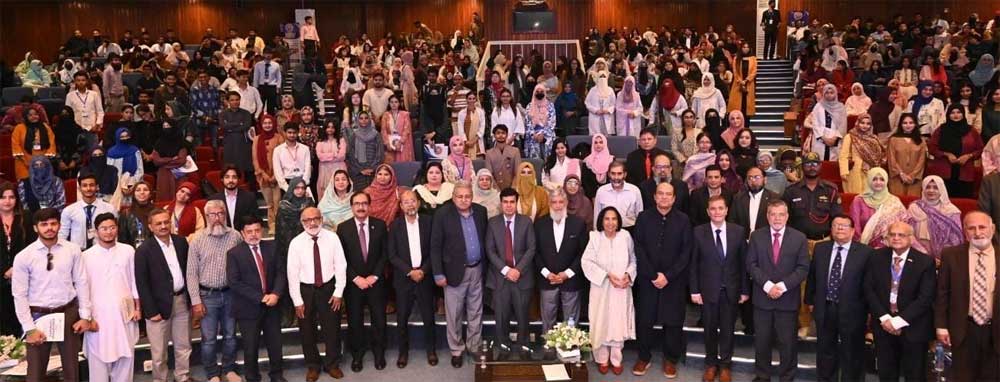
The three-day conference, organised by the University of Karachi in collaboration with Al-Kawthar University under the theme “Governing for Health: Equity, Resilience, and Innovation Towards a Sustainable Public Health Future”, is being held at the HEJ Research Institute Auditorium.
Vice Chancellor of the Health Services Academy Islamabad Prof Dr Shehzad Ali Khan said Pakistan’s healthcare system had evolved into a mixed public-private model but faced limited resources, inadequate access to healthcare, weak regulation and a growing disease burden.
He said government expenditure accounted for nearly 34 per cent of total health spending, while the private sector contributed 64.4pc and out-of-pocket payments by citizens constituted 89.9pc.
According to him, Pakistan’s per capita health expenditure was around $45, compared with $75 in India, $127 in Sri Lanka and $50 in Afghanistan. Pakistan spends only 0.7 to one per cent of GDP on health.
Dr Shehzad said more than 17pc of the population suffered from diabetes, over 25pc of adults above 18 had hypertension, while hepatitis, malnutrition and other communicable and non-communicable diseases remained major challenges.
He said Pakistan had one of the highest neonatal mortality rates globally, while maternal and child mortality also remained alarmingly high. The country also had the fifth-highest tuberculosis burden and was among only two countries where polio remained endemic.
Principal Secretary to the Governor of Sindh Dr Saif-ur-Rehman said environmental surveillance, sewage monitoring, vaccination coverage and rapid laboratory testing were the “eyes and ears” of a modern health system.
Executive Director NICVD Prof Dr Tahir Saghir, PIMA President Dr Ahmed Salman Ghori, HANDS Chief Executive Dr Shaikh Tanveer Ahmed, Pakistan Microbiologist Society Chairperson Dr Shahana Urooj, psychiatrist Prof Dr Iqbal Afridi, ICCBS Director Prof Dr Muhammad Raza Shah, NUML HOD Management Sciences Dr Nabeel Ashraf and KU Director Evening Programme Dr Shabih-ul-Hasan also spoke at the conference.
Caption: Participants and speakers at the first international conference on Public Health Governance and Sustainable Health Systems 2026 at the HEJ Research Institute Auditorium, University of Karachi, on Wednesday.