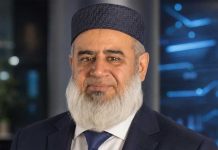
Muhammad Umar Waqqas
KARACHI: When the world thinks of Pakistan, the first images that often come to mind are tied to politics, security, and regional tensions. But away from these dominant narratives, another story unfolds, one woven in silk, sequins, and centuries-old artistry. Fashion, particularly bridal couture, has become one of Pakistan’s most powerful tools of cultural diplomacy.
Famous designer Moazzam Khan says “Every country has its fashion identity. France is synonymous with haute couture, Italy with luxury craftsmanship, Japan with avant-garde minimalism. For Pakistan, that identity is unmistakably defined by its bridal couture rich, intricate, and deeply rooted in tradition. Pakistani bridal wear is not just about adornment; it is a reflection of heritage. Each piece tells a story of regions, rituals and generations of craftsmanship. From the fine zardozi and gota work of Punjab to the mirror embroidery of Sindh, the delicate threadwork of Khyber Pakhtunkhwa and the captivating handwork of Balochistan, every stitch carries echoes of history.”
What sets Pakistani couture apart is its commitment to handcraft. In an age dominated by fast fashion and digital design, Pakistan’s bridal ateliers remain bastions of human artistry. The embellishments are done by artisans whose skills have been passed down through families for centuries. This devotion to detail has made Pakistani designers respected figures in the global fashion industry, admired for their ability to blend heritage with haute couture.
Khan expresses his broad frame of vision, he says “Soft power is a country’s ability to influence others through culture, values, and creativity rather than politics or force. In this sense, Pakistan’s designers are doing what diplomats and politicians often cannot, changing perceptions through beauty and craft.”
When a bride in Dubai, Delhi, London, New York or Toronto chooses to wear a Pakistani designer, she does more than celebrate her wedding; she celebrates Pakistan’s artistry. The global visibility of designers like HSY, Elan, Bunto Kazmi, Sania Maskatiya, and Moazzam Khan among others projects an image of a nation that is creative, sophisticated, and steeped in culture.
Fashion weeks in Karachi and Lahore, as well as showcases in New York, London, and Doha, have given international audiences a new lens through which to view Pakistan. It’s not a country defined solely by its politics, but by its people, artists, dreamers, and creators whose work speaks a universal language.
Moazzam Khan says “Few art forms communicate identity as powerfully as clothing. Fashion crosses borders without translation. It invites curiosity instead of confrontation. Through couture, Pakistan engages with the world in a dialogue that is peaceful, beautiful, and enduring.”
Designers like Moazzam Khan Couture have long understood this role. Their work, rooted in the grandeur of traditional craftsmanship yet alive with contemporary relevance, acts as a bridge between the past and the present. A Moazzam Khan bridal ensemble is not just a gown; it is a canvas of heritage, the shimmer of sequins echoing Mughal motifs, the palette reflecting local landscapes, and the form tailored for a global audience. When international clients wear these creations, they become ambassadors of Pakistan’s softer, more nuanced image. In an era where headlines often tell one story, couture tells another, one that is woven with pride, artistry, and resilience.
When TFD asked Moazzam Khan about the related challenges and opportunities for Pakistan’s fashion industry, he said “It lies in balancing heritage with innovation. The new generation of designers operates in a global digital economy where trends move at the speed of social media. To stay relevant, Pakistani couture must adapt embracing technology, e-commerce, and sustainability without losing its essence. Some brands are already navigating this space thoughtfully. Digital fashion showcases, online bridal consultations and global shipping networks have allowed Pakistani couture to reach clients far beyond its borders. Yet the soul of the craft remains rooted in hand embroidery, storytelling, and a deep respect for the artisan. Sustainability, too, offers a path forward. In a world increasingly concerned with ethical fashion, Pakistan’s tradition of handwork, recycling vintage fabrics, and valuing craftsmanship aligns naturally with slow fashion principles. This could be a key narrative for Pakistani couture in global conversations about responsible luxury.”
Fashion, at its best, is not about excess but expression. Pakistani bridal couture expresses who we are as a nation with history, artistry, and pride in its people’s creativity. It is a reminder that culture can be a far more enduring export than politics or policy. As long as our designers continue to tell stories through their stitches, stories of heritage, humanity, and hope; Pakistan’s cultural image will keep shining. From the runways of Karachi to the red carpets of Paris and the wedding halls of Toronto, each thread becomes a line in the larger narrative of who we are and what we can be.
“Fashion may not make the headlines of international diplomacy, but it shapes hearts and minds in ways few other mediums can. In the delicate shimmer of a handcrafted dupatta or the intricate weave of a bridal lehenga, Pakistan speaks softly yet powerfully to the world.” Moazzam Khan tells TFD.