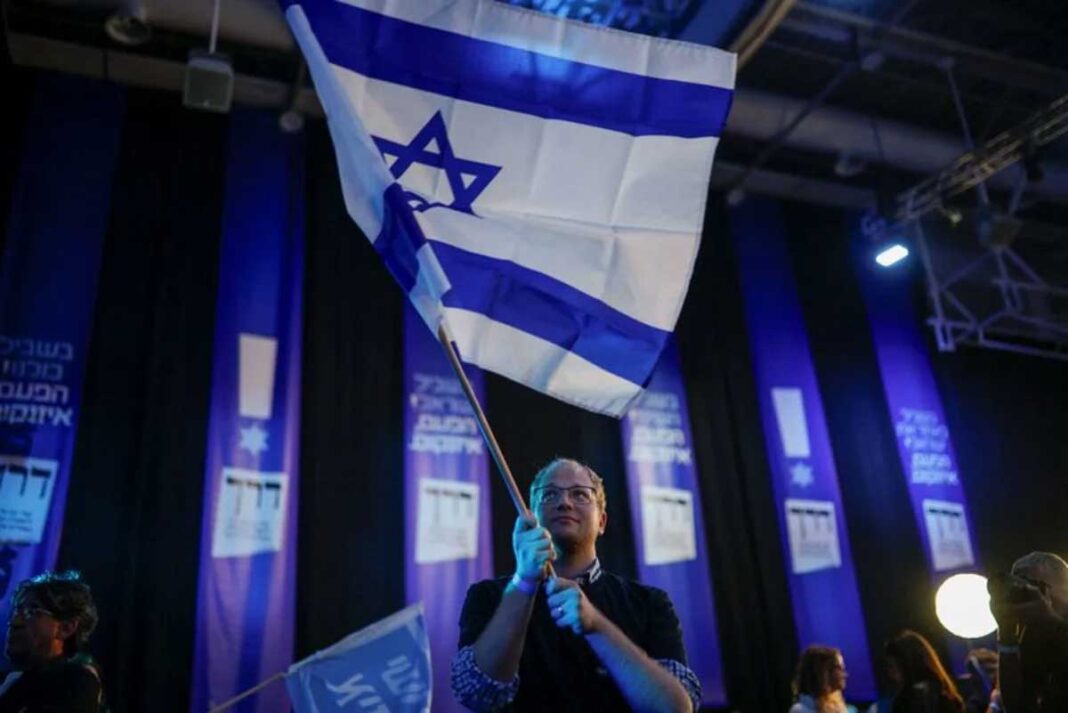

KARACHI: Israel faces renewed political uncertainty following Tuesday’s parliamentary elections, as Prime Minister Benjamin Netanyahu and his principal challenger, former military chief Gadi Eisenkot, failed to establish a clear path to a governing majority, raising serious questions about the country’s political stability and future security policies amid continuing tensions across the Middle East.
The October 27 elections witnessed an exceptionally high voter turnout of 77.7 percent, the highest since 1999, reflecting widespread public engagement with the country’s political future. However, preliminary results indicated that neither of the two principal political blocs had secured the 61 seats required to form a government in the 120-member Knesset.
With the final vote count still underway, the results suggested that Israel could face prolonged coalition negotiations, political instability or even another election if rival parties fail to reach an agreement on government formation.
The electoral contest was widely viewed as a referendum on Netanyahu’s leadership, national security policies, democratic accountability and the consequences of years of military confrontation.
While Netanyahu sought another mandate based on his security record and political experience, Eisenkot campaigned on the need for national unity, institutional reforms and a more accountable administration.
Despite intense campaigning, Israeli voters delivered a deeply divided verdict, demonstrating the widening ideological and political differences within society.
Netanyahu’s Likud party emerged as the largest individual party in early counting, but the broader right-wing alliance faced difficulties in securing sufficient parliamentary support. Eisenkot’s centrist Yashar party and other opposition groups also confronted substantial obstacles in assembling a viable coalition.
Arab political parties, projected to secure a significant parliamentary presence, could play an influential role in determining the composition of the next government. However, ideological disagreements and the reluctance of several mainstream political parties to cooperate with Arab representatives remain major challenges.
The uncertainty comes at a particularly sensitive moment for Israel, which continues to confront the consequences of the Gaza conflict, tensions with Iran, instability in Lebanon and growing international pressure over its military and political policies.
The absence of a decisive electoral mandate could complicate decisions concerning military operations, diplomatic negotiations, ceasefire arrangements and broader regional security commitments.
Political observers believe that a weak coalition government would face considerable difficulty reconciling competing positions on national security, judicial independence, religious affairs and Israel’s relations with neighbouring countries.
The elections have also highlighted a fundamental disagreement over the country’s future security strategy. Netanyahu has consistently emphasised military strength and deterrence, while his political opponents have questioned whether continued confrontation without a comprehensive diplomatic approach can guarantee long-term stability.
Eisenkot’s political challenge has centred on the argument that national security requires not only military capabilities but also effective governance, institutional credibility and greater political cohesion.
Meanwhile, regional diplomatic developments have added another dimension to Israel’s political uncertainty.
Senior representatives of Pakistan, Saudi Arabia and Türkiye, the three members of the Mecca Joint Defence Agreement, engaged with Iranian officials in Tehran on October 26 in an important diplomatic initiative aimed at reducing regional tensions and exploring mechanisms for collective security.
The discussions brought together senior defence and security officials, including Pakistan’s Field Marshal Syed Asim Munir, Saudi Defence Minister Prince Khalid bin Salman and Turkish intelligence chief Ibrahim Kalin.
The initiative reflected growing efforts among regional powers to prevent further military escalation and encourage dialogue over disputes involving Iran, Israel and the wider Middle East.
The diplomatic engagement also demonstrated the increasing importance of regional security cooperation at a time when military tensions, attacks on strategic infrastructure and threats to international trade routes have raised concerns about wider instability.
For Israel, these developments present additional challenges as its political leadership struggles to establish a clear governing mandate.
Observers warn that prolonged coalition negotiations could weaken political decision-making and reduce the ability of any incoming administration to respond effectively to emerging diplomatic opportunities.
The unresolved Palestinian question remains another significant challenge. Continued humanitarian concerns in Gaza, demands for Palestinian political rights and international calls for a sustainable settlement are expected to remain central issues for Israel’s next government.
The international community is closely watching developments in Israel, particularly their possible implications for regional military operations, relations with Washington and prospects for broader Middle East peace initiatives.
Israel’s President Isaac Herzog is expected to begin consultations with political parties following the confirmation of the final election results before assigning a leader the responsibility of attempting to form a government.
The process could prove difficult given the ideological divisions separating nationalist, religious, centrist and Arab political groups.
The October 27 elections have therefore left Israel facing a crucial political test. Although voters participated in exceptionally large numbers, the fragmented outcome has failed to provide an immediate solution to the country’s continuing governance crisis.
With regional tensions remaining high and diplomatic initiatives gathering momentum, Israel’s ability to establish a stable government could have far-reaching implications beyond its borders.
The coming days are expected to determine whether political leaders can overcome their differences and establish a functioning administration or whether the country will enter another prolonged period of uncertainty.
The election outcome has reinforced a central concern across the region: without political consensus and responsible leadership, Israel’s internal divisions could further complicate efforts to achieve lasting stability and peace in the Middle East.