KARACHI: The Executive Committee of the Karachi Editors Club (KEC), at its special meeting held on Saturday under the chairmanship of KEC President Mubasher Mir, unanimously welcomed the Government of Pakistan’s decision to appoint Mrs. Raisa Adil as the Principal Information Officer (PIO), Ministry of Information and Broadcasting.
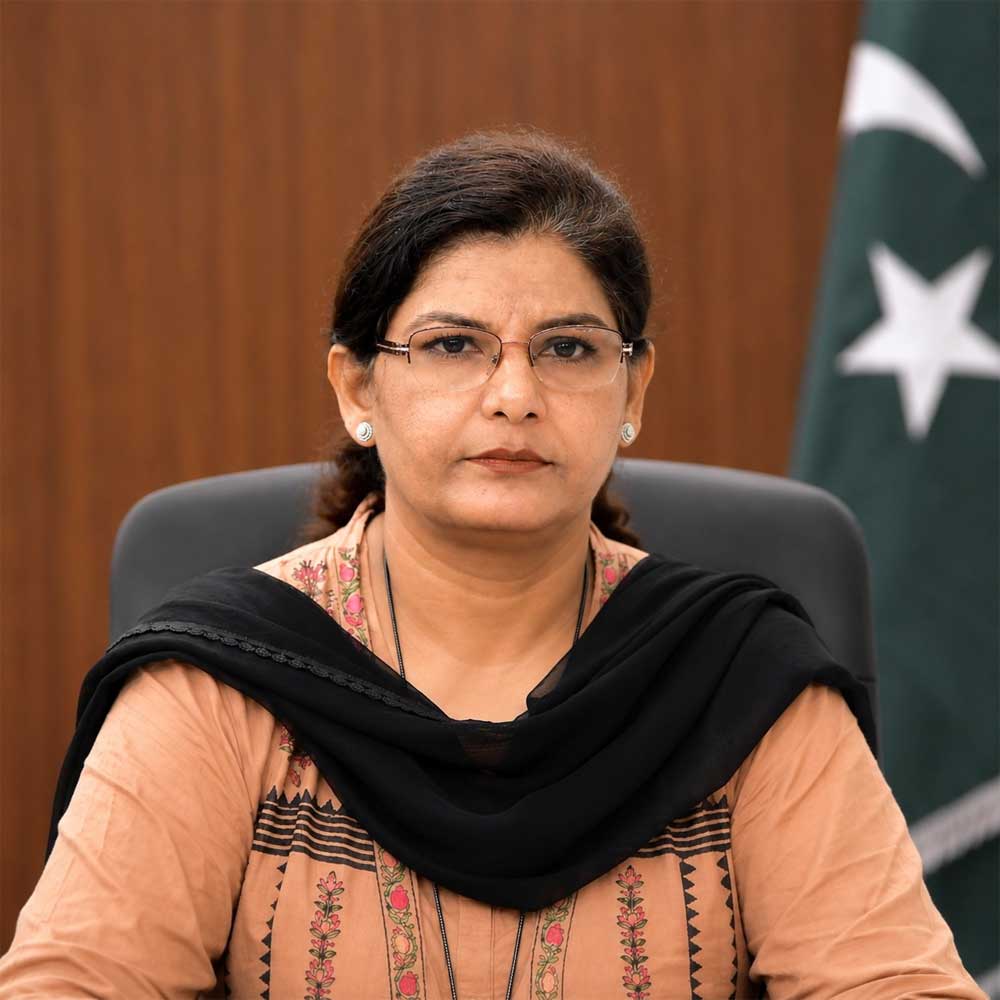
The Executive Committee also congratulated Federal Minister for Information and Broadcasting Attaullah Tarar for making what it described as a merit-based and well-deserved appointment to one of the Ministry’s most significant positions. The Committee observed that selecting an experienced, capable and highly professional officer to lead the government’s principal media liaison institution reflects the government’s commitment to strengthening communication between the state and the media.
The meeting extended its heartfelt congratulations to Mrs. Raisa Adil on assuming one of the country’s most important public communication responsibilities and expressed confidence that her extensive professional experience, administrative competence and deep understanding of media affairs would further strengthen relations between the Government of Pakistan and the country’s media fraternity.
Speaking on the occasion, KEC President Mubasher Mir said that the office of the Principal Information Officer serves as the most vital institutional bridge between the government and the media. He expressed the hope that under the leadership of Mrs. Raisa Adil, the Press Information Department would further promote transparency, ensure the timely dissemination of official information and strengthen a relationship based on mutual trust, respect and constructive engagement with journalists and media organizations across Pakistan.
KEC Secretary General Manzar Naqvi said that Pakistan’s media industry is currently passing through one of the most difficult periods in its history. Newspapers, television channels and digital media organizations are facing unprecedented financial challenges due to declining revenues, rising operational costs and continuing economic uncertainty. As a consequence, hundreds of journalists and media professionals have lost their jobs, while thousands of others continue to face uncertainty regarding their professional future.
He expressed the hope that Mrs. Raisa Adil would serve as an effective bridge between the Government of Pakistan and the media community by adopting an open-door policy, encouraging regular consultations with representative media bodies and working collectively to address the genuine concerns of journalists and media organizations.
The Executive Committee emphasized that among the most pressing issues requiring immediate attention are the timely release of government advertisements, prompt clearance of outstanding advertisement payments and the formulation of a transparent, fair and equitable government advertising policy that adequately supports national, regional and local media organizations. The members observed that the financial sustainability of many media houses depends significantly upon the timely settlement of government dues.
The Committee further urged the Ministry of Information and Broadcasting, through the office of the Principal Information Officer, to take the lead in developing a comprehensive and practical framework for journalists and media workers who have lost their employment due to the ongoing financial crisis confronting the media industry. Such a framework, the Committee suggested, should be developed in consultation with journalists’ organizations, editors, media owners and other relevant stakeholders, and should include professional capacity building, digital skills training, employment facilitation, welfare initiatives and institutional support to help affected journalists re-enter the profession with dignity.
The Executive Committee also stressed the urgent need to restore journalists’ confidence regarding job security, professional independence and career sustainability. It observed that a financially stable, independent and professionally secure media is indispensable for strengthening democratic institutions, safeguarding freedom of expression and ensuring that the public continues to receive credible, responsible and objective journalism.
The members appreciated Mrs. Raisa Adil’s distinguished professional services in the Information Group and expressed confidence that her leadership would usher in a new era of mutual trust, effective coordination and institutional cooperation between the government and the media. They further hoped that longstanding issues confronting the media industry would be resolved through continuous dialogue, consultation and meaningful reforms.
The Karachi Editors Club reaffirmed its commitment to extending full cooperation to the Ministry of Information and Broadcasting and the Press Information Department in promoting responsible journalism, institutional harmony, media freedom and constructive engagement in the larger national interest.
Of the 26 appointments, 16 were nominated by Labour, five by the Liberal Democrats, three by the Conservatives and two were appointed as crossbench peers with no party affiliation.
Among Labour’s nominees are human rights advocates Parvais Jabbar and Saul Lehrfreund, co-founders of the Death Penalty Project, and Cathy Ashley, a campaigner for families’ rights and former head of the Holocaust Memorial Day Trust.
The Conservative Party nominated former Chief of the General Staff General Sir Patrick Sanders, while the Liberal Democrats selected economist Tim Leunig, chief economist at the social innovation foundation Nesta.
Crossbench nominee Sir Brian Leveson, the former senior judge who chaired the 2011 inquiry into Britain’s phone-hacking scandal, was also included on the list.
Starmer did not recommend any nominees from Reform UK, despite the party holding seven seats in the House of Commons following Nigel Farage’s resignation as an MP earlier this month.
Farage criticised the decision, saying it left the upper chamber even less representative.
Before the latest appointments, the Conservatives held 246 seats in the House of Lords, compared with Labour’s 216, giving the opposition a numerical advantage in the upper chamber. -NNI