

As Pakistan’s economic team joins the world’s financial leadership this week in Washington for the Atlantic Council and IMF-World Bank Annual Meetings, Finance Minister Senator Muhammad Aurangzeb has taken the stage to outline his government’s roadmap for stability, governance, and sustainable growth amid global uncertainty. His address – titled “As Pakistan advances fiscal reforms and addresses the economic toll of recent floods” – set the tone for what many see as Pakistan’s most confident international engagement in years.
Aurangzeb’s remarks centered on resilience after adversity. He emphasized that Pakistan, once on the edge of fiscal collapse, is now steering toward long-term discipline and transparency. His focus on tax reform, energy restructuring, social protection, and climate resilience drew attention from policymakers, investors, and analysts watching whether Pakistan’s renewed dialogue with global institutions can finally anchor the country’s economy on stable ground.
In the corridors of the Atlantic Council, discussions have been animated: Can Pakistan move from emergency loans to sustainable recovery? Can governance evolve from policy statements to institutional strength? And can moral and political coherence accompany fiscal reform? These are not abstract questions; they form the heart of Pakistan’s ongoing economic story.
It was in this broader international context that a few days earlier, Ambassador Rizwan Sheikh hosted a deeply thoughtful interactive dinner session at the Embassy of Pakistan in Washington DC, attended by Finance Minister Aurangzeb, the Governor of the State Bank of Pakistan, senior economists, and leading bankers. The evening offered a candid atmosphere – not one of formality, but of reflection.
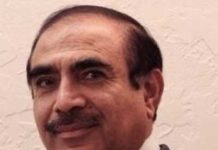
During the dialogue, I had the honor of being the second participant to pose a question to the Minister – one that echoed the conviction I have carried throughout my civic and academic work:
“A nation’s economy cannot rise on financial structures alone – it must be built on moral, political, and financial pillars working in harmony.”
The Minister listened with focus and responded with appreciation, agreeing that economic revival requires ethical integrity and political continuity alongside fiscal management. It was a rare moment where public leadership and citizen insight intersected, reaffirming that policy without values cannot endure.
Just two years ago, Pakistan’s economic negotiations with the IMF were marked by crisis and concession. Each meeting was shadowed by uncertainty; conditions were heavy, and credibility was thin. The country’s fiscal fragility, compounded by inflation and political turbulence, reduced its leverage on the global stage. That phase tested not only Pakistan’s economic endurance but its diplomatic composure.
Today, the tone is notably different. The IMF’s recent staff-level agreement on the second review of the Extended Fund Facility (EFF) and the first review under the Resilience and Sustainability Facility (RSF) signals cautious optimism. Roughly US $1.2 billion is now within reach – a sign that Pakistan’s reform effort is regaining credibility. For the first time in fourteen years, the current account shows a surplus; inflation, while still a burden, is inching within target range; and market confidence is slowly returning as sovereign spreads narrow.
But beneath this progress lies a sobering reality. External support cannot forever substitute for domestic reform. The IMF’s praise for “strong implementation” comes with reminders of vulnerability: floods that displaced millions, a fragile energy sector, and structural inefficiencies that demand persistence rather than promises. The challenge is not funding – it is follow-through.
For ordinary Pakistanis, macroeconomic progress must mean something tangible – affordable food, reliable power, jobs, and dignity. If reforms fail to humanize economics, frustration will erode faith in institutions. Hence, my consistent argument: Pakistan’s prosperity must grow from three intertwined economies – moral, political, and financial.
The moral economy anchors justice, transparency, and responsibility; the political economy secures continuity, trust, and credibility in governance; and the financial economy provides fiscal strength and growth. Without harmony among these, even the best-designed budgets will falter.
The IMF report also calls attention to Pakistan’s climate vulnerabilities – a lesson underscored by this year’s floods. Under the RSF, Pakistan has pledged investments in green mobility, energy decarbonization, and resilient infrastructure. These ambitions are laudable but must be delivered through verifiable action. The world’s confidence depends not only on what Pakistan promises but how transparently it implements those pledges.
As the Atlantic Council meetings continue, Pakistan’s representation by Minister Aurangzeb projects a blend of technical expertise and moral resolve. His interactions with IMF, World Bank, and diaspora audiences highlight a commitment to governance, climate responsibility, and credible reform. If that commitment translates into consistent domestic action, it could mark the beginning of Pakistan’s shift from dependence to dignity.
The evening at the Embassy was thus not a routine diplomatic event but a reflection of this same awakening. It reminded all present that economic strength without ethical purpose remains incomplete, and that the real stability Pakistan seeks will come when moral will, political wisdom, and financial discipline converge.
When these three forces align – as they must – Pakistan can redefine its economic destiny. Not as a nation reliant on rescue, but as a country capable of rebuilding itself through faith, integrity, and the will to sustain growth that uplifts every citizen.