The successful privatization of the national airline PIA was appreciated all over the world, including Pakistan. This historic privatization was successfully completed through a transparent process in which Arif Habib Consortium bought PIA by bidding the highest price of Rs 135 billion. Although the government did not get any significant financial benefits from this privatization process, the government’s reputation and confidence certainly increased significantly and Prime Minister Shahbaz Sharif described the privatization process as an important milestone.
The story of the national airline PIA is very interesting. Before the establishment of Pakistan, Quaid-e-Azam Muhammad Ali Jinnah expressed his desire to his Muslim businessmen Mirza Ahmed Isfahani, Adamji and Haji Dawood that “Pakistan after independence should have its own airline.” Thus, on October 23, 1946, “Orient Airways” was established, which purchased three DC-3 passenger aircraft and started operations regularly, the first flight began between Calcutta and Karachi in June 1947. On August 14, 1947, when Pakistan came into existence, Mirza Ahmed Isfahani shifted these aircraft to Pakistan along with the crew, and thus it became Pakistan’s first private airline. On August 5, 1953, under an agreement between Orient Airways and the Government of Pakistan, Orient Airways was taken over by the govt renamed “Pakistan International Airlines” (PIA). Thus, the national airline of Pakistan was formally launched, with the slogan “Excellent people, excellent service”. After the government took over PIA, Mirza Ahmed Isfahani was appointed as the first chairman of the organization, who ran it in a very professional manner. PIA was at its peak during the tenure of Air Marshal Asghar Khan and within a few years, PIA was considered one of the best airlines in the world based on its performance, service and quality.
PIA was responsible for the formation and training of airlines in many countries of the world, including the famous Emirates Airline. In addition, PIA also played an important role in the formation of Royal Air Moroc & Malta Airbus, but in the 1980s, PIA’s performance gradually declined and the organization began to decline, the main reasons for which were politically motivated recruitment, unionization and corruption. By 2000, PIA’s financial condition had become extremely weak and the govt had to provide subsidies and loans to run the organization. In 2013, PIA’s annual loss reached Rs 44 billion, Rs 50 billion in 2021 and Rs 88 billion in 2022, thus the total loss of the national airline in the last few years has exceeded Rs 700 billion and the govt was spending Rs 75 billion every year to run PIA. Ghulam Sarwar Khan, the aviation minister during the Imran Khan government, played a major role in the collapse of PIA, whose controversial statement about PIA pilots in the National Assembly severely damaged the reputation of the organization and many European countries banned Pakistani pilots and PIA flights.
There is a consensus all over the world that the government’s job is not to run a business but to provide a good business environment. That is why the national airlines of many countries including Air India, TAP, Air Portugal, Olympic Air of Greece and Japan Air were handed over to the private sector. In October 2021, the Tata Group bought 100% of Air India’s shares for $2.5 billion. At that time, Air India had 130 passenger aircraft. PIA currently has 38 passenger aircraft, but only 18 of them are operational. If we look at it in terms of our aircraft, our cost per aircraft is higher than India’s, which is a good price. Although the government did not get any significant financial benefits from the privatization of the national airline, the annual burden of Rs 75 billion to run the company will no longer fall on the national exchequer. The total equity of the national airline was estimated at Rs 180 billion and the sale of more shares of the company will generate an additional Rs 45 billion, which is equal to the airline’s estimate.
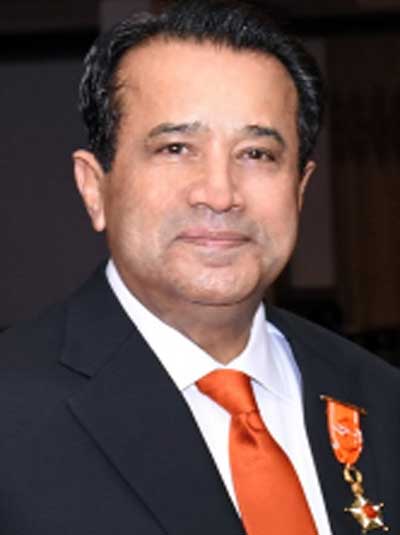
The privatization of PIA is being called the biggest and most historic privatization of Pakistan in the last two decades, but some critics are criticizing it and are of the opinion that the govt made the wrong decision by selling the “family silver” even though this family asset had become a burden on the country’s economy. Secondly, the buyers of the national airline are Pakistanis and there will be no change in the PIA’s flagship aircraft, but those who were recruited on political grounds may have to face difficulties. Prime Minister Shehbaz Sharif and Chief of Defence Forces Field Marshal Asim Munir played an important role in the privatization of PIA. General Asim Munir, during his visit to Karachi, requested businessmen to form a consortium and play their role in the privatization of PIA. Arif Habib, Chairman of the Arif Habib Group, is a close friend of mine. He is a professional and experienced businessman.
I am confident that under his leadership, PIA will once again restore its lost glory and move towards a new era of flying. The privatization of the national airline teaches us that those institutions where recruitment was done on political grounds in the past are facing disaster today, including the steel mills. There is a need to ensure the privatization of all loss-making govt institutions, including steel mills, as soon as possible so that the govt treasury can be stopped from being wasted.