KARACHI: Punjab Chief Minister Maryam Nawaz Sharif has rolled out a flagship governance initiative centered on real-time digital monitoring, aimed at tightening accountability and improving service delivery across government departments, with an immediate focus on the health sector.
Under the new model, the Chief Minister is personally overseeing the performance of public institutions through a live monitoring dashboard, supported by an activated Chief Minister Inspection Team (CMIT) that is submitting real-time field reports directly to the provincial leadership. The initiative marks a shift from periodic administrative reviews to continuous, data-driven oversight at the highest level of government.
As part of the drive, inspection teams have begun conducting surprise visits to hospitals across Punjab to assess the availability of essential facilities, including the uninterrupted provision of free medicines for patients. Officials say the monitoring mechanism will be expanded beyond health and education to cover other public service institutions in subsequent phases.
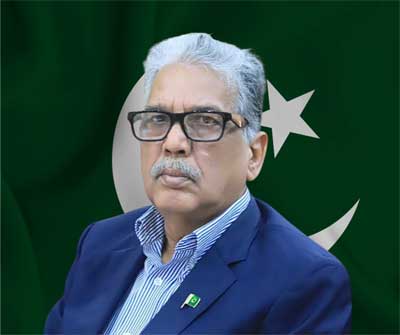
Special Assistant to the Chief Minister Shoaib Mirza, accompanied by members of the CM Inspection Team, has been leading unannounced inspections of healthcare facilities to evaluate compliance with service standards and identify administrative lapses. The findings from these inspections, combined with citizen complaints, have already resulted in decisive action.
In a strong signal of zero tolerance for negligence, Chief Minister Maryam Nawaz Sharif has removed several Medical Superintendents and institutional heads following adverse inspection reports. The move underscores the government’s intent to link authority with performance and enforce consequences for persistent inefficiency.
Senior officials in the Chief Minister’s Office say the digital dashboard allows instant visibility into departmental performance, enabling swift corrective measures rather than delayed bureaucratic responses. “This system is designed to ensure that public officials remain answerable on a daily basis, not just during annual reviews,” a senior official said.
Governance analysts view the initiative as a significant departure from conventional administrative practices, where monitoring is often fragmented and reactive. By centralizing performance data and inspection feedback, the government aims to close the gap between policy directives and on-ground implementation.
However, experts caution that the long-term success of the model will depend on its institutionalization. “Digital oversight is effective only if it becomes part of the system rather than remaining personality-driven,” said a governance specialist. “Sustained impact will require transparent benchmarks, credible data, and consistent application across departments.”
The Punjab government maintains that accountability, transparency, and citizen-focused service delivery remain its top priorities. Officials indicate that further actions against underperforming officers are likely as the monitoring framework matures and expands.
If implemented consistently, the real-time oversight model could redefine public sector accountability in Punjab, shifting governance from complaint-driven reactions to proactive performance management-an approach that, if sustained, may set a precedent for other provinces to follow.