

WASHINGTON: The United States has announced the establishment of a new military coordination unit, named Task Force Iron Gate, aimed at disrupting Iran's access to advanced weapons, sensitive technologies and financial networks through its land borders and the Caspian Sea, amid growing concerns over another escalation in the Middle East.
According to a report published by Al Jazeera, the initiative represents an expansion of Washington's existing maritime restrictions against Tehran, reflecting a broader strategy to weaken Iran's military capabilities and restrict the movement of materials that could support its defence industry.
The United States Central Command (CENTCOM) announced on Saturday that the task force would coordinate efforts to identify and disrupt the transportation of advanced weapons systems, dual-use technology, sanctioned commodities and illicit financial resources into and out of Iran.
Headquartered in Tampa, Florida, the unit will reportedly consist of approximately 20 civilian and military personnel working alongside other US government agencies.
CENTCOM Commander Admiral Brad Cooper described the initiative as an extension of Washington's maritime pressure campaign against Iran, suggesting that American authorities intend to tighten restrictions beyond traditional shipping routes.
Washington Expands Pressure Beyond Maritime Routes
The establishment of Task Force Iron Gate indicates that Washington is increasingly focusing on Iran's extensive overland transportation networks and commercial connections with neighbouring countries.
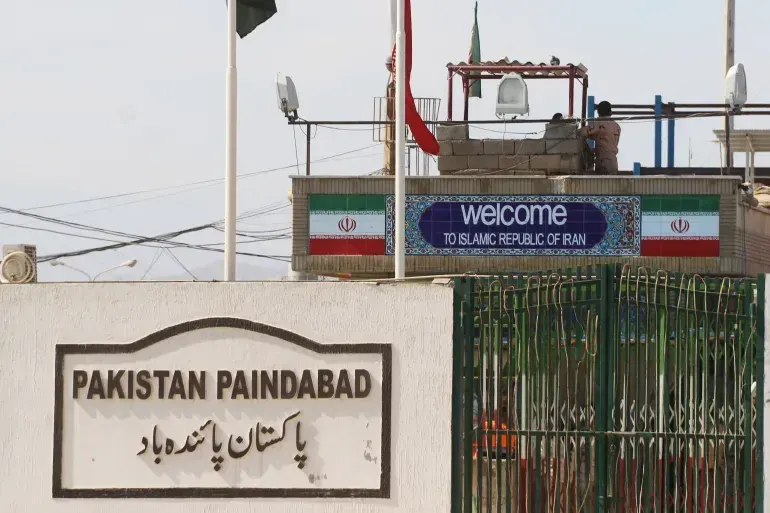
Iran shares land borders with Afghanistan, Armenia, Azerbaijan, Iraq, Pakistan, Turkiye and Turkmenistan, while its northern coastline provides access to the Caspian Sea, a strategically important trade corridor linking Iran with Russia and other regional economies.
According to Al Jazeera, Michael Mulroy, a former US deputy assistant secretary of defence for the Middle East, explained that the new unit would examine the origins of weapons entering Iran, identify potential supply routes and assess ways of disrupting Tehran's energy-related transportation networks.
Mulroy suggested that the initiative could eventually become part of a wider strategy targeting economic infrastructure if Washington decides to intensify military operations against Iran.
Unlike previous military campaigns that primarily concentrated on military installations, future measures could increasingly focus on infrastructure and economic assets considered essential to sustaining Iran's defence capabilities, he indicated.
Iran Rejects US Initiative as Ineffective
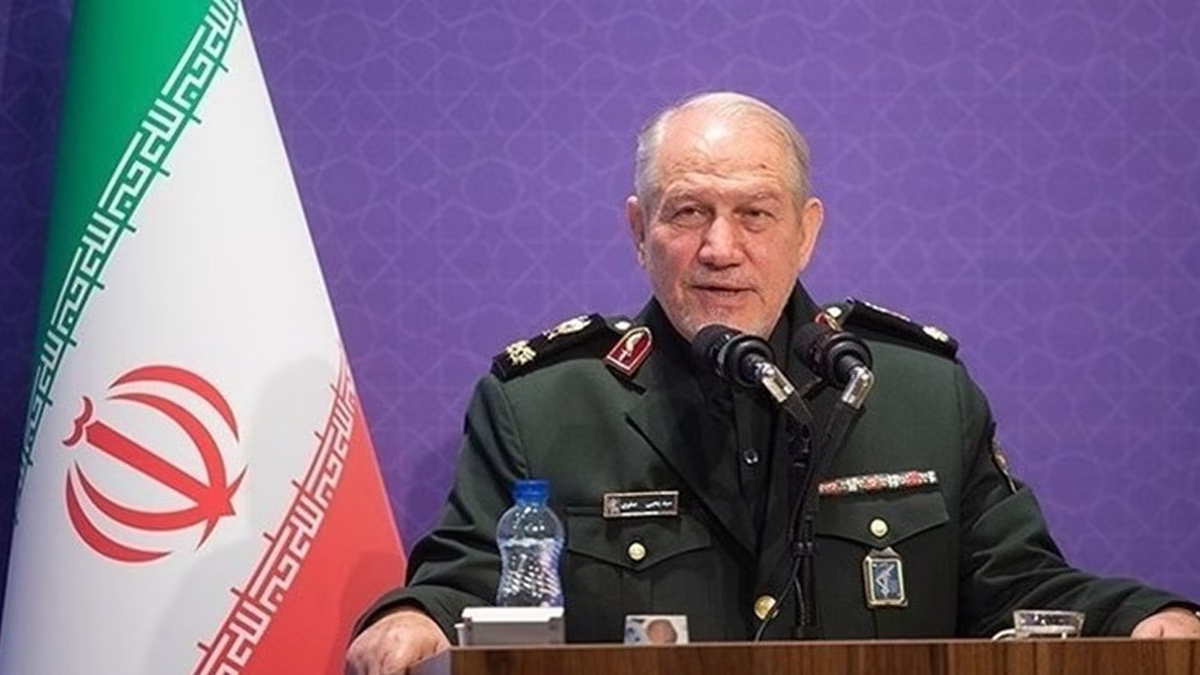
Iran's Islamic Revolutionary Guard Corps (IRGC) has dismissed the American announcement, questioning whether the task force can achieve its stated objectives.
IRGC spokesman Sardar Mohebi, quoted by Iran's Fars news agency, described the initiative as largely rhetorical and argued that Washington would be unable to bring about the collapse of the Iranian economy through additional restrictions.
He maintained that previous American predictions of an imminent Iranian economic breakdown had failed to materialise.
Tehran has repeatedly argued that its domestic defence industry, alternative trade arrangements and longstanding regional commercial relationships enable it to withstand external economic and military pressure.
Meanwhile, the IRGC has reportedly outlined plans to further strengthen underground facilities capable of supporting missile and drone production, even during sustained aerial attacks.
The announcement follows reports of continued construction around Iranian missile installations, reinforcing questions about the effectiveness of previous strikes against Iran's underground military infrastructure.
Russia-Iran Defence Cooperation Under Scrutiny
One of the most sensitive dimensions of the American initiative concerns Iran's strategic relationship with Russia.
Although CENTCOM did not specifically identify Russian military cooperation as a target, analysts believe the inclusion of the Caspian Sea suggests particular concern over possible weapons and technology transfers between Moscow and Tehran.
According to media reports cited by Al Jazeera, Russia has allegedly supplied drone components and explosive materials to Iran through Caspian Sea transportation routes. Other reports have raised questions about potential Russian technological assistance in the development of advanced Iranian missile systems.
These claims have increased American concerns about the possibility of Iran strengthening its military capabilities through external support despite international restrictions.
Mahjoob Zweiri, a professor of contemporary history and politics at Qatar University, told Al Jazeera that reported military equipment transfers involving Russia represent a significant concern for Washington.
He warned that efforts to disrupt such arrangements could create additional tensions between the United States and Russia, particularly if American measures interfere with strategically sensitive regional trade networks.
Can Washington Effectively Restrict Iran's Supply Networks?
Despite the announcement, analysts remain divided over whether the United States possesses the practical ability to significantly restrict Iran's extensive transportation and commercial networks.
Iran's geographical position, historical trading relationships and economic connections across Asia and the Middle East present considerable challenges for any comprehensive blockade.
Rami Khouri, a public policy fellow at the American University of Beirut and a non-resident senior fellow at the Arab Center in Washington, questioned the effectiveness of Washington's approach.
Speaking to Al Jazeera, Khouri argued that Iran's commercial relationships have developed over centuries and cannot easily be dismantled through unilateral American restrictions.
He observed that Iranian businesses and trading networks maintain connections with numerous regional and international partners, including commercial entities in Asia and the Gulf.
Such networks, analysts say, often involve intermediaries and complicated supply chains, making it difficult to identify the ultimate destination of sensitive technological components.
Although the United States can impose financial sanctions and restrictions on international shipping, enforcing similar measures across numerous sovereign countries and land transportation routes would require extensive diplomatic and security cooperation.
Caspian Sea Presents Operational Challenges
The Caspian Sea presents another major obstacle to Washington's objectives.
Unlike the Persian Gulf, where the United States maintains a substantial military presence, the Caspian Sea is geographically enclosed and does not provide direct access to American naval forces.
Any attempt to monitor or disrupt transportation through this region would therefore depend heavily on intelligence-sharing, diplomatic arrangements and cooperation from countries bordering the sea.
Zweiri noted that regional governments may be reluctant to participate in American efforts that could damage their relations with Russia or Iran.
He also questioned the economic consequences of restrictions targeting Caspian Sea transportation, arguing that the region accounts for a relatively limited share of Iran's overall external trade.
While the precise economic contribution remains uncertain, the Caspian route nevertheless carries strategic importance because of its connections with Russia and other regional trading partners.
Concerns Over Further Military Escalation
The creation of Task Force Iron Gate has also raised questions about its potential implications for diplomatic initiatives aimed at preventing another military confrontation.
Joe Kent, a former senior counterterrorism official in the Trump administration who resigned earlier this year over the US war with Iran, criticised the move and warned that additional military pressure could complicate diplomatic negotiations.
In comments posted on X and reported by Al Jazeera, Kent suggested that military initiatives undertaken during sensitive diplomatic discussions could increase the likelihood of escalation.
Meanwhile, reports in the American media indicate that some senior defence officials have advocated stronger measures against Iran, reflecting continuing disagreements over the most effective approach to Tehran.
Observers believe that Washington's emerging strategy combines economic restrictions, military deterrence and intelligence coordination in an attempt to limit Iran's regional capabilities without necessarily committing to another major ground operation.
However, the success of the task force will largely depend on cooperation from neighbouring countries, access to reliable intelligence and the ability to distinguish legitimate commercial activities from prohibited military transfers.
For Iran, the initiative represents another challenge to its economic resilience and defence supply networks. For the wider region, it introduces an additional source of uncertainty at a time when diplomatic efforts remain essential to preventing further confrontation.
Whether Task Force Iron Gate becomes a significant instrument of American pressure or remains primarily a coordination mechanism will depend on its operational reach and the response of regional powers.
Source attribution: This report has been independently rewritten and adapted for The Financial Daily, based on reporting originally published by Al Jazeera on November 8, 2026, under the title “US task force to cut off Iran’s transport of advanced weapons: What we know.” Statements and assessments attributed to analysts were originally reported by Al Jazeera. The Financial Daily has not independently verified all underlying claims.
Original report: https://www.aljazeera.com/news/2026/11/8/us-launches-task-force-to-disrupt-irans-land-based-supply-routes