

TFD Monitoring Desk
KYIV: Ukraine is confronting an increasingly severe energy crisis as intensified Russian missile and drone attacks continue to damage the country's electricity infrastructure, leaving millions of residents struggling with prolonged blackouts, disrupted water supplies and inadequate heating as winter temperatures continue to fall.
The relentless attacks on power stations, transmission networks and electricity substations have forced Ukrainian authorities to introduce extensive power rationing across major cities, including the capital Kyiv, where some households reportedly face outages lasting up to 20 hours a day.
The deteriorating situation has raised fears of a humanitarian emergency as temperatures decline and families struggle to maintain basic living conditions.
According to a report by the BBC, electricity shortages have become increasingly unpredictable, disrupting domestic routines, children's education, business activities and essential public services.
The crisis has developed against the backdrop of continuing diplomatic efforts aimed at ending the Russia-Ukraine conflict, with American representatives reportedly engaging Russian and Ukrainian leaders in renewed discussions.
However, despite ongoing peace initiatives, military attacks against energy infrastructure have intensified, with Ukraine also carrying out retaliatory strikes against Russian oil refineries.
Families Struggle Without Electricity, Water and Heating
In Kyiv, ordinary families are experiencing the immediate consequences of the destruction of electricity infrastructure.
Daryna Kulchytska, a single mother raising two children in a seventh-floor apartment, described the difficulties of managing household responsibilities amid constantly changing electricity schedules.
Her family sometimes receives only four or five hours of electricity during an entire day, making it difficult to prepare meals, complete school assignments and maintain communication services.
When electricity supplies are interrupted, the building's lifts stop operating, internet connections disappear and water pumps become inactive, leaving residents on upper floors without running water.
The family relies on torches, battery-powered lights and simple indoor activities to pass the long hours of darkness.
Daryna's 12-year-old son, Kyryll, told the BBC that frequent power cuts had disrupted nearly every aspect of his daily routine, including entertainment, homework and opportunities to relax after school.
The experience reflects the growing emotional and psychological strain on families already exhausted by years of conflict.
Many residents have been forced to adjust their schedules around unpredictable periods of electricity availability, while others are considering leaving their homes in search of safer locations with more reliable heating and power supplies.
Major Power Station Devastated by Missile Strike
The scale of the damage to Ukraine's electricity system was illustrated by the destruction of one of the country's major power generation facilities following a recent Russian ballistic missile attack.
According to the BBC report, the power station, whose identity was withheld for security reasons, suffered extensive structural damage that rendered it inoperable.
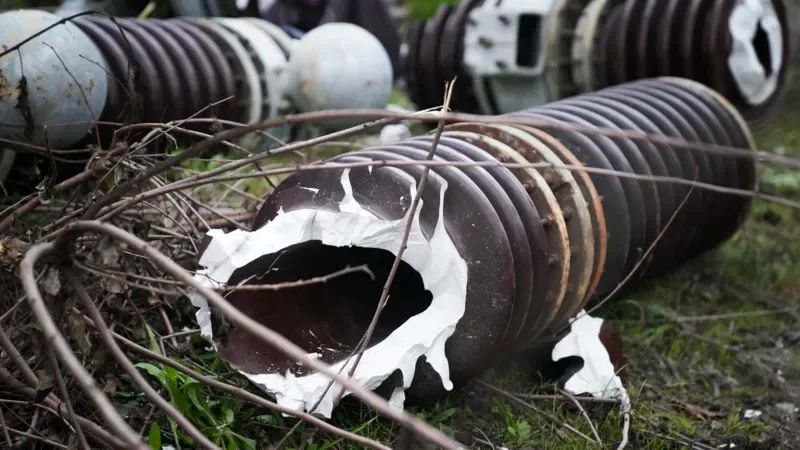
Large sections of the facility were reduced to twisted metal, collapsed equipment and damaged industrial infrastructure, leaving turbines and other essential machinery buried beneath debris.
Volodymyr Kovalenko, a veteran employee who has worked at the facility for approximately 25 years, described the latest attack as significantly more destructive than previous strikes.
He was working in the station's control room when missiles struck the installation during the early morning hours.
Despite the devastation, Kovalenko expressed confidence that the facility could eventually be restored, although the extent of damage presents enormous technical and financial challenges.
Repair teams are working under extremely dangerous conditions, with repeated air raid warnings forcing personnel to abandon restoration activities and seek shelter.
During a four-hour visit by BBC journalists, seven air raid alerts were reportedly issued, illustrating the constant threat confronting workers attempting to restore electricity supplies.
Energy Workers Risk Lives to Restore Supplies
Ukrainian energy workers have become essential to efforts to maintain basic services, frequently repairing infrastructure while facing the possibility of additional missile and drone strikes.
Vadym Bobyr, who is supervising restoration activities at the damaged power station, described the difficulties of organising major repair operations under persistent aerial threats.
Workers are often required to evacuate their positions when warnings are issued, reducing the time available for essential repairs.
In some instances, personnel have been forced to shelter behind reinforced structures because incoming missiles left insufficient time to reach designated protective facilities.
According to the report, one cruise missile was intercepted approximately five kilometres from the damaged installation during the journalists' visit.
The repeated disruptions have significantly slowed reconstruction efforts, making it difficult to restore damaged power generation capacity before the end of winter.
Energy workers have also suffered casualties during attacks on electricity installations, adding to the risks associated with maintaining the country's essential infrastructure.
Electricity Transmission Network Under Severe Pressure
Ukrainian President Volodymyr Zelensky has maintained that the country possesses sufficient electricity generation capacity to meet demand under normal distribution conditions.
However, extensive damage to transmission lines, substations and other critical facilities has prevented available electricity from reaching many homes, businesses and public institutions.
The deterioration of the distribution network has created serious difficulties even where electricity generation remains operational.
Russia has reportedly used increasingly sophisticated tactics to damage infrastructure, including drones that remain attached to electricity pylons or cables before being remotely detonated.
Such methods complicate the work of Ukrainian air defence forces and infrastructure repair teams.
The attacks have also affected urban transportation, with metro services and electrically powered public transport periodically disrupted.
Kyiv has been among the hardest-hit cities, although electricity shortages have affected communities across the country.
Energy Company Warns of Worsening Crisis
Maxim Timchenko, chief executive of DTEK, Ukraine's largest private energy company, warned that the scale and intensity of recent attacks had placed the electricity system under greater pressure than during the previous winter.
According to Timchenko, Russian forces have increased both the volume of attacks and the variety of weapons used against energy facilities.
He suggested that the scale of the assault had roughly doubled compared with earlier campaigns, while Ukraine's overstretched air defence systems remained unable to protect every important installation.
The DTEK chief also warned that restoring the severely damaged power station could take until at least next summer.
Repeated attacks and safety precautions have reportedly reduced productive repair time to as little as one or two hours daily at some locations.
The company's assessment indicates that Ukraine may face substantial electricity shortages throughout the winter, with lasting economic and social consequences.
Humanitarian Concerns Grow as Winter Intensifies
The continuing blackouts have created serious concerns for vulnerable populations, including elderly residents, children, people with disabilities and those requiring electrically powered medical equipment.
The loss of electricity also affects water distribution, telecommunications, sanitation systems and heating facilities, potentially creating wider humanitarian problems.
For families living in high-rise apartment buildings, the disruption of lifts and water pumps has made ordinary household activities increasingly difficult.
The combination of low temperatures, limited heating and unpredictable electricity supplies has intensified pressure on communities already affected by displacement, economic hardship and prolonged insecurity.
Ukrainian officials have expressed concern that electricity availability below a minimum level could make normal living conditions unsustainable for millions of residents.
The approaching colder months have therefore increased the urgency of infrastructure repairs and international assistance.
Peace Talks Continue Amid Infrastructure Attacks
The deepening energy crisis comes as international diplomatic efforts continue to seek a resolution to the conflict.
American representatives have been engaging officials in Moscow and Kyiv in efforts to explore possibilities for a negotiated settlement.
However, the continuing exchanges of attacks on energy-related targets demonstrate the difficulties facing those negotiations.
Russia's attacks on Ukrainian electricity infrastructure and Ukraine's strikes against Russian oil facilities have increased concerns about the impact of the conflict on civilian populations and regional energy security.
International humanitarian organisations have repeatedly emphasised the need to protect essential civilian infrastructure and ensure that populations retain access to electricity, water and heating.
Under international humanitarian law, civilian infrastructure is protected against deliberate attacks unless it qualifies as a military objective. Even attacks against military objectives remain subject to the rules of proportionality and precautions to minimise civilian harm.
Uncertain Winter Ahead for Ukrainian Families
As repair teams struggle to restore damaged infrastructure, thousands of Ukrainian families face difficult decisions about whether to remain in their homes or temporarily relocate.
For Daryna Kulchytska and her children, the uncertainty has become part of daily life, with household activities constantly interrupted by blackouts and air raid warnings.
The continuing disruption has also affected children's emotional wellbeing, with families reporting heightened anxiety, sleep disturbances and exhaustion.
Despite these challenges, many Ukrainians remain determined to stay in their communities, even as living conditions deteriorate.
The resilience of ordinary residents and energy workers has become a defining feature of Ukraine's struggle to maintain essential services during the conflict.
Nevertheless, the country's ability to withstand another difficult winter will depend heavily on the success of infrastructure repairs, the availability of replacement equipment and the effectiveness of air defence protection.
For Ukraine, the energy crisis has become more than an economic or technical challenge. It now represents a critical humanitarian concern affecting everyday life and the country's capacity to function during prolonged hostilities.
With temperatures falling and major generating facilities still out of operation, the coming months could prove particularly challenging unless electricity supplies can be stabilised and further destruction prevented.
Source attribution: This report has been independently rewritten, reorganised and adapted for The Financial Daily from original field reporting by BBC News, including interviews conducted with Ukrainian families, electricity workers and energy industry officials. The Financial Daily did not independently conduct the interviews or visit the damaged facilities. The eyewitness accounts and assessments are attributed to BBC News.