

Among the many opportunities explored during Chief Minister Sindh Syed Murad Ali Shah's week-long visit to China, the future of Thar coal and its potential transformation into a diversified industrial economy deserves particular attention. For decades, Thar has been associated primarily with coal reserves and electricity generation. However, the recent China mission has opened a broader discussion: can Sindh move beyond extracting coal for power and use its resources to develop chemical industries, fertilizers, manufacturing and employment-generating enterprises?
This question is central to Sindh's ambition to learn from the Chinese development model.
During his China visit, Murad Ali Shah was accompanied by Senior Minister Sharjeel Inam Memon, members of the Sindh cabinet, senior provincial officials and Wang Zhaoxiang, Secretary to the Consul General at the Chinese Consulate in Karachi. The delegation's engagements in Hubei and Shanghai focused on investment, technology transfer, industrialisation, energy and long-term economic cooperation.
At the Shanghai Investment Conference, Thar emerged as an important component of Sindh's industrial development vision. The discussions extended beyond electricity generation to coal-based chemical production, fertilizer manufacturing, industrial research, renewable energy and the productive use of water extracted during mining operations.
The challenge now is to transform these proposals into economically viable and environmentally responsible industries.
Thar: From energy security to economic opportunity
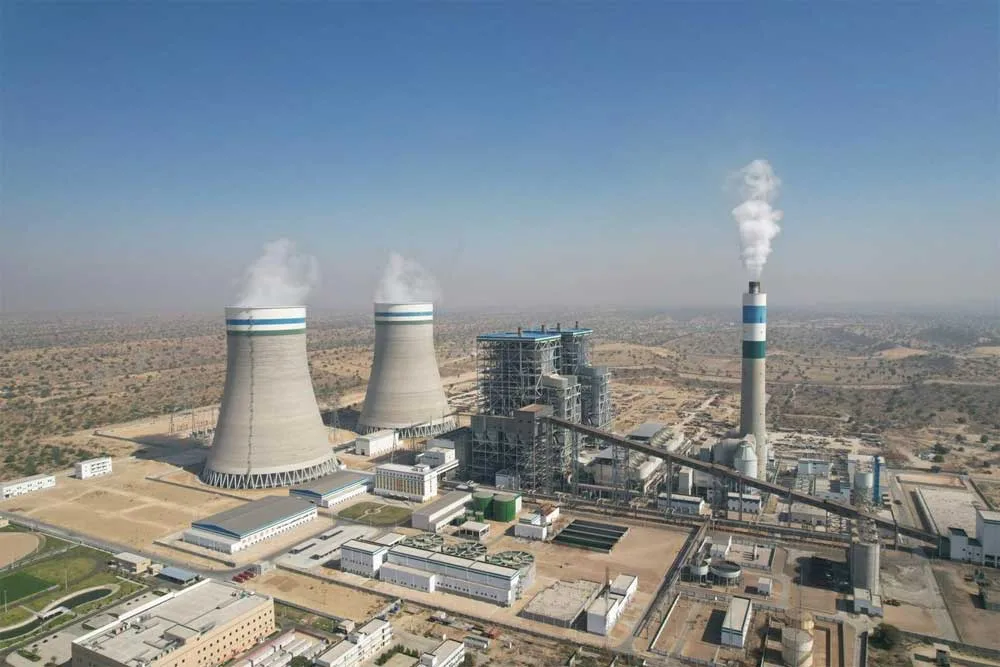
Thar possesses one of Pakistan's largest indigenous energy resources. Its development has already contributed to domestic electricity production and demonstrated that a resource once considered commercially difficult to exploit can become part of the national energy system.
The operational Thar Block-I coal mine and 1,320-megawatt power project, developed with Shanghai Electric's participation, represents a significant example of Pakistan-China cooperation under the China-Pakistan Economic Corridor.
Yet electricity generation should not automatically be considered the final destination of Thar's economic development.
China's experience demonstrates how raw materials can support wider industrial activities when research, manufacturing, infrastructure and supporting industries are brought together.
For Sindh, the opportunity lies in examining whether Thar's resources can support products of greater industrial value while ensuring that their economic benefits justify the financial, environmental and social costs.
Coal-to-chemicals: A new industrial direction
One of the most significant proposals associated with the China mission concerned coal-to-chemicals technology.
This involves converting coal through industrial processes into chemical feedstocks and products that may include methanol, ammonia, fertilizers and other materials used by manufacturing industries.
China has developed considerable experience in coal gasification and related industrial technologies, particularly in regions with substantial coal resources.
Sindh's investment plans identified possible cooperation with Chinese engineering companies and industrial partners to explore similar opportunities.
The proposed development of chemical industries linked to Thar, including potential facilities at Dhabeji Special Economic Zone, could connect resource extraction with downstream manufacturing.
Such an approach would create the possibility of additional industrial activity rather than relying exclusively on coal sales or electricity production.
However, these projects require detailed feasibility studies, reliable infrastructure, careful assessment of environmental impacts and substantial investment before commercial viability can be established.
Fertilizer production and agricultural security
One particularly important opportunity concerns fertilizer manufacturing.
Pakistan's agricultural economy depends heavily on the reliable availability of fertilizers. Price fluctuations, energy costs and supply-chain pressures can increase production expenses for farmers.
A coal-to-fertilizer industry using Thar resources could potentially diversify domestic fertilizer production and reduce exposure to certain imported inputs.
The Sindh government has already been pursuing proposals involving the conversion of Thar coal into industrial feedstocks for ammonia and urea production.
Such projects could create a connection between two major pillars of Sindh's economy: energy resources and agriculture.
If technically and commercially successful, they could contribute to fertilizer availability, industrial employment and agricultural productivity.
But economic feasibility must remain the deciding factor. Domestic production should not be encouraged merely because a raw material is locally available. It must also be competitive, environmentally manageable and beneficial to consumers.
Shanghai Electric: Expanding an existing partnership
An important development during Murad Ali Shah's visit was his engagement with Shanghai Electric Group Chairman Wu Lei and senior company executives.
The discussions reviewed existing cooperation in Thar and explored possible expansion into coal-to-chemicals, coal research, briquetting technologies, renewable energy, storage systems and productive utilisation of mine water.
Shanghai Electric's existing investment gives the company practical experience of Sindh's energy sector, infrastructure requirements and operational conditions.
This could provide a foundation for further cooperation.
The Chief Minister's invitation to expand investment beyond traditional power generation reflects a wider development objective: transforming Thar into an industrial and economic centre rather than treating it only as an electricity-producing region.
The relationship should also be used to increase technical training, local employment and knowledge transfer.
Thar and Dhabeji: Connecting resources with industry
One of China's most important industrial lessons is that natural resources generate greater economic activity when linked to manufacturing centres, transport networks and export facilities.
For Sindh, this suggests a potential relationship between Thar and Dhabeji.
Thar can provide industrial resources, subject to their economic suitability, while Dhabeji offers proximity to Karachi, Port Qasim and international markets.
Chemical manufacturing, fertilizer production and other downstream industries could benefit from such connections.
But these possibilities depend upon affordable transport, dependable
See#30 Page7