



Part V: PIA’s new flight: Rebuilding a national icon
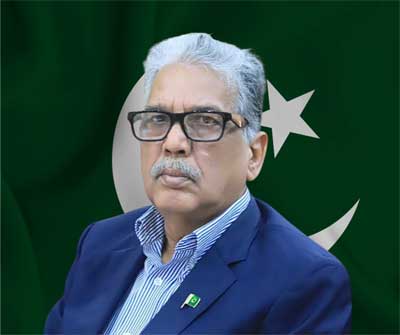
The future of Pakistan International Airlines (PIA) will not depend solely upon aircraft acquisitions, route expansion or financial restructuring. Its long-term success will largely be determined by the quality of leadership, governance and institutional capability behind its transformation.
That is why the composition of the consortium that has assumed responsibility for PIA deserves careful examination.
Unlike traditional acquisitions where a single investor assumes complete control, the new ownership structure brings together some of Pakistan’s most respected corporate institutions-organizations that have built their reputations over decades through financial discipline, operational excellence and professional management.
Each partner enters the consortium from a different sector of the economy. Individually, they have demonstrated success within their own industries. Collectively, they represent one of the most diverse combinations of expertise ever assembled for the revival of a major public-sector enterprise in Pakistan.
The significance of this partnership extends beyond financial investment.
It represents an attempt to apply modern corporate governance to one of Pakistan’s most recognizable national institutions.
More than Investors
Airlines are among the world’s most complex businesses.
They combine engineering, logistics, finance, technology, customer service, international regulation, marketing and human resource management within a single organization.
No individual company possesses expertise in every one of these disciplines.
The strength of the new consortium therefore lies in the complementary capabilities of its members.
Each shareholder contributes experience developed over decades in managing large organizations operating within highly competitive industries.
This diversity reduces dependence upon any single area of expertise while strengthening collective decision-making.
Arif Habib Group: Strategic Vision and Financial Leadership
Leading the consortium is the Arif Habib Group, one of Pakistan’s most respected business houses.
Over several decades, the Group has expanded from capital markets into diversified investments covering financial services, industrial manufacturing, fertilizers, energy, real estate and infrastructure.
Throughout this journey, the organization has consistently emphasized institutional development, prudent financial management and long-term value creation.
These qualities are particularly relevant to PIA.
The airline requires strategic planning extending well beyond annual financial results.
Fleet renewal, route development, digital transformation and organizational restructuring all demand leadership capable of balancing immediate operational priorities with long-term commercial objectives.
The Arif Habib Group’s experience in managing complex investments provides an important foundation for this transformation.
Fatima Fertilizer: Operational Excellence
Few industrial organizations illustrate operational discipline as effectively as Fatima Fertilizer.
Operating large-scale manufacturing facilities requires rigorous planning, engineering precision, supply chain management and continuous attention to efficiency.
Although fertilizer production differs fundamentally from aviation, many principles of operational excellence remain remarkably similar.
Asset management.
Preventive maintenance.
Safety standards.
Process optimization.
Performance measurement.
These disciplines form the backbone of every successful airline.
Fatima Fertilizer’s experience in managing sophisticated industrial operations therefore contributes valuable institutional knowledge to the consortium.
Fauji Fertilizer Company: Governance and Stability
Among Pakistan’s largest and most respected corporate institutions, Fauji Fertilizer Company represents another important pillar of the consortium.
Its reputation has been built upon sound governance, financial stability and consistent corporate performance over many decades.
For PIA, such experience is invaluable.
Airline restructuring requires disciplined financial oversight, transparent reporting and careful allocation of capital.
The governance culture associated with FFC strengthens the consortium’s institutional credibility while reinforcing confidence among investors, regulators and financial markets.
Lake City Holdings: Infrastructure and Long-Term Development
Infrastructure plays a critical role in aviation.
Airports, maintenance facilities, training centres, office complexes and commercial developments all require strategic planning extending over many years.
Lake City Holdings has established its reputation through large-scale real estate and infrastructure development.
Its expertise lies in creating integrated projects that combine long-term planning with commercial sustainability.
Such experience can contribute meaningfully to optimizing PIA’s physical assets while identifying opportunities to improve commercial utilization beyond traditional airline operations.
The City School Group: Investing in Human Capital
Perhaps the most unexpected member of the consortium is The City School Group.
At first glance, education and aviation appear unrelated.
In reality, successful airlines depend fundamentally upon people.
Pilots.
Engineers.
Cabin crew.
Ground staff.
Customer service representatives.
Managers.
Every aspect of airline performance depends upon continuous learning, professional development and organizational culture.
The City School’s experience in education and institutional management reinforces an often-overlooked reality:
Airlines are ultimately built by skilled people rather than aircraft alone.
Investing in human capital may become one of the most important elements of PIA’s long-term revival.
AKD Group: Capital Markets and Financial Expertise
The AKD Group brings another important dimension to the consortium.
With extensive experience in investment banking, financial advisory services and capital markets, the Group understands the financial architecture required for large-scale corporate transformation.
Future expansion may involve refinancing, strategic partnerships, capital raising or even public market participation.
Managing such opportunities requires sophisticated financial expertise.
AKD’s experience therefore complements the consortium’s broader strategic capabilities while strengthening its ability to respond to changing market conditions.
Why This Consortium Is Different
Previous restructuring efforts often focused primarily upon reducing losses.
The current approach appears considerably broader.
It combines investment with governance.
Industrial management with financial expertise.
Infrastructure development with human capital.
Corporate planning with long-term institutional thinking.
This integrated approach reflects an understanding that sustainable airline recovery cannot be achieved through isolated reforms.
Every component of the organization must improve simultaneously.
Operations, Finance, Technology, Customer experience, Human resources. Corporate culture.
Only then can meaningful transformation occur.
A Shared National Responsibility
While each consortium member brings commercial expertise, PIA represents something greater than a business investment.
It remains Pakistan’s flag carrier.
Its aircraft carry the national identity across international skies.
Its performance influences perceptions of Pakistan among tourists, investors and overseas communities.
This creates responsibilities extending beyond ordinary commercial expectations.
Success will be measured not simply by profitability but by service quality, international credibility and public confidence.
The consortium therefore inherits not only assets and liabilities but also a legacy cherished by millions of Pakistanis.
That responsibility cannot be measured on a balance sheet.
Building Institutions, Not Simply Businesses
Pakistan has often produced successful entrepreneurs.
Its greater challenge has been building institutions capable of sustaining excellence across generations.
PIA presents precisely such an opportunity.
If the consortium succeeds in transforming the airline through professional governance, operational excellence and financial discipline, it will demonstrate that Pakistan’s private sector possesses both the capability and the confidence to revive major national institutions.
Such an achievement would extend far beyond aviation.
It would strengthen investor confidence.
Encourage broader economic reform.
Enhance Pakistan’s international reputation.
Most importantly, it would reaffirm the principle that strong institutions are built through leadership, accountability and long-term vision rather than short-term expediency.
The journey has only just begun.
Yet for the first time in many years, Pakistan’s national airline possesses not only a new ownership structure but also a coalition of corporate expertise capable of pursuing comprehensive transformation.
Whether history ultimately records this consortium as the architects of PIA’s revival will depend not upon promises but upon performance.
The opportunity before them is extraordinary.
So too is the responsibility.
Looking Ahead
In Part VI of this special series, “Learning from the Best: What PIA Can Learn from the World’s Great Airline Turnarounds,” we will examine how some of the world’s most successful airlines-including British Airways, Japan Airlines, Air India, Turkish Airlines and Singapore Airlines-overcame financial crises, modernized their operations and rebuilt global reputations. We will explore the lessons these transformations offer and how PIA can adapt them to Pakistan’s unique aviation landscape as it charts its own course toward sustainable success.


 will not depend solely upon aircraft acquisitions, route expansion or financial restructuring.)