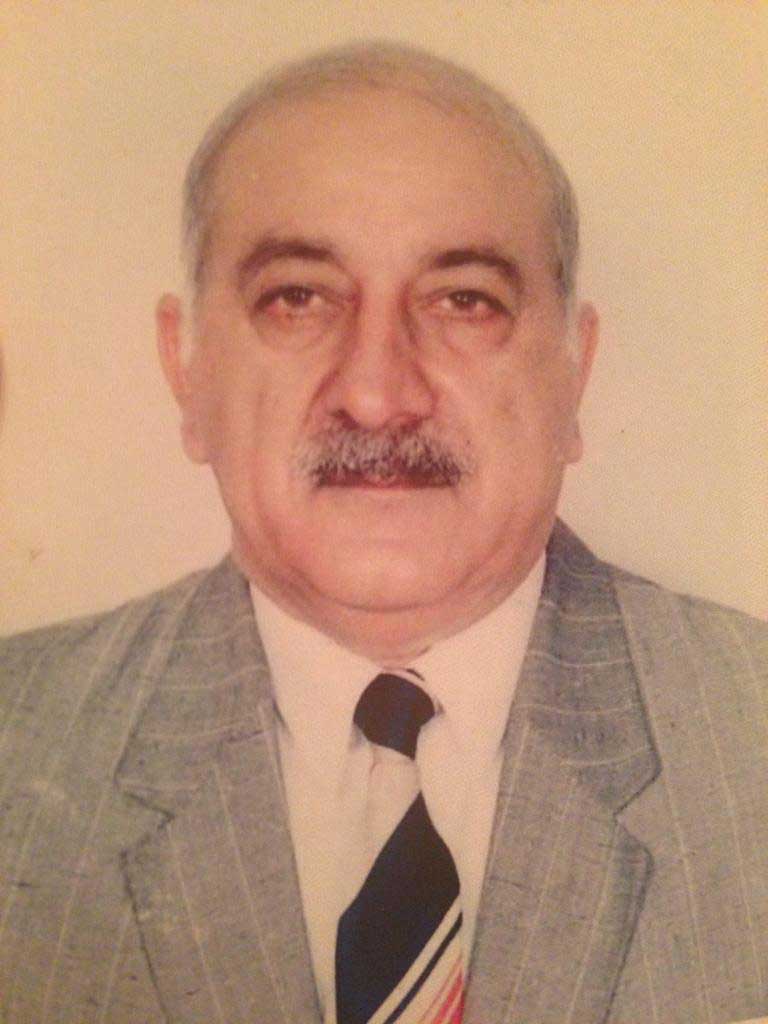
Undoubtedly, the establishment remains the most powerful force in the country not by deliberate design alone, but largely due to the political vacuum created by repeated governance failures, weak institutions, and massive corruption. When civilian leadership falters, the nation instinctively searches for a stabilizing force, a messiah capable of restoring order. Historically, it is the establishment disciplined, organized, and cohesive that steps into the arena during moments of national uncertainty. It is no secret that the head of the Inter-Services Intelligence (ISI) has long been perceived as one of the most powerful individuals in the state structure. The office operates in shadows, tasked with national security, intelligence gathering, and counterintelligence domains where secrecy is essential. However, secrecy without robust oversight creates the risk of unchecked authority. When power is exercised without visible accountability, it can gradually move beyond the defined limits of duty. This is where the controversy surrounding Lt Gen (R) Faiz Hameed emerged.
During his tenure, Faiz Hameed became a highly visible figure unusual for an intelligence chief. His actions, whether real or perceived, were widely interpreted as political interference. Opposition parties accused him of punitive tactics, intimidation, and intrusion into personal and political spaces. Business leaders reportedly faced pressure, coercion, and public humiliation. Allegations of manipulation, overreach, and misuse of authority became frequent in public discourse. Such perceptions whether entirely accurate or partially exaggerated proved damaging. In civil-military relations, perception often matters as much as reality. More troubling were reports suggesting ambitions beyond institutional boundaries, including alleged maneuvering related to the post of Army Chief. If true, such conduct would represent a serious breach of military discipline, which is built upon hierarchy, restraint, and loyalty to the institution rather than personal advancement. Acting under the assumption that one is untouchable is often the first step toward institutional backlash. The sentencing of Faiz Hameed through Field General Court Martial (FGCM) proceedings to ten years though subject to appeal and potential reduction marks a defining moment. It reinforces a reality often overlooked in public debate: The Pakistan Army possesses a strong internal accountability system. It is neither symbolic nor selective when institutional red lines are crossed. History shows that generals and officers regardless of rank or influence, have faced consequences when found guilty of misconduct. The system may appear opaque from outside, but internally it is firm, structured, and uncompromising. Escaping accountability within the military is far more difficult than commonly assumed. The Faiz Hameed episode thus serves not merely as the fall of an individual, but as an institutional assertion. However, two lessons emerge. Firstly, there is no escape from accountability. Power may shield individuals temporarily, but institutions endure. No office, no rank, and no proximity to authority grants permanent immunity. When actions are seen as damaging to the institution’s credibility, accountability eventually follows. The system may move slowly, but it does move decisively.
This episode sends a clear message: unchecked authority is an illusion, and those who believe otherwise ultimately face consequences. Second important lesson that emerges never indulge in politics while in uniform. The military’s strength lies in its neutrality. The moment an officer particularly at senior levels enters the political arena, institutional credibility erodes. Politics is divisive by nature; the military must remain unifying. History repeatedly demonstrates that political engineering may deliver short-term outcomes, but it creates long-term institutional damage. Professional soldiers are guardians of the state, not power brokers in political contests.
The Faiz Hameed episode is not just about one individual’s rise and fall; It is a defining moment for institutional discipline and self-correction. It serves as a cautionary tale about the dangers of unchecked power and blurred boundaries, reinforcing the principle that institutions survive only when rules apply equally to all without any fear or favor. In this context, credit is due to the Field Marshal(FM) and the Chief of Army Staff (COAS) for allowing the process to take its course without hesitation or compromise. By upholding institutional norms over personal loyalties, the top military leadership demonstrated that discipline, and rule of law remain paramount within the armed forces. Such decisions, though difficult, strengthen public confidence and reaffirm that no individual is above accountability. For Pakistan’s future stability, the lesson is unequivocal. Politics must be left to politicians, and accountability must remain non-negotiable regardless of rank or past influence.