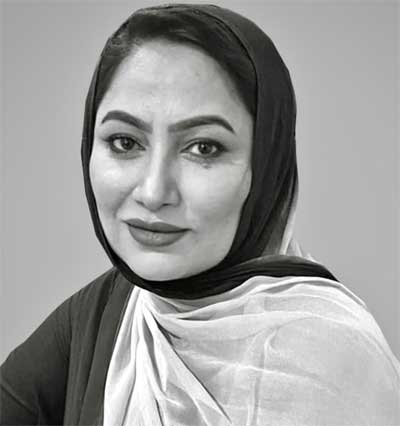
I am writing this article straight from my heart not as a mental health professional but as a woman. My hope is that after reading it, even a few women may pause and reflect on their own lives, their choices, and their sense of self.
In this article, I am writing about daily tasks, though unacknowledged, quietly lay the foundation for a woman’s identity loss. Women keep going, they breathe, they function, but they are rarely allowed to actually live.
From the very beginning, society draws a blueprint for what a “good woman” should be and every woman has to win this title at any cost. A good woman, society whispers, is one who always sacrifices, who puts everyone else before herself, who bears the responsibility for maintaining harmony at home, and somehow even absorbs the blame for what goes wrong. She is the keeper of peace, the silent anchor in a sea of expectations
It’s true that every relationship sometimes requires sacrifice. But in our society, a woman is the one expected to listen, adjust, and follow everyone else’s directions.
The journey of identity loss begins in childhood. Girls are taught, subtly and overtly, that their lives are not entirely their own. They must compromise, share, and yield to the needs of brothers, elders, or the collective family. They are told to go to another home and ensure that no one is unhappy with them. The message is clear: the home you belong to now is not yours; it is a place to learn patience, submission, and selflessness. Yet, in these formative years, they are rarely encouraged to understand their own desires, their own voices, or even their own worth and most of them live a perplexed life.
When they step into their marital homes, slowly, unconsciously, women begin reshaping themselves to fit the archetype of the “good wife.” And then there are the quieter shifts, the ones no one even notices. They stop reading the books they love, turn away from TV series that give them joy, eat food dictated by family preferences, and alter their clothing to match others’ expectations. She stops drinking tea and starts drinking coffee, or the other way around. She changes her food preferences, adjusts her routines, reshapes her choices just to fit into what is expected of her.
And sometimes, after serving everyone else, she discovers there isn’t enough food left for herself and maybe the bread, the rice, or the curry has already finished. So, she eats whatever leftovers she can find, or something stored in the fridge, just to fill her stomach but not to satisfy her taste, her cravings, or her comfort. Most women even say, “It’s okay… this is what women are for.” Can you imagine how deeply this conditioning has seeped into their sense of self that they have accepted these expectations as natural, even necessary These are not small adjustments; they are silent, unnecessary sacrifices absorbed into daily life, which, under the guise of culture and relationships, quietly erode a woman’s life, crush her confidence, and bury her sense of self-worth so deeply that she loses all idea of choosing herself or valuing her own needs.
Before cooking, women first ask everyone else in the house what they want to eat and they cook as per other family members. I have met countless women who freeze when asked the simplest questions: “What’s your favourite food” “Your favourite colour” “What do you enjoy in your free time” “What makes you happy” “What comforts you on a bad day” “What do you dream for yourself” They look lost, as if these answers were never meant for them.
Yes, we love our families and we love our loved ones. But this is not love. This is self-neglect. This is disowning your own self, piece by piece, without even noticing.
This process is incremental, insidious, and often unnoticed. Sacrifice becomes equated with virtue, and slowly, the self she once knew fades into the background. Deep inside, there is a quiet ache and a sense of incompleteness but she may dismiss it, believing that she is doing what is right, what is expected.
Motherhood is meant to be celebrated, but here, it only amplifies this erosion. The woman who was already bending herself to fit societal moulds now bends even further. Shower times are skipped, daytime rest becomes a luxury, and sleep is interrupted, if it exists at all.
Slowly, her childhood friendships fade, and her social life disappears, because every choice bends toward fulfilling others’ needs. She cannot leave even a single house chore and if she does, shame and guilt overwhelm her, as if she’s committed a crime. In this way, she sacrifices herself completely, leaving no space for joy, friendship, or her own desires.
Women are not praised for the immense emotional, physical, and mental labour that they perform. Instead, the narrative persists that this is “just how women are.”
It is crucial to recognize that no level of morality, humanity, culture, or ethics tells a woman that she should abandon her own choices or her own life. At every level, women have the right to live fully as themselves.
It is often not until middle age, perhaps in their 50s or 60s, that some women begin to notice the void left by these years of compromise. By then, the realization can be both painful and doubtful. Some question whether they truly chose their path or merely followed expectations. Others reflect on their lives and gains, yet cannot fully grasp what happened to them or what others imposed. Awareness of this identity loss is rare in societies where women are conditioned from birth to prioritize others over themselves. But slowly, a new consciousness is emerging.
Today, awareness is spreading. Conversations about mental health, autonomy, and self-worth are gaining ground. It requires courage to question lifelong conditioning, to assert personal desires in the face of social expectation, and to rediscover the individual beneath the roles of daughter, sister, wife, mother, and caretaker.
Reclaiming identity is not merely a personal act; it is a cultural shift. When a woman embraces her individuality, she challenges a societal script that has gone unexamined for generations. She reminds the world and herself that worth is not measured by endless unnecessary sacrifices or the quiet maintenance of harmony, but by authenticity, self-respect, and the freedom to live fully as oneself.
Women can rediscover their passions, their voices, and their autonomy without guilt, without shame, and without the pressure to conform to an outdated definition of “goodness.”
As a reflection for every woman reading this: What do you think about yourself At which stage are you in this journey How much of your identity have you lost, and how much are you ready to reclaim.
The story of identity loss is a cautionary tale, but it is also a story of hope. Awareness may arrive late, and some lessons may be learned only through years of silence and compromise. Women are discovering that they can be nurturers and, at the same time, whole, complete, and worthy of recognition, care, and freedom.