


The commencement of Warrior-IX, the ninth edition of the annual Pakistan-China bilateral counter-terrorism exercise, is far more than a routine military engagement. It is a reaffirmation of a relationship that has matured over decades-one that continues to evolve with the complexities of modern global security. Held at Pakistan’s National Counter Terrorism Center (NCTC), Pabbi, the exercise brings together the Pakistan Army and China’s People’s Liberation Army (PLA) under a shared vision: strengthening interoperability, enhancing professional readiness, and bolstering a joint response framework to emerging threats.
In a world where geopolitics is increasingly defined by hybrid warfare, non-state actors, and asymmetric threats, Pakistan and China’s counter-terrorism cooperation remains an essential pillar of regional stability. The ISPR’s statement underscored that the exercise aims to refine professional skills and exchange best practices-an objective that carries exceptional weight given the rapidly shifting tactics of global terrorist outfits. Both countries have faced the menace of terrorism in distinct but deeply consequential ways. Pakistan has spent the last two decades fighting some of the world’s deadliest militant groups, while China has been strengthening its internal and border security frameworks in the wake of rising global extremism and its spillover potential.
The presence of Major General Bian Xiaoming, Deputy Chief of Staff of the PLA’s Western Theatre Command, alongside senior Pakistani commanders, highlights the strategic seriousness that both sides attach to Warrior-IX. Such high-level participation sends a clear message: counter-terrorism is not a standalone military requirement-it is a core component of their shared security architecture.
Beyond the drills and tactical maneuvers, the exercise embodies the broader and time-tested relationship described often as “Iron-Clad Brotherhood.” This term is not mere diplomatic rhetoric; it reflects decades of cooperation across defence, diplomacy, and development. In an era where alliances fluctuate with political tides, Pakistan and China’s partnership stands out as remarkably consistent-rooted in mutual trust, non-interference, and a strategic understanding of each nation’s security imperatives.
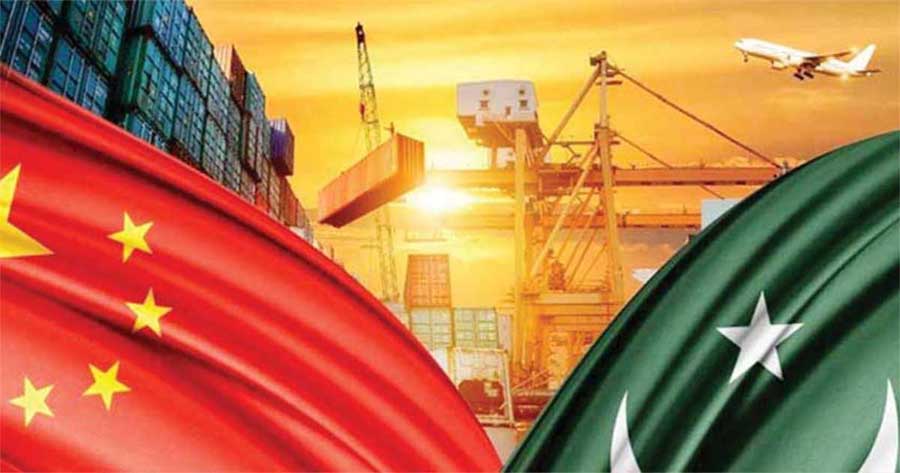
Warrior-IX also holds symbolic significance. It reminds regional and global stakeholders that Pakistan and China continue to align their security priorities. With the deepening of the China-Pakistan Economic Corridor (CPEC)-a flagship of China’s Belt and Road Initiative-the two nations share vested interests in ensuring a peaceful and secure environment across the region. Counter-terror cooperation, therefore, directly complements their economic cooperation. The protection of trade routes, project sites, and regional connectivity corridors depends on robust capability development, intelligence coordination, and joint readiness.
Moreover, the evolving geopolitical landscape in South Asia and the broader Asia-Pacific region makes such exercises indispensable. Unconventional threats-ranging from cyber intrusions to transnational terrorism-require well-rehearsed operational synergy. For Pakistan, the NCTC remains one of the most sophisticated training platforms in the region, designed after years of real-world counter-terror experience. For China, participation in Warrior-IX offers valuable exposure to high-quality counter-terror training methodologies shaped by Pakistan’s hard-earned battle experience.
Equally important is the message of peace embedded in this exercise. While some observers may view joint military training through the lens of conventional power projection, the nature of Warrior-IX-focused explicitly on counter terrorism-underscores both nations’ commitment to regional peace and collective security. Counter-terrorism is not an offensive military posture; it is a stabilizing one. It reflects a desire to prevent violence, dismantle destabilizing networks, and ensure the safety of civilian populations.
As Pakistan continues to navigate internal and external challenges, these joint military engagements reinforce its capacity to remain resilient. For China, the exercise enhances the capability of its military forces to coordinate effectively with partners across diverse terrains and operational environments.
But beyond the technical and strategic dimensions, Warrior-IX stands as a statement of continuity. It signals that Pakistan and China’s defence cooperation is neither episodic nor symbolic-it is a structured, institutionalized, and forward-looking partnership. It is a reminder that in an unpredictable world, longstanding alliances built on trust and shared purpose remain the most valuable currency in international relations.
As the ninth edition of Warrior-IX unfolds, it strengthens not only the joint operational preparedness of two allied militaries but also the broader architecture of regional security. It reinforces the principle that counter-terrorism is a shared responsibility and that nations committed to peace must stand together against the forces that threaten it.
The Pakistan-China partnership has weathered global shifts, regional realignments, and changing security doctrines. Warrior-IX is another milestone in this enduring journey-an affirmation that the two Iron-Clad Brothers remain united in purpose, steadfast in friendship, and aligned in their pursuit of peace, stability, and a secure future for the region.
Warrior-IX: Deepening the strategic security bond between Pakistan and China
Previous article

Next article

