


Every nation that has achieved remarkable economic growth and social prosperity has one characteristic in common: an efficient system of governance. Good governance is not merely about honest leadership or sound policies; it is about creating administrative structures that bring government closer to the people. No matter how visionary a government may be, it cannot deliver quality education, healthcare, law and order, infrastructure and economic opportunities unless its administrative framework is capable of serving its citizens efficiently.
Pakistan has been blessed with abundant natural resources, a strategic geographical location, fertile agricultural land and one of the world’s youngest populations. Yet despite these strengths, millions of Pakistanis continue to face challenges in accessing even the most basic public services. The question that has troubled policymakers, economists and citizens alike is simple: why has Pakistan struggled to transform its enormous potential into sustainable prosperity?
In my opinion, one of the most overlooked answers lies in administrative reforms.
This conviction is not a recent one, nor is it influenced by contemporary political debates. It dates back to 2012, when I had the privilege of visiting Türkiye at the invitation of the Government of Türkiye through the courtesy of Ms. Shazia Marri. During our visit, senior Turkish officials presented the country’s remarkable transformation in infrastructure, governance, urban planning and economic development. Witnessing the scale and speed of Türkiye’s progress was both inspiring and thought-provoking.
During one of the presentations, I asked a senior Turkish minister a question that had been on my mind throughout the visit.
“What is the secret behind Türkiye’s extraordinary development?”
His reply was brief but profound.
“It is an open secret. Create maximum administrative units. Allow every administrative unit to develop its own resources, strengthen its local economy and contribute to the national economy. When every region prospers, the entire country prospers.”
That simple statement has remained with me for more than a decade. I later documented this experience in my book, “The Land of Ataturk,” because I believed that Pakistan could learn valuable lessons from Türkiye’s governance model.
The philosophy is remarkably straightforward. Governments located hundreds of kilometres away cannot fully understand or effectively respond to the unique challenges faced by every district, city or region. Smaller administrative units bring decision-making closer to the people. They enable quicker responses, better planning, greater accountability and more efficient utilisation of local resources.
Many successful countries have embraced decentralisation as a cornerstone of governance. Rather than concentrating authority in a few administrative centres, they have empowered regional and local administrations to make decisions, manage budgets and implement development projects according to local priorities. Such an approach not only improves public services but also encourages healthy competition among regions, with each striving to attract investment, create employment and improve the quality of life for its residents.
Pakistan, by contrast, continues to grapple with an administrative structure that often struggles to keep pace with the needs of a rapidly growing population. Over the decades, the country’s population has multiplied many times over, while its administrative arrangements have not expanded proportionately. As populations grow, governance naturally becomes more complex. Citizens require more schools, hospitals, police stations, courts, roads, industrial zones and municipal services. Without corresponding administrative reforms, governments inevitably become overstretched, resulting in delays, inefficiency and public dissatisfaction.
Administrative decentralisation is not merely about creating new provinces. It encompasses a broader process of strengthening governance through additional divisions, districts, tehsils and empowered local governments where appropriate. It is about ensuring that government institutions remain accessible, responsive and accountable to the communities they serve.
Effective administrative units can transform almost every sector of national life.
Healthcare services can become more accessible because decisions regarding hospitals, clinics and emergency facilities can be made closer to the communities that need them. Educational planning can better reflect local requirements, enabling investments in schools, colleges and technical institutions where they are most needed. Law enforcement agencies can respond more efficiently when policing is managed through well-organised local administrative structures. Investors are generally more inclined to establish businesses in regions where administrative processes are transparent, efficient and predictable. Local industries, agriculture and tourism can flourish when regional administrations are empowered to identify and promote their own comparative advantages.
Most importantly, decentralisation strengthens accountability. Citizens know exactly which authority is responsible for delivering public services. Public officials become more accessible, performance becomes easier to evaluate and governance becomes increasingly transparent.
Naturally, discussions regarding the creation of additional provinces or administrative units involve constitutional, political and administrative considerations. Such reforms require careful study, broad national consultation and constitutional consensus. They should never be pursued merely for political expediency. Instead, they should be guided by objective criteria such as population, geography, economic viability, administrative efficiency and the equitable delivery of public services.
Pakistan does not need administrative reforms because other countries have implemented them. Pakistan needs administrative reforms because the realities of the twenty-first century demand a governance system capable of serving more than 250 million citizens effectively. Our institutions must evolve alongside our population and our economic aspirations.
The debate should therefore not be whether administrative reforms are necessary, but how they can be designed to strengthen national unity, improve governance and accelerate economic development.
Good governance begins with institutions that are capable of delivering results. Administrative reforms are not an end in themselves; they are a means to build a stronger economy, reduce regional disparities, attract investment, create employment and improve the daily lives of ordinary Pakistanis.
As Pakistan charts its course towards a more prosperous future, administrative decentralisation deserves to become a central pillar of the national reform agenda. The lesson I learned in Türkiye more than a decade ago remains as relevant today as it was then: when every administrative unit is empowered to realise its own potential, the entire nation moves forward together.
Way Forward
” Establish a National Administrative Reforms Commission comprising constitutional experts, economists, urban planners and public administration specialists.
” Conduct a nationwide review of Pakistan’s administrative structure based on population growth, geography and service delivery needs.
” Strengthen divisions, districts, tehsils and local governments to improve administrative efficiency.
” Consider the creation of additional administrative units where justified through constitutional procedures and national consensus.
” Delegate greater financial and administrative authority to local institutions while ensuring strong accountability mechanisms.
” Develop region-specific economic strategies that enable every administrative unit to utilise its own natural, industrial and human resources.
” Introduce performance-based governance indicators to encourage healthy competition among administrative units.
” Ensure that administrative reforms remain focused on improving public services, promoting investment and enhancing the quality of life for all citizens.
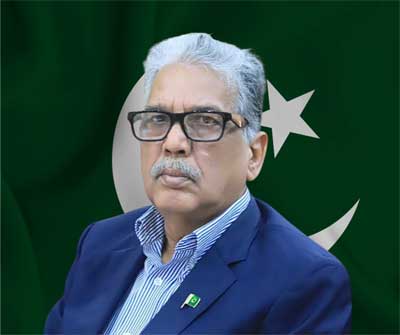
The author believes that sustainable prosperity begins with effective governance, and that administrative reforms are the first step towards building a stronger, more inclusive and economically vibrant Pakistan.
To be continued.