Muhammad Sarfaraz Alam
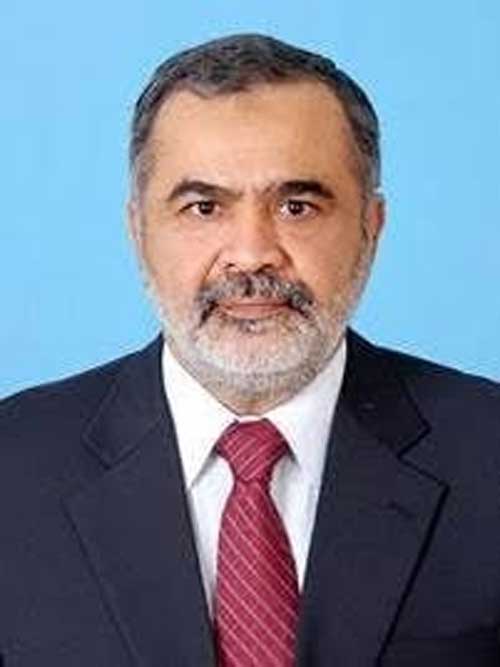
Javed Bilwani is the Patron-in-Chief of the Pakistan Hosiery Manufacturers & Exporters Association and representative of 19 exporters associations. He has also served as Chairman of the Karachi Chamber of Commerce & Industry. With deep insight into Pakistan’s industry, trade, exports and business policies, Bilwani has long highlighted the challenges faced by industrialists and the business community. Following the situation created by the nationwide nine-day strike by goods transporters, he spoke about the losses suffered by the export-oriented industry, rising freight costs, and the challenges confronting the government and business community.
Question: To what extent did the nine-day nationwide strike by goods transporters affect the national economy, particularly the export-oriented industry?
Javed Bilwani: The strike was not merely an issue concerning transporters; its repercussions were felt across the entire economy. Supply chains play a fundamental role in Pakistan’s economy. Raw materials are transported to factories, while finished goods move from factories to ports, airports and other markets. When the wheels of freight vehicles stop turning, the entire economic system is disrupted.
During the nine-day strike, the supply of raw materials to industries was affected, the transportation of finished products came to a halt, export consignments could not reach ports on time, and several industries were forced to reduce production or temporarily suspend operations. This directly affected the country’s exports and its capacity to earn foreign exchange.
Question: Do you believe the strike caused substantial financial losses to exports?
Javed Bilwani: Absolutely. Timing is extremely important for the export industry. International buyers expect to receive goods within agreed deadlines. If shipments do not arrive on time, exporters not only have to bear additional costs, but the confidence of buyers is also affected.
Pakistan is already facing intense competition in international markets. If we cannot ensure timely deliveries, buyers may turn to suppliers in other countries. Therefore, the losses suffered during the strike are not limited to those nine days; their effects may continue to be felt for months to come.
Question: How do you view the increase in freight costs caused by the strike?
Javed Bilwani: It is an extremely worrying situation. Pakistan’s export industry is already under pressure from electricity, gas, taxes, raw materials and other production costs. If transportation costs rise further, Pakistani products become even more expensive in international markets.
We must understand that exporters cannot always pass additional costs on to buyers. Prices in international markets are determined on the basis of competition. If Pakistani products become more expensive, buyers may enter into agreements with suppliers from other countries. As a result, exports could decline, industrial production could be affected, and employment opportunities could become more limited.
Question: What impact has this situation had on the hosiery and textile sectors?
Javed Bilwani: Hosiery and textiles are major pillars of Pakistan’s exports. The entire sector operates through an integrated supply chain. Yarn, fabric, dyeing, packaging, machinery, finished products and their transportation to ports are all interconnected.
When transportation is disrupted, finished goods remain stuck in warehouses, and in some cases there is little justification for factories to continue production. If export orders are not dispatched on time, exporters may also have to bear penalties, additional storage charges, container demurrage and other costs.
Question: Can the responsibility for this crisis be placed solely on the transporters?
Javed Bilwani: No. It would not be appropriate to view the issue in that manner. Transporters are also an important part of the economy and have their own genuine concerns. A permanent and effective dialogue among the government, transporters and industrialists is essential.
The real problem is that we often begin negotiations only after a crisis has emerged. We need a system in which disputes are resolved before they reach the stage of a strike. The nine-day strike demonstrates that our economic system lacks an effective and permanent mechanism for coordination among stakeholders.
Question: What lessons should the government learn from this situation?
Javed Bilwani: First and foremost, the government should declare supply-chain continuity a national economic priority. Pakistan is an import- and export-dependent economy, and therefore economic growth cannot be achieved without strengthening the systems of ports, roads, railways, transportation and logistics.
The second important point is that representatives of industry and trade must be taken into confidence when making business-related decisions. Policymaking should not take place solely within government offices. Those who are actually engaged in business understand the ground-level impact of a particular decision.
Question: Is Pakistan’s existing logistics system adequate to achieve its export targets?
Javed Bilwani: Unfortunately, no. If we genuinely want to substantially increase exports, fundamental reforms are required across the entire logistics system. Along with roads, we need to improve rail freight, port efficiency, customs clearance, container management and modern warehousing.
Globally, countries where the movement of goods is fast, affordable and reliable are the ones increasing their exports more rapidly. If a shipment in Pakistan faces unnecessary delays and additional costs simply to reach the port, our competitiveness is weakened..
Question: In the context of this strike, what is the biggest risk for exporters?
Javed Bilwani: The biggest risk is losing the confidence of international buyers. If a buyer feels that goods cannot be delivered on time from Pakistan, they will look for an alternative country. Once a business relationship is weakened, it is not easy to restore it.
We must also recognize that Pakistan’s competitors can take advantage of our weaknesses. Bangladesh, Vietnam, China, Türkiye and other countries are competing aggressively in the global textile market. We must protect our export industry from uncertainty and disruption.
Question: Should the government take special measures to help the export industry recover from the losses caused by the strike?
Javed Bilwani: The government should immediately assess the problems faced by affected industries and exporters. Issues involving containers stranded at ports, demurrage and other additional costs should be addressed on a practical and sympathetic basis.
At the same time, implementation of a permanent national logistics policy is essential to prevent such situations in the future. We should not merely estimate the losses after a crisis; we must also determine how to ensure that such a crisis does not happen again.
Question: Do you think the strike has also highlighted a crisis of confidence between the government and the business community?
Javed Bilwani: Yes. The business community wants policy continuity and predictability. Investors want to know that a decision being made today will not necessarily be reversed tomorrow. Similarly, industrialists want the government to be readily available to resolve problems whenever they arise.
Trust can only be established through continuous communication among the government, industrialists and transporters. Instead of moving from one crisis to another, we need to establish an institutionalized system.
Question: Finally, what message would you like to give the government?
Javed Bilwani: The government must understand that exports are not merely the business of industrialists; they are a fundamental source of foreign exchange earnings for the country. An export container does not contain products alone. It also carries jobs, foreign exchange, the survival of industries and Pakistan’s reputation in international markets.
The nine-day transport strike has taught us an important lesson: an economy cannot function without roads, ports and efficient supply chains. The government must immediately adopt a comprehensive strategy to reform the logistics sector, permanently resolve the problems faced by transporters, reduce freight costs and make the export industry more competitive.