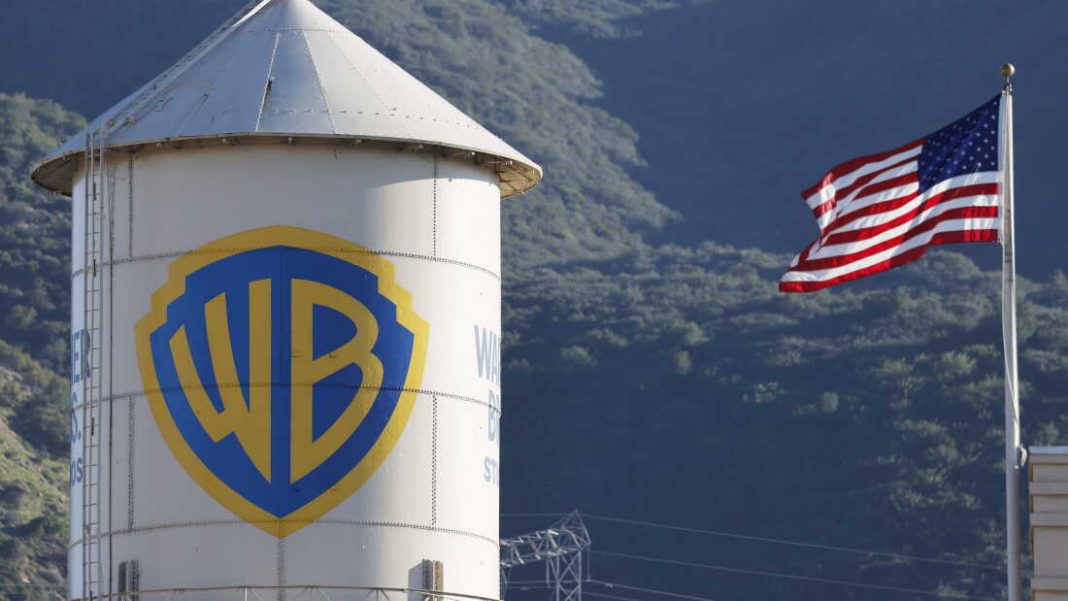
Few corporate stories in entertainment this year have carried as much drama, political intrigue, and sheer scale as the battle over Warner Bros. Discovery. What began as a routine-sounding acquisition announcement in February 2026 has spiraled into one of the most contentious media mergers in recent memory — tangled up in antitrust litigation, allegations of political favoritism, and a growing list of parties trying to block, delay, or reshape the deal entirely.
How We Got Here
In February 2026, Paramount Skydance signed a roughly $110 billion agreement to acquire Warner Bros. Discovery — the parent company of HBO, CNN, and a sprawling library of film and television assets. The deal followed a competitive sale process that had, months earlier, included interest from Netflix, which ultimately withdrew its own bid over financial considerations.
Even before a deal was signed, the sale process was drawing political scrutiny. Lawmakers on both sides of the aisle raised concerns months in advance — Republican Rep. Darrell Issa warned that a Netflix acquisition could hand one company excessive control over the streaming market, while Democratic senators Elizabeth Warren, Bernie Sanders, and Richard Blumenthal pushed the Department of Justice to ensure any review was conducted independently, warning against what they called a “cloud of political favoritism and corruption” surrounding the sale.
Federal Approval, State Pushback
In June 2026, the Justice Department’s Antitrust Division cleared the Paramount-WBD merger without requiring any divestitures or behavioral remedies — a notably clean approval for a deal of this size. But federal clearance didn’t end the fight. Senator Warren responded sharply, framing the approval as a win for what she called “Trump-aligned billionaires,” and vowing that state attorneys general would continue pushing back.
That prediction proved accurate. In July 2026, a coalition of twelve state attorneys general — all Democrats — filed a formal legal challenge seeking a preliminary injunction to block the deal, arguing it would violate antitrust law. They weren’t alone: the Writers Guild of America filed its own separate antitrust suit, arguing the merger would suppress pay and reduce competition across three key labor markets for writers — blockbuster scripts, episodic television writing, and overall studio deals.
Additional legal challenges piled on. A group of Paramount+ subscribers sued to block the deal over fears of price hikes and reduced viewing options, though a federal judge denied their request for an injunction. Separately, a Paramount shareholder filed suit against CEO David Ellison and his father, Oracle co-founder Larry Ellison, alleging the two struck an improper arrangement with the Trump administration to smooth the deal’s path to approval.
A Deal on Pause
Facing the state AGs’ lawsuit as the most serious remaining threat to the merger, Paramount Skydance struck an agreement in late July 2026 to postpone closing the Warner Bros. Discovery deal — either until five days after an antitrust trial concludes, or until June 1, 2027, whichever comes first. No trial date has yet been set, meaning the deal’s fate now hinges on a legal process with no clear timeline.
Complicating matters further, Paramount is also facing international regulatory hurdles. The European Commission has opened an investigation into the deal under the EU’s Foreign Subsidies Regulation, examining roughly $24 billion in financing for the acquisition coming from the sovereign wealth funds of Saudi Arabia, Qatar, and Abu Dhabi. In the UK, the country’s culture minister has signaled she is considering intervening in the deal as well.
Why This Fight Matters Beyond One Merger
Legal analysts following the case have pointed out that its significance extends well past Paramount and Warner Bros. themselves. The deal is increasingly being treated as a test case for how regulators approach mergers in industries that have already gone through years of rapid consolidation — with agencies looking less at simple market-share thresholds and more at how a deal reshapes competitive dynamics across an entire sector. For any company eyeing a major merger in a similarly concentrated industry, how this case plays out could shape merger strategy and regulatory expectations for years to come.
There’s also the matter of what it would cost Paramount to simply walk away: reports indicate a breakup fee of $7 billion would apply if the company abandoned the deal — a number large enough that observers see backing out as extremely unlikely, whatever the legal outcome.
What Happens Next
With the deal’s closing now tied to an antitrust trial that has no scheduled date, Warner Bros. Discovery’s future remains genuinely uncertain heading into the back half of 2026. What’s clear is that this is no longer just a story about two media companies combining — it’s become a case study in how political scrutiny, state-level antitrust enforcement, labor advocacy, and international regulators can collectively reshape even a deal that’s already cleared federal review.
For an industry still adjusting to the streaming era’s brutal economics, the outcome will likely shape not just Warner Bros. Discovery’s fate, but the playbook every other media company watches when they consider their own next big move.