Shabbar Naqvi
Pakistan’s automotive market has spent the last few years cautiously circling the idea of electrification — hampered by patchy charging infrastructure, high import costs, and a car-buying public that has, for good reason, been wary of range anxiety. Into that hesitant market stepped Deepal, the electric-vehicle brand under Chinese automaker Changan, with a strategy that sidestepped the industry’s biggest hesitation entirely: Range-Extended Electric Vehicles, or REEVs.
The result has been one of the more consequential shifts in Pakistan’s new-energy vehicle (NEV) landscape in recent memory.
What Makes a REEV Different
A REEV isn’t a hybrid in the traditional sense, and that distinction is central to why Deepal’s approach has resonated. In a conventional hybrid or plug-in hybrid, the combustion engine can directly drive the wheels. In Deepal’s REEV models, the small onboard engine never touches the wheels at all — it exists purely as a generator, topping up the battery so the electric motor can keep driving the car. The result, in practice, is a vehicle that drives like a full EV nearly all the time, but never leaves the driver stranded without a charging station in sight.
For a market like Pakistan, where public charging infrastructure is still being built out, this is more than a technical footnote — it’s the feature that made electrification commercially viable in the first place. Deepal has marketed this as “Range Confidence,” explicitly framing it as an answer to the anxiety that has held back EV adoption in the country.
The S05: A Genuine Industry First
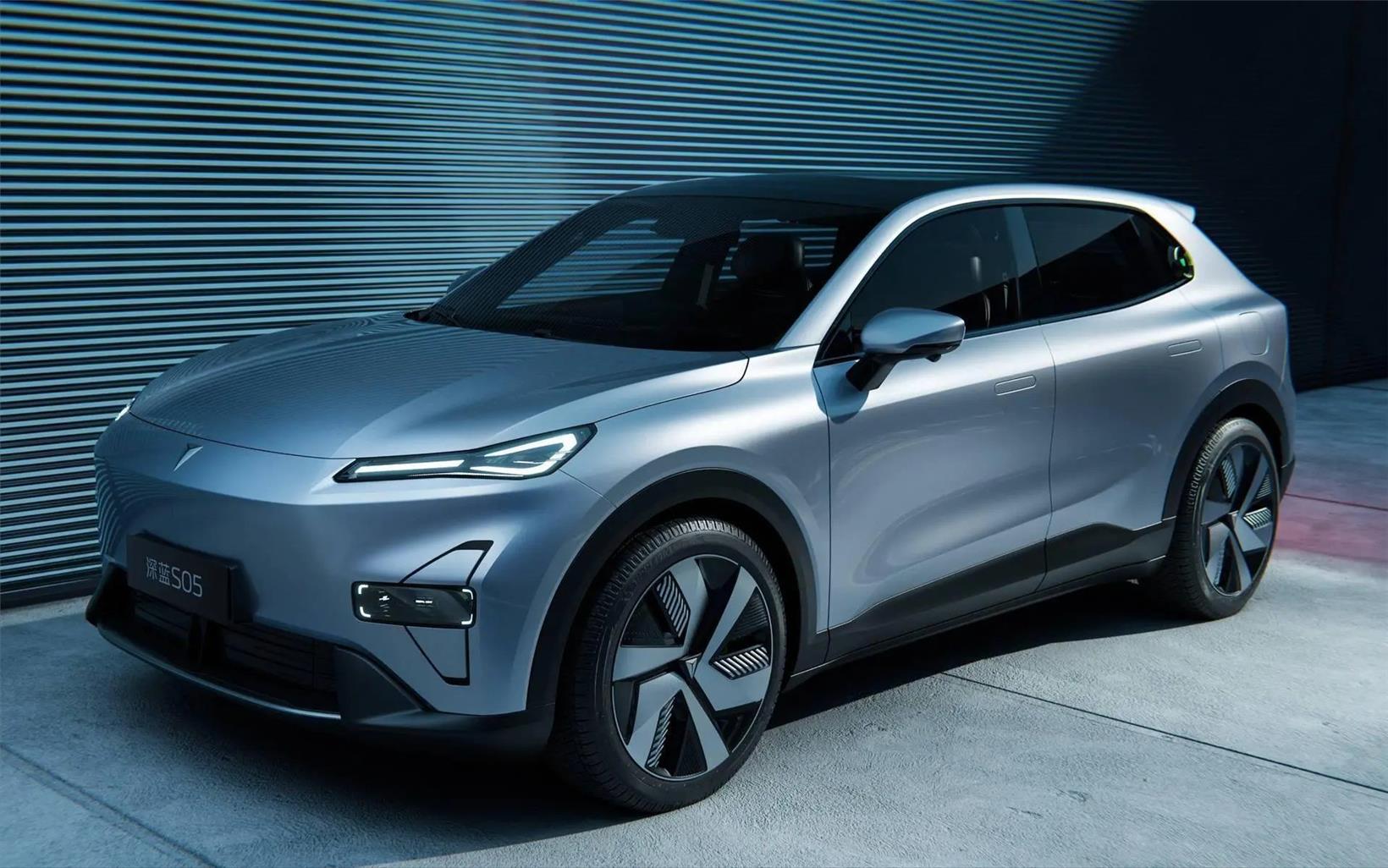
The flagship of Deepal’s Pakistan push has been the S05, a compact C-segment SUV and the first REEV to be locally assembled in the country. Introduced at the Pakistan Auto Show in late 2025 and entering full delivery in early 2026, the S05 is built at Master Changan Motors’ facility in Karachi on Changan’s dedicated EPA1 electric platform — not a combustion platform retrofitted for electrification, but a vehicle designed around an electric drivetrain from the ground up.
The numbers behind it are significant for the segment: a combined range exceeding 1,000 kilometers, with up to 170 kilometers achievable on pure electric power alone from its battery pack — reportedly the longest all-electric range of any non-BEV vehicle sold in Pakistan at the time of launch. It also arrived loaded with more than 20 Level-2 driver-assistance features, including automated parking functions, and interior touches like zero-gravity passenger seating that are typically reserved for vehicles well above its price bracket.
Priced at an introductory rate of roughly PKR 9.999 million, the S05 positioned itself as an accessible entry point into serious electrified motoring — not a novelty EV for early adopters, but a mainstream family SUV with electric underpinnings.
Beyond the S05: Building Out a Fleet
Deepal hasn’t stopped at a single model. The brand has been steadily rolling out a broader REEV and EV lineup in Pakistan, including the L07 sedan, the S07 SUV, and the fully electric E07, with additional models like the G318 and the performance-oriented K50 Hunter REEV — which reportedly targets an 850-kilometer combined range with dual-motor all-wheel drive — signaling further expansion still to come.
That breadth matters. A single standout model can generate headlines; a full model line, spanning body styles and price points, is what actually shifts a market’s underlying purchasing habits. By offering REEV technology across sedans, compact SUVs, and larger performance SUVs, Deepal is positioning itself less as a niche EV importer and more as a genuine full-line competitor to Pakistan’s established combustion-engine players.
Why This Matters for the Industry
The ripple effects go beyond Deepal’s own sales figures. Local assembly — rather than pure completely-built-unit (CBU) importing — brings real manufacturing investment into Pakistan, creating jobs and building domestic technical capability around electric drivetrains for the first time at meaningful scale. Industry commentary around the S05’s launch has repeatedly framed it not just as a new product, but as a new benchmark for what electrified manufacturing in Pakistan can look like.
It’s also intensifying competition. Rival brands, including Forthing with its Friday model, have begun entering the same REEV compact SUV segment, suggesting the format itself — rather than just Deepal’s specific execution of it — is being validated by the wider market. That’s a meaningful signal: it means Pakistan’s auto industry isn’t just absorbing one company’s product, but adapting its overall strategy around a new powertrain category.
The Road Ahead
None of this means Pakistan’s transition to electrified vehicles is complete, or even close to it. Charging infrastructure remains underdeveloped outside major cities, import duties and currency volatility continue to affect pricing, and REEV technology is, by design, a bridge rather than a final destination — most manufacturers, Deepal included, still see full battery-electric vehicles as the eventual endpoint once infrastructure catches up.
But bridges matter. By solving the range-anxiety problem that has stalled EV adoption elsewhere, and backing that solution with local assembly, competitive pricing, and a genuinely broad model lineup, Deepal has done something more significant than simply launching a car in Pakistan. It has given the country’s auto industry a working model for what electrification can look like in a market not yet ready for pure EVs — and in doing so, it’s pulled a cautious industry a meaningful step further down the road toward one.