The emerging security cooperation among Türkiye, Saudi Arabia and Pakistan has generated considerable discussion about the possibility of a new strategic architecture in the Muslim world. Yet the significance of this development should not be measured simply by asking whether these three countries can form a military alliance. The more important question is whether their cooperation can become the starting point for a broader framework of collective security, strategic coordination and greater autonomy for Muslim states.
Three fundamental structural challenge must be considered: the three countries do not share common borders. This immediately raises questions about the geographical and operational scope of such an alliance. More importantly, what would constitute its common security threat?
Second, the three countries do not face identical security environments. Türkiye’s strategic calculations are shaped by its NATO membership, its position at the intersection of Europe, the Middle East and Eurasia, and its complex regional security environment. Saudi Arabia’s security concerns have traditionally included Iran, instability in Yemen and wider Gulf security. Pakistan, meanwhile, continues to regard India as its principal conventional security challenge.
This divergence matters. An effective military alliance normally depends on a substantial convergence of threat perceptions. Yet Türkiye, Saudi Arabia and Pakistan also maintain varying degrees of diplomatic and economic engagement with India. Identifying a single adversary around which all three could organize their security policies would therefore be considerably more complicated than it may initially appear.
There is a third factor that cannot be ignored: the historical relationship of all three states with Western powers, particularly the United States. Türkiye remains a NATO member, Saudi Arabia has maintained a longstanding strategic partnership with Washington, and Pakistan has historically been drawn into US-led regional security arrangements.
Pakistan’s experience deserves particular attention. Over the decades, Islamabad has repeatedly been relied upon to address regional security challenges and confront perceived adversaries of the United States, sometimes at substantial political, economic and security costs. Pakistan should therefore approach any emerging security architecture with a clear understanding of the lessons of its past alliances. Strategic partnerships should enhance national and regional agency rather than reproduce patterns of dependence.
The evolving geopolitics of the Middle East makes this question even more urgent. Israel’s military and strategic posture, the continuing repercussions of the Gaza conflict, and the wider contest for regional influence are reshaping calculations across the Middle East. Iran is already a major factor in Israel’s strategic planning, while Türkiye and Pakistan possess military, political and strategic capabilities that make them important actors in the wider regional equation.
Türkiye’s diplomatic role in efforts surrounding Gaza, alongside continuing international concerns regarding Pakistan’s nuclear capabilities, illustrates how developments that appear geographically separate can increasingly become interconnected. The security environment of the Middle East can no longer be viewed in isolation from South Asian and wider Eurasian strategic dynamics.
For Pakistan, this creates a particularly complicated strategic environment-a potential double trap. Islamabad must manage its longstanding rivalry with India while simultaneously deepening its relationships with Saudi Arabia and Türkiye and maintaining a geographical, economic and diplomatic relationship with Iran. A rigid, bilateral approach to security could therefore leave Pakistan vulnerable to competing strategic pressures.
Pakistan needs a broader regional vision.
This does not necessarily mean creating an exclusive military bloc. In fact, attempting to construct a “Muslim NATO” may be neither realistic nor desirable at this stage. Muslim-majority states have different political systems, strategic priorities, threat perceptions and relationships with external powers. Expecting them to immediately align themselves within a single military structure would be unrealistic.
A more viable model would be gradual and layered.
Cooperation could begin with bilateral and trilateral defence arrangements and expand into intelligence sharing, joint military training, maritime security, defence-industrial cooperation, diplomatic consultations, crisis management and coordinated strategic planning. Over time, these mechanisms could provide the institutional foundations for a broader regional security framework.
Such a framework should not be limited to the largest Muslim powers. Small and medium-sized Muslim states should have a meaningful place within it. Their geographical positions, economic resources, diplomatic networks and specialized capabilities can contribute significantly to collective security. A genuinely effective regional architecture should therefore be inclusive rather than dominated exclusively by the most powerful states.
China could also play an important, although distinctive, role.
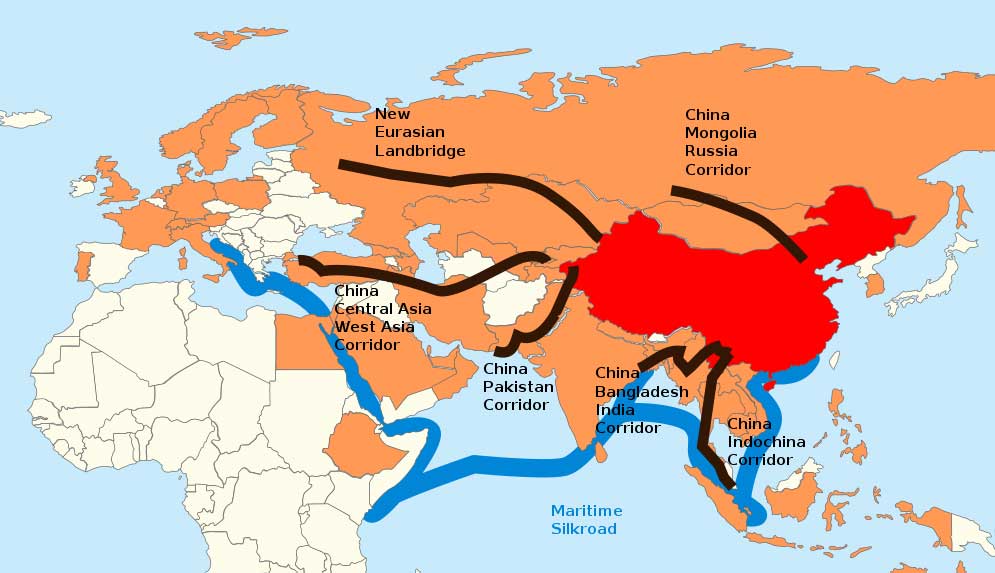
Beijing has already developed extensive technological and strategic cooperation with Pakistan and has demonstrated its diplomatic utility in the Middle East, including its facilitation of improved relations between Saudi Arabia and Iran. Yet China is unlikely to become a formal member of a military alliance of this nature. Its longstanding emphasis on strategic autonomy and peaceful development makes direct participation in a collective military structure less likely.
China’s contribution may instead be more valuable precisely because it does not require formal alliance membership. Technology cooperation, economic connectivity, infrastructure development, defence-industrial collaboration, capacity building and diplomatic facilitation could strengthen the capabilities of partner states without turning China into a formal military participant.
The challenge, however, is institutional.
The Organisation of Islamic Cooperation has long possessed the political potential to serve as a platform for collective action, but translating shared interests into coordinated policy has remained difficult. The Muslim world does not lack organizations; it lacks sufficiently effective mechanisms for converting common concerns into sustained collective action.
This is where strategic research institutions and think tanks can play a critical role.
Before states can develop common policies, they need common assessments. Research institutions across Muslim-majority countries could collaborate on strategic foresight, regional threat assessments, emerging technologies, energy security, maritime security, nuclear stability, economic vulnerabilities and conflict prevention. Such cooperation could create an intellectual infrastructure for collective security that complements formal diplomatic and defence arrangements.
The idea of a “common threat” could provide cohesion, but it must be handled carefully. Building an alliance primarily around opposition to a particular country risks deepening regional polarization and creating new security dilemmas. A more sustainable approach would be to focus on common security challenges rather than a single common enemy.
The conflicts in Gaza, Syria and Sudan, instability in Yemen, maritime insecurity, terrorism, food and energy insecurity, technological dependence and economic vulnerability all demonstrate that contemporary security cannot be reduced to conventional military threats.
The ultimate objective should therefore be to create a system through which Muslim states can protect vulnerable members, manage regional crises, strengthen strategic capabilities and reduce excessive dependence on external powers.
The emerging cooperation among Türkiye, Saudi Arabia and Pakistan should consequently be viewed not as a finished alliance, but as a potential first step toward something larger.
Its long-term significance will depend on whether it remains a limited three-country arrangement or evolves into a wider framework of diplomatic coordination, strategic consultation, technological partnership, economic connectivity and collective security.
The Muslim world does not necessarily need another rigid military bloc. What it needs is greater strategic agency
That agency will not emerge overnight, nor will it come from declaring a common enemy. It will emerge gradually through institutions, confidence-building, research cooperation, economic interdependence and carefully calibrated security partnerships.
The real test of the Türkiye-Saudi Arabia-Pakistan initiative, therefore, is not whether it can become another NATO. It is whether it can help demonstrate that Muslim states, despite their differences, can build the capacity to define their own security priorities, coordinate their responses and collectively navigate an increasingly fragmented and competitive international order.