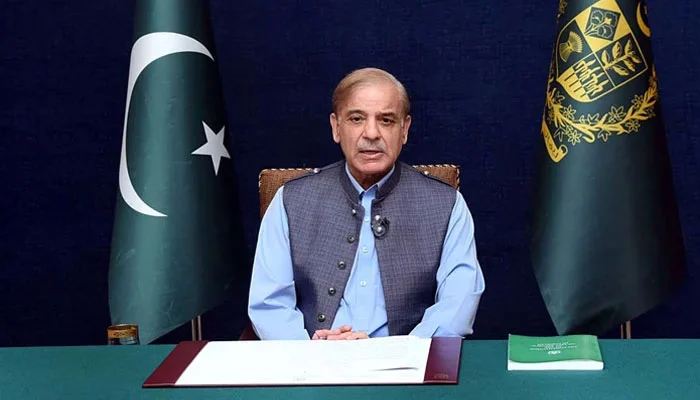
Prime Minister Muhammad Shehbaz Sharif’s blunt message to the Afghan interim government – to choose between peaceful relations with Pakistan or continued support for India’s proxy terrorist outfits, particularly the banned Tehrik-e-Taliban Pakistan (TTP) and the so-called Fitnaul Khwaraj – has struck a decisive chord in Pakistan’s national security discourse. The statement, delivered after chairing a high-level security meeting in Bannu, has been widely welcomed across political, academic, and security circles as a turning point in the state’s counter-terrorism narrative.
For too long, ambiguity has clouded Pakistan’s response to cross-border terrorism. Militants exploiting Afghan soil, with the tacit support of hostile elements, have inflicted grievous losses on Pakistan’s security forces and civilians alike. The Prime Minister’s assertion that “the era of ambiguity is over” signals a long overdue shift from defensive postures to proactive resolve. By drawing a red line for Kabul, Pakistan has reminded the Afghan authorities of their obligations under the Doha Agreement, which clearly stipulates that Afghan territory must not be used for attacks against neighboring countries.
The timing of this message is critical. Khyber Pakhtunkhwa has seen a resurgence of deadly attacks in recent months, with the Frontier Constabulary lines in Bannu recently targeted in a brutal assault that claimed the life of Major Adnan Aslam and others. Evidence points to the involvement of Indian proxies operating through Afghan sanctuaries. Former Inspector General of Police and ex-Home Secretary Syed Akhtar Ali Shah rightly observed that the nexus between TTP, Fitnaul Khwaraj, and Indian handlers has become intolerable. Pakistan’s patience, he argued, can no longer substitute for decisive action.
The Prime Minister’s words also carried an implicit reminder of history. The arrest of Indian spy and serving naval officer Kulbhushan Yadav provided irrefutable proof of New Delhi’s involvement in sponsoring terrorism inside Pakistan. Today, the same destructive designs appear to be channeled through Afghan soil. By naming India’s hand behind these groups, the government has clarified the nature of the threat: this is not only a domestic security challenge but part of a wider regional destabilization strategy.
Academics and analysts have underscored the broader implications of the Prime Minister’s statement. Professor Dr. Ejaz Khan of the University of Peshawar noted that Pakistan has always sought peaceful relations with all its neighbors, including Afghanistan, but such peace cannot be purchased at the cost of innocent lives. Trade, economic cooperation, and regional stability will all be jeopardized if Afghan authorities fail to rein in terrorists. His point that the Afghan interim government bears moral, legal, and security responsibilities in this regard resonates strongly. Peaceful coexistence requires reciprocity.
Brigadier (R) Mahmood Shah, former Secretary Law and Order of FATA, warned that Afghanistan’s fragile international legitimacy will suffer further if it continues to harbor militants. He also pointed to the security risks posed by large numbers of undocumented Afghan nationals residing in Khyber Pakhtunkhwa and other areas. Pakistan has hosted millions of Afghan refugees for decades out of compassion and goodwill, but the continuation of unlawful activities by some elements makes the case for stricter repatriation policies. This argument underscores the linkage between internal security and immigration management.
Another key dimension is the unity of Pakistan’s civil and military leadership. Analysts have emphasized that the Prime Minister’s unequivocal statement demonstrates rare cohesion between civilian government and armed forces. This unity is crucial, as the fight against terrorism cannot succeed without consistent political backing, legal reforms, and societal support. The Prime Minister’s hint at forthcoming legal and administrative measures – including a cabinet meeting to chart out decisive steps – reflects the seriousness of the state’s resolve.
The strong message also carries diplomatic weight. By publicly confronting the Afghan interim government, Pakistan has sent a signal to the international community that it will not allow its sovereignty to be compromised by cross-border terrorism. The choice given to Kabul is simple: work for peaceful coexistence, or face the consequences of being perceived as complicit in terrorism. This clarity strengthens Pakistan’s moral and political position on global platforms, where counter-terrorism cooperation remains a central concern.
As Pakistan braces for the next phase of counter-terrorism, the path forward will demand difficult choices, resilience, and unity. Peaceful relations with Afghanistan remain the preferred option, but not at the expense of Pakistan’s sovereignty and security. The message from Bannu is thus both a warning and an opportunity: Afghanistan can choose partnership and peace, or isolation and confrontation.
Prime Minister Shehbaz Sharif’s words have crystallized the stakes. For Pakistan, the line is drawn – there will be no compromise with terrorism, no tolerance for proxies, and no ambiguity in defending the lives and dignity of its people.