


Mubashar Naqvi
MUZAFFARABAD: The prolonged confrontation between the Azad Jammu and Kashmir (AJK) government and the proscribed Joint Awami Action Committee (JAAC) has caused substantial economic disruption across the region, with the government estimating losses from the 2026 unrest at Rs15 billion, including around Rs4 billion in the tourism sector.
However, the government has not publicly released a detailed methodology or independent assessment explaining how the Rs15 billion estimate was calculated.
AJK Ex. Finance Minister Chaudhry Qasim Majeed put the economic losses at Rs15 billion on June 25, attributing them to protests and shutdowns during the preceding fortnight. AJK Information Secretary Muhammad Rashid Hanif subsequently reiterated the figure on July 6, saying business activity had remained suspended across the region.
The two statements establish Rs15 billion as the government’s estimate, but do not provide a detailed breakdown of the losses among businesses, workers, government revenues, tourism, transport or physical damage.
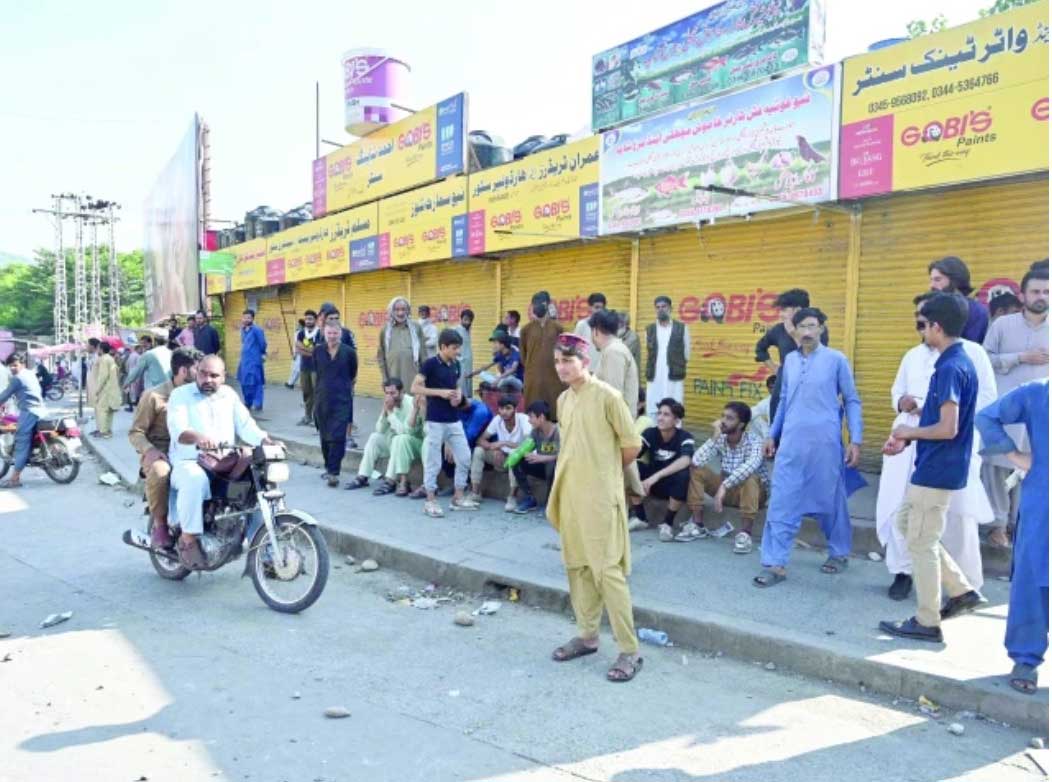
The economic disruption caused by the unrest was widely reported. Dawn reported that AJK remained largely paralysed from June 9 following a JAAC-called strike, while traders said only 50 to 70 per cent of businesses in Muzaffarabad had resumed operations by the end of June. In parts of Madina Market, the reopening rate for shops selling clothing, cosmetics and electronics was reported to be around 30 per cent.
The disruption extended beyond the closure of shops. Internet services remained suspended, affecting online banking and businesses dependent on digital communication, while fuel shortages and restrictions on transportation further affected commercial activity. Intercity and intracity transport also remained suspended for periods during the unrest.
The internet shutdown also affected the supply of essential goods. Reports indicated that medicine supplies were disrupted as businesses faced difficulties in communicating with suppliers and transporting goods from Abbottabad and Rawalpindi.
The unrest coincided with the summer tourism season, an important source of economic activity for AJK. On June 5, the government proscribed JAAC and advised tourists to leave the territory while asking prospective visitors to postpone their travel until June 20, citing security concerns. Mobile internet and data services were also suspended during the period.
The government’s estimate of Rs4 billion in tourism losses therefore relates to a period in which travel was discouraged and tourism-related businesses faced significant disruption. No independently audited assessment of the figure, however, has been made public.
The impact of the shutdowns was not uniform across the economy. Retailers, wholesalers, transport operators, hotels, restaurants and daily-wage workers faced different forms of losses. While some businesses may recover part of their deferred sales after reopening, income lost by daily-wage workers during days without employment is generally not recoverable.
Businesses also faced losses that were not necessarily linked to physical closures. The prolonged suspension of internet services affected digital payments, supplier communication, online orders and other commercial activities, particularly for businesses dependent on electronic transactions.
The Rs15 billion estimate has also been accompanied in some discussions by reference to the Rs23 billion relief package approved following the 2024 protests. Government officials and other commentators have at times cited the two figures together. The Rs23 billion package, however, was a fiscal intervention linked to the settlement of the 2024 dispute and cannot automatically be treated as economic damage caused by protests.
Similarly, government expenditure on electricity and wheat subsidies represents a policy and fiscal cost and cannot, without further evidence, be classified as an economic loss resulting from the 2026 unrest.
The confrontation between the government and JAAC followed a dispute that has continued in different forms since 2023. The movement initially focused primarily on electricity tariffs and wheat prices, while its demands subsequently expanded to include constitutional and political issues, including the abolition of 12 Legislative Assembly seats reserved for refugees from Jammu and Kashmir settled in Pakistan.
In August 2025, JAAC announced a territory-wide strike over the reserved-seats issue, leading to another confrontation and a subsequent political agreement. In January 2026, JAAC leaders alleged that the government had not fully implemented the agreement, including commitments relating to compensation. The dispute subsequently intensified and contributed to the 2026 confrontation.
The AJK government proscribed JAAC on June 5, 2026, under the AJK Anti-Terrorism Act, 2014, citing activities it said were prejudicial to peace and security. Authorities later placed 147 JAAC activists on the Fourth Schedule, according to reports.
The prolonged disruption has therefore generated economic costs extending beyond immediate business closures. These include lost sales, reduced household incomes, cancelled tourism bookings, transport losses, disrupted supply chains, additional costs for businesses dependent on internet connectivity and possible losses in government revenue.
However, the precise value of these losses remains difficult to establish from the information currently available in the public domain.
A comprehensive assessment would require data from several institutions and sectors, including revenue-collection figures from the AJK Finance Department, tourism arrivals and hotel occupancy data, cancellation figures, sector-wise sales estimates from traders, transport operators’ records, information on disrupted supply chains and estimates of lost income among daily-wage workers.
Data from banks and telecommunications companies could also help assess the economic impact of the prolonged disruption to digital payments and communications, subject to applicable privacy safeguards.
Such an assessment would also need to distinguish between gross business turnover that was lost during the shutdown and permanent economic losses. It would similarly need to separate losses to businesses and households from losses in government revenue and additional public expenditure arising from the crisis.
For now, Rs15 billion remains the clearest publicly stated official estimate of the economic damage caused by the 2026 unrest. There is no independently verified public figure establishing the total economic cost of the JAAC-related confrontations since 2023.
The economic consequences have nevertheless been felt across several sectors, including trade, transport, tourism and daily-wage employment, while the prolonged disruption to communications and movement has added to the pressure on businesses and households.
Until the government publishes the methodology and supporting data behind its Rs15 billion estimate, and the economic impact of earlier episodes is assessed separately, the overall financial cost of the prolonged cycle of protests and shutdowns in AJK remains uncertain.


 government and the proscribed Joint Awami Action Committee)