



Part IV: PIA’s New Flight: Rebuilding a National Icon
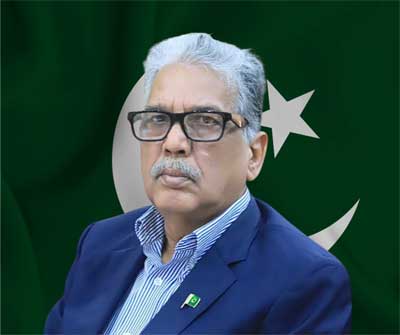
Every successful corporate transformation begins with leadership. Capital can finance new aircraft, modern technology can improve efficiency, and business plans can outline ambitious goals, but without visionary leadership and sound corporate governance, even the most promising investments often fail to deliver lasting results.
As Pakistan International Airlines (PIA) embarks upon one of the most significant chapters in its seven-decade history, much of the nation’s attention has naturally focused on the consortium that has assumed responsibility for the airline’s future. At the center of this historic undertaking stands one of Pakistan’s most respected entrepreneurs and corporate leaders-Arif Habib.
His involvement in PIA’s privatization has generated optimism not merely because of his business success, but because of the values that have defined his career: long-term investment, institution-building, financial discipline and confidence in Pakistan’s economic potential.
The challenge before him is unlike any commercial project he has previously undertaken. PIA is not simply another corporate acquisition. It is Pakistan’s national flag carrier, a symbol of national pride, and an institution that millions of Pakistanis hope to see restored to its former stature.
From Entrepreneur to Institution Builder
Few business leaders have influenced Pakistan’s corporate landscape as profoundly as Arif Habib.
Beginning his professional journey in Pakistan’s capital markets, he earned recognition through hard work, calculated decision-making and an ability to identify opportunities where others saw uncertainty. Over the years, he expanded from brokerage services into a diversified business group with interests spanning financial services, fertilizers, industrial manufacturing, real estate, energy, infrastructure and investment management.
Throughout this journey, one characteristic remained consistent: a commitment to building institutions rather than pursuing short-term gains.
In Pakistan’s corporate community, Arif Habib is widely regarded as a businessman who values governance, transparency and strategic planning. These principles have enabled the businesses associated with his name to grow steadily while maintaining credibility among investors, regulators and financial institutions.
That reputation now carries particular significance for PIA.
Confidence Built Over Decades
Corporate reputations cannot be built overnight.
They are earned through decades of performance, accountability and consistency.
Pakistan’s business community has watched Arif Habib navigate economic cycles, political transitions and changing market conditions while continuing to invest in productive sectors of the economy. His confidence in Pakistan has remained evident even during periods when investment sentiment was uncertain.
This long-term perspective distinguishes experienced institution builders from purely financial investors.
Reviving an airline demands patience. It requires sustained capital expenditure, careful operational planning and a willingness to prioritize long-term competitiveness over immediate returns. Aviation is among the world’s most demanding industries, where profitability depends upon efficiency, safety, customer confidence and disciplined management.
The leadership now entrusted with PIA understands these realities.
Leadership beyond Capital
One of the most important lessons from successful corporate transformations around the world is that financial resources alone do not guarantee success.
History offers numerous examples of organizations that received significant investment but failed because governance remained weak or strategic direction lacked clarity.
Conversely, many companies with limited initial resources achieved remarkable recoveries because leadership successfully transformed organizational culture.
For PIA, this distinction is particularly important.
The airline’s greatest challenges were never confined solely to finance. They also involved governance, continuity of management, operational efficiency and the ability to make commercial decisions free from unnecessary external influences.
Private-sector leadership creates an opportunity to address these structural issues through professional management, clear accountability and long-term planning.
A Consortium of Complementary Strengths
While Arif Habib provides leadership and strategic direction, the consortium itself reflects an equally important strength: diversity of expertise.
Its constituent organizations represent different sectors of Pakistan’s economy, each bringing capabilities that can contribute to PIA’s revival.
Industrial experience contributes operational discipline.
Financial expertise strengthens capital planning and investment management.
Infrastructure development supports long-term asset optimization.
Educational institutions understand human capital development and organizational learning.
Investment professionals contribute expertise in governance, risk assessment and sustainable growth.
Together, these capabilities create a broader foundation than would be available through a single investor acting alone.
For an airline as complex as PIA, such diversity may prove to be one of the consortium’s greatest advantages.
Restoring a Culture of Excellence
Corporate turnarounds rarely begin with aircraft.
They begin with culture.
PIA once earned international admiration because excellence became part of its identity. Pilots, engineers, cabin crew and ground staff understood that they represented not only an airline but also Pakistan itself.
Rebuilding that culture will require leadership that inspires confidence throughout the organization.
Employees must believe that merit, professionalism and innovation will once again be recognized.
Managers must be empowered to make timely commercial decisions.
Performance must be measured objectively.
Training must regain its central role within the organization.
Most importantly, leadership must establish a culture in which accountability is viewed as a strength rather than a burden.
A National Responsibility
The privatization of PIA is not simply a commercial transaction.
It represents one of Pakistan’s most closely watched economic reforms.
Success would demonstrate that professional governance and private-sector expertise can revive a major national institution while preserving its public significance.
Failure, conversely, would reinforce long-standing skepticism regarding structural reform.
This reality places an extraordinary responsibility upon the consortium.
Unlike most corporate acquisitions, the performance of PIA will be measured not only through financial statements but also through public confidence, international reputation and national pride.
Every improvement in punctuality, customer service, operational reliability and financial performance will strengthen confidence that Pakistan’s flagship airline can once again compete on merit.
The Measure of Leadership
Great leaders are remembered not simply for the companies they build but for the institutions they transform.
History often remembers those who accepted the most difficult challenges rather than those who pursued the easiest opportunities.
For Arif Habib and his fellow investors, the acquisition of PIA represents such a challenge.
The task before them is formidable.
They inherit an airline with a remarkable legacy but also decades of accumulated operational, financial and institutional difficulties.
Yet they also inherit something equally valuable: a globally recognized brand, experienced aviation professionals, strategic international rights and the goodwill of millions of Pakistanis who genuinely want their national carrier to succeed.
If these strengths are combined with disciplined management, sound governance and sustained investment, PIA may once again become a symbol of Pakistan’s capability rather than its challenges.
The coming years will determine whether this historic opportunity is fully realized.
For now, the nation watches with hope, cautious optimism and the expectation that experienced private-sector leadership can succeed where previous efforts struggled.
History has already recorded PIA’s remarkable past.
Its future is now being written.
Looking Ahead
In Part V of this special series, “The Consortium behind the Comeback: How Pakistan’s Leading Corporate Institutions Can Transform PIA,” we will take an in-depth look at the companies that have joined hands to revive the national carrier. We will examine the strengths each partner brings to the consortium, their track records in corporate governance and business excellence, and why this unique combination of financial, industrial, educational and investment expertise may provide PIA with its strongest foundation for sustainable growth in decades.


