A Journey of Service, Security and the Search for Peace
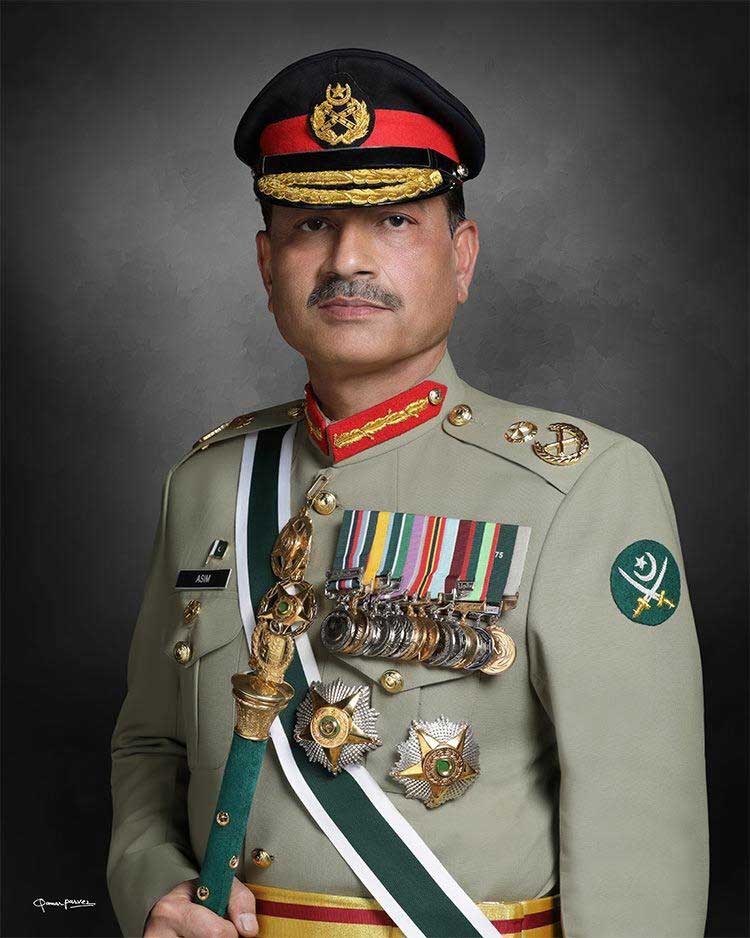
Field Marshal Asim Munir: From soldier to statesman
PART II – From infantry officer to strategic commander: The formative military years of Asim Munir
Every distinguished military career is built long before the individual reaches the rank by which history eventually remembers him. Medals, senior appointments and positions of national importance come later. The foundations are laid in regimental life, in classrooms and command posts, in difficult terrain and through years of responsibility in which an officer learns not only how to command soldiers, but how to understand an increasingly complex security environment.
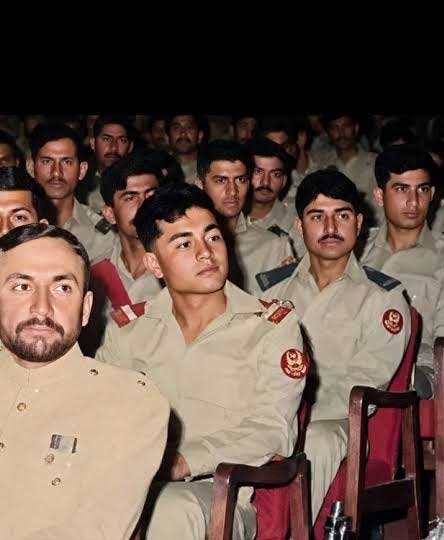
For Syed Asim Munir, that journey began after he was commissioned in April 1986 into the 23rd Frontier Force Regiment, having already distinguished himself as the recipient of the Sword of Honour of the 17th Officers Training Course.
If the first chapter of his life was about entering the profession of arms, the next was about becoming a professional soldier.
Over the years that followed, Munir moved through an unusually broad range of command, staff and instructional appointments. These experiences would gradually transform the young infantry officer into a commander familiar with conventional warfare, strategic planning, military education, border security and, eventually, the world of intelligence.
Learning command from the ground up
The infantry is often described as the backbone of an army because its soldiers operate where military objectives ultimately have to be secured on the ground.
For a young officer of the Frontier Force Regiment, therefore, leadership was not an abstract concept.
It meant responsibility for soldiers.
Munir’s association with the 23rd Frontier Force Regiment, his parent unit, would remain an important element of his professional identity. During his career, he eventually returned to command the very battalion into which he had originally been commissioned.
Commanding one’s parent unit carries particular significance in regimental military culture. An officer who once arrived as a young lieutenant ultimately returns responsible for the operational effectiveness, discipline, training and welfare of the entire battalion.
But military leadership requires more than regimental experience.
As Munir advanced through the ranks, his assignments began exposing him to the wider machinery of the Pakistan Army.
Official records show that among his important staff appointments he served as Brigade Major of a deployed infantry brigade and as General Staff Officer Grade-2 in the Chief of General Staff Secretariat.
These positions matter because they expose an officer to planning and coordination beyond the immediate responsibilities of commanding troops.
A commander must understand the battlefield.
A staff officer must learn how the battlefield is organised.
The combination of both experiences would become increasingly important as Munir’s responsibilities expanded.
The classroom alongside the battlefield
Modern warfare demands continuous professional education.
An officer who begins his career learning infantry tactics must eventually understand operational planning, joint warfare, national security, international relations and strategic decision-making if he is to advance to senior command.
Munir’s military education consequently extended far beyond his initial officer training at Mangla.
Pakistan’s official biographical record lists him as a graduate of the Fuji School in Japan, the Command and Staff College, Quetta, the Malaysian Armed Forces Command and Staff College in Kuala Lumpur, and the National Defence University in Islamabad.
He also earned an MPhil in Public Policy and Strategic Security Management.
The diversity of these institutions is significant.
Military education in Pakistan provided familiarity with the country’s defence requirements and command structures, while study abroad exposed him to different military doctrines and professional cultures.
Such experiences are especially valuable for an officer who will later work in intelligence and strategic command, where understanding an adversary, an ally and the broader geopolitical environment can be as important as understanding the deployment of troops.
Munir also served on the Directing Staff of the Command and Staff College, Quetta.
Teaching future commanders is itself an important stage in an officer’s development. The instructor is required not merely to understand military doctrine but to analyse it, explain it and challenge other officers to think critically about its application.
These years helped broaden the professional foundation upon which his later career would be built.
Saudi Arabia: military service and a personal milestone
Another important chapter took Munir beyond Pakistan.
Official records state that he led the Pakistan Training Contingent in the Kingdom of Saudi Arabia, reflecting the longstanding defence relationship between Pakistan and the Kingdom. Other biographical accounts also record that he served in Saudi Arabia during his military career.
The Saudi experience carried professional as well as personal significance.
It was during a posting in Madinah, while serving as a lieutenant colonel, that Munir reportedly completed the memorisation of the Holy Quran at the age of 38, becoming a Hafiz-e-Quran.
The achievement added another dimension to a personality already shaped by religious education from his younger years.
For Munir, therefore, Saudi Arabia became associated with both military service and a deeply personal religious accomplishment.
His experience in the Kingdom would also have given him familiarity with a country that occupies an exceptionally important place in Pakistan’s strategic, economic and diplomatic relationships.
Years later, as Pakistan’s Army Chief and subsequently Field Marshal, Saudi Arabia would again feature prominently in his international engagements.
But before diplomacy at the highest level came command in some of Pakistan’s most difficult terrain.
Command where mountains become battlefields
One of the most consequential phases of Munir’s professional development came in Pakistan’s northern regions.
He served as a brigadier with troops associated with Force Command Northern Areas, and later, as a major general, commanded the formation itself.
The Northern Areas present a military environment unlike almost anywhere else in the world.
Here, soldiers operate amid towering mountains, glaciers, severe weather and some of the world’s most unforgiving terrain. The wider operational environment includes the sensitive Line of Control and the Siachen sector, where altitude and weather can become enemies as formidable as opposing forces.
Command in such conditions demands more than conventional military competence.
Logistics become a matter of survival. Maintaining supply lines is extraordinarily difficult. Soldiers must remain operational in extreme cold and at high altitude. Commanders must understand not only military tactics but terrain, weather, communications and the physical limits of the men under their command.
For an officer destined for higher command, this was invaluable experience.
It was also during this phase of his career that Munir worked within the command structure of X Corps, which was then commanded by General Qamar Javed Bajwa.
The Northern Areas assignment would later be remembered as an important stage in Munir’s rise through the Army hierarchy.
From tactical command to strategic thinking
As Munir’s career progressed, the nature of his responsibilities changed.
The young officer responsible for soldiers at battalion level was gradually becoming an officer required to think about formations, operational theatres and national security.
Official records also show that he served as Chief of Staff of a Strike Corps-another appointment requiring the coordination of complex military planning and operational preparedness.
Each assignment added another layer to his professional experience.
Regimental service taught him the relationship between officer and soldier.
Staff appointments taught planning.
Instructional duties demanded analysis.
Foreign military education broadened his professional exposure.
Saudi Arabia added international experience.
Northern command confronted him with the realities of one of Pakistan’s most sensitive operational theatres.
Taken individually, these may appear to be conventional stages in the career of a successful military officer. Taken together, however, they reveal the gradual construction of a professional profile suited to responsibilities far beyond ordinary command.
The next step would take him into a very different battlefield.
There would be fewer visible front lines.
Information would become a weapon.
Threats would not always arrive in uniform.
Decisions would involve terrorism, counter-intelligence, regional developments, internal security and the activities of foreign intelligence services.
Asim Munir was moving toward the intelligence world.
Preparing for the intelligence challenge
Intelligence leadership demands a particular combination of characteristics.
A senior intelligence officer must absorb enormous amounts of information while separating fact from deception. He must assess threats that may not yet be visible. He must understand political and military developments without allowing either to obscure the national security objective.
Munir’s previous career had provided many of the building blocks required for such responsibilities.
He had commanded soldiers.
He had worked in operational formations.
He had served in staff appointments.
He had taught officers.
He had studied national security.
He had served abroad.
And he had commanded in a strategically sensitive region.
By the middle of the following decade, those experiences were about to converge.
In early 2017, Major General Asim Munir was appointed Director General Military Intelligence.
It represented a major turning point.
Military Intelligence operates at the heart of the Pakistan Army’s security and counter-intelligence structure. Its director general occupies one of the most sensitive appointments within the military establishment.
For Munir, it was the beginning of a chapter that would ultimately make his career exceptional.
After Military Intelligence would come the Inter-Services Intelligence, Pakistan’s premier intelligence agency.
He would eventually become the first future Chief of Army Staff to have headed both organisations.
But his tenure at the ISI would also bring him into one of the most controversial episodes of his career-an episode involving the highest political office in the country and one that, years later, would remain the subject of competing claims and political debate.
The infantry officer from the 23rd Frontier Force Regiment had reached the corridors where some of Pakistan’s most sensitive information was assessed.
The next phase of his journey would test not only his professional abilities but also his willingness to carry out his responsibilities when intelligence, power and politics intersected.
That story deserves a chapter of its own.
To be continued….