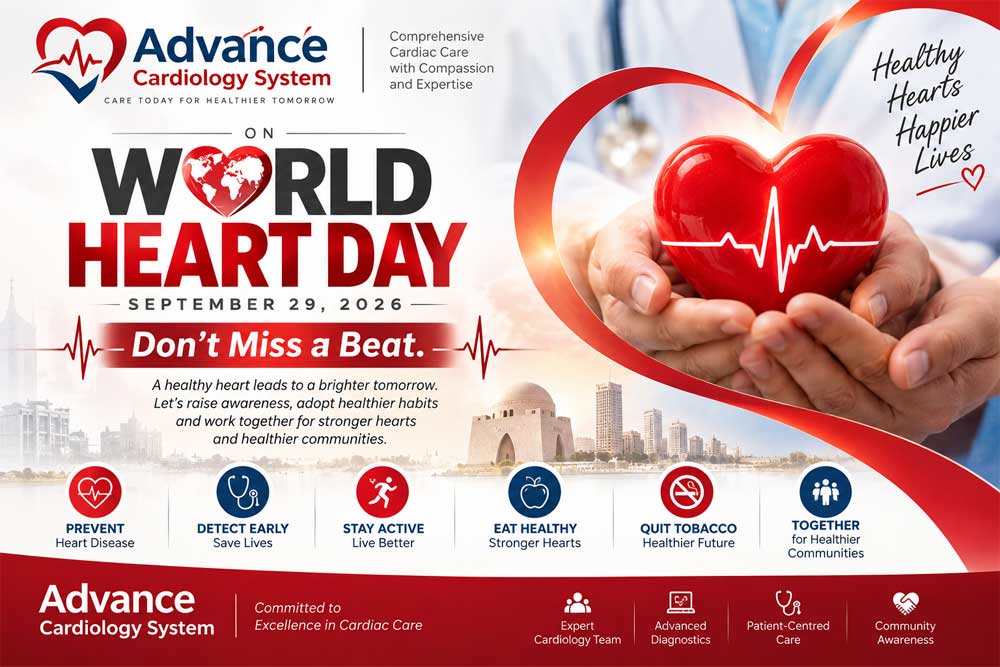
Messages World Heart Day 2026 “Don’t Miss a Beat”

Chief Minister Sindh
World Heart Day is an important occasion to reaffirm our commitment to protecting the cardiovascular health of our people and creating greater awareness about the prevention, early diagnosis and timely treatment of heart diseases. The theme “Don’t Miss a Beat” rightly reminds us that every heartbeat is precious and every warning sign deserves attention.
The Government of Sindh has accorded high priority to strengthening cardiac healthcare and ensuring that quality treatment is accessible to people irrespective of their financial circumstances. I am particularly proud of the exemplary services being provided through NICVD and the Sindh Institute of Cardiovascular Diseases (SICVD) network, which have significantly expanded access to specialised cardiac care across Sindh.
Through state-of-the-art cardiac hospitals and Chest Pain Units, advanced facilities including emergency cardiac care, angioplasty, cardiac surgery and paediatric cardiac services are being made available free of cost. This extensive network reflects our commitment to taking quality healthcare closer to the people.
However, treatment alone is not enough. Prevention must remain our first line of defence. Healthy diets, regular physical activity, avoidance of tobacco, and timely screening for hypertension, diabetes and cholesterol can prevent many cardiovascular complications.
I appreciate The Financial Daily International for publishing this Special Supplement on World Heart Day 2026 and contributing to public awareness about heart health.

Karachi Institute of Heart Diseases (KIHD)
World Heart Day is an important reminder that protecting our hearts requires awareness, prevention and timely medical attention. The theme for 2026, “Don’t Miss a Beat,” carries a simple yet powerful message: we must not ignore our heart health or the warning signs that may indicate cardiovascular disease.
Heart disease remains one of the foremost health challenges of our time. High blood pressure, diabetes, obesity, smoking, unhealthy dietary habits, stress and physical inactivity significantly increase cardiovascular risk. Many of these risk factors, however, can be controlled through healthier lifestyles, regular screening and appropriate medical care.
At the Karachi Institute of Heart Diseases (KIHD), our commitment is to provide accessible and quality cardiac care while promoting greater awareness about prevention and early diagnosis. Alongside treatment, educating people about heart-healthy choices is essential to reducing the burden of cardiovascular disease.
On World Heart Day, I urge everyone to know their blood pressure, blood sugar and cholesterol levels, remain physically active, adopt a balanced diet and seek timely medical advice whenever necessary.
I appreciate The Financial Daily International for publishing this Special Supplement and helping spread the vital message of heart health.
World Heart Day 2026: Don’t miss a beat protecting every heart, every day

Every heartbeat is a reminder of life itself. Yet, for millions of people around the world, cardiovascular disease remains a silent and often underestimated threat. World Heart Day, observed annually on September 29, provides an opportunity not merely to discuss heart disease but to remind individuals, families, healthcare institutions and governments that many cardiovascular complications can be prevented through awareness, healthier lifestyles, early diagnosis and timely treatment.
The message associated with World Heart Day 2026 – “Don’t Miss a Beat” – carries particular significance. It encourages people not to overlook their cardiovascular health, not to dismiss warning signs and, equally importantly, not to miss opportunities for prevention.
Heart disease does not always announce itself dramatically. High blood pressure may remain unnoticed for years. Diabetes can gradually damage blood vessels. High cholesterol may produce no obvious symptoms until serious cardiovascular disease has developed. Smoking, obesity, physical inactivity, unhealthy diets, chronic stress and inadequate medical screening can steadily increase risk.
That is why protecting the heart must begin long before a medical emergency occurs.
Cardiovascular Disease: A Global Challenge
Cardiovascular diseases encompass a range of disorders affecting the heart and blood vessels, including coronary heart disease, cerebrovascular disease, rheumatic heart disease and other conditions. Heart attacks and strokes account for a substantial proportion of cardiovascular deaths worldwide.
The tragedy is that many premature cardiovascular deaths are associated with risk factors that can be prevented, identified or better controlled.
Tobacco consumption remains one of the most damaging. High blood pressure is another major contributor. Diabetes, elevated cholesterol, obesity and sedentary lifestyles further increase cardiovascular risk. Environmental factors, including air pollution, are also increasingly recognised as relevant to cardiovascular health.
Modern lifestyles have brought convenience, but they have also reduced physical activity for many people. Hours spent sitting at desks, travelling in vehicles or looking at screens have replaced movement that was once part of everyday life. At the same time, diets high in salt, sugar, unhealthy fats and heavily processed foods have become increasingly common.
The result is a dangerous combination of risk factors that can begin affecting cardiovascular health at a relatively young age.
Pakistan’s Heart-Health Challenge
For Pakistan, cardiovascular disease represents an especially important public-health challenge.
The country faces a significant burden of hypertension and diabetes, while tobacco use, obesity, unhealthy diets and insufficient physical activity add to the problem. Rapid urbanisation and changing lifestyles have further altered patterns of disease.
The challenge is not restricted to elderly people. Increasingly, doctors encounter patients at comparatively younger ages with hypertension, diabetes and cardiovascular complications. This makes prevention particularly important.
There is also a widespread tendency to seek medical assistance only when symptoms become severe. Routine preventive examinations are still not part of everyday life for many families.
This culture needs to change.
Knowing one’s blood pressure should become as normal as knowing one’s age. Adults, particularly those with a family history of cardiovascular disease or other risk factors, should discuss appropriate screening for blood glucose and cholesterol with healthcare professionals.
Prevention is generally easier, safer and less costly than treating advanced disease.
Sindh’s Expanding Cardiac Care
Sindh has made important investments in cardiovascular healthcare, particularly through specialised public-sector cardiac services.
Institutions such as the National Institute of Cardiovascular Diseases (NICVD) and the expanding Sindh Institute of Cardiovascular Diseases (SICVD) network have helped extend specialised cardiac treatment to a broader section of the population.
The expansion of cardiac facilities beyond Karachi is especially significant. Historically, specialised medical treatment in Pakistan has often been concentrated in major metropolitan centres. For a patient suffering a heart attack, however, travelling hundreds of kilometres for appropriate treatment can result in dangerous delays.
Taking cardiac services closer to communities therefore has consequences beyond convenience. In cardiovascular emergencies, time is critical.
Chest Pain Units and specialised cardiac facilities can contribute to earlier assessment and treatment of patients experiencing symptoms that may indicate acute heart problems.
Karachi also has longstanding institutions dedicated to cardiovascular care, including the Karachi Institute of Heart Diseases (KIHD), alongside public and private hospitals providing specialised cardiac services.
Infrastructure alone, however, cannot solve the cardiovascular challenge. Pakistan must simultaneously strengthen prevention, awareness, primary healthcare and early detection.
Don’t Ignore the Warning Signs
One of the most important messages on World Heart Day is simple: never casually dismiss possible symptoms of a heart attack or stroke.
Heart attack symptoms can vary. Chest pressure, squeezing, heaviness or discomfort may occur, but some people experience pain or discomfort extending to the arms, back, neck, jaw or stomach. Shortness of breath, unusual sweating, nausea, dizziness or extreme weakness can also accompany cardiac emergencies.
Symptoms may not always follow the pattern people expect, and presentations can differ between individuals.
A stroke is equally time-sensitive. Sudden weakness or numbness-particularly affecting one side of the body-difficulty speaking or understanding speech, sudden problems with vision, loss of balance, severe unexplained headache or facial drooping require urgent medical attention.
In such circumstances, waiting for symptoms to disappear can be dangerous.
Don’t Miss a Beat should therefore be understood literally as well as symbolically: recognise warning signs and seek emergency medical assistance promptly.
Prevention Begins at Home
The strongest defence against cardiovascular disease begins with everyday choices.
Regular physical activity is among the most valuable. Exercise helps improve cardiovascular fitness, assists weight management and can contribute to healthier blood pressure, blood sugar and cholesterol levels.
This does not mean everyone must become an athlete. Walking, cycling, swimming and other appropriate activities can be beneficial. The important point is consistency and choosing activity suited to an individual’s health status.
Diet is equally important.
Meals built around vegetables, fruits, whole grains, legumes and other nutritious foods can support cardiovascular health. Excessive consumption of salt, sugar, trans fats and highly processed foods should be reduced.
For Pakistani households, reducing salt deserves particular attention. Salt consumption can be hidden in processed products, snacks, sauces and restaurant food in addition to what is added during cooking.
Tobacco, meanwhile, has no place in a heart-healthy lifestyle. Cigarettes and other tobacco products damage blood vessels and substantially increase cardiovascular risk. Protecting people from second-hand smoke is important as well.
Adequate sleep and effective stress management also form part of overall cardiovascular wellbeing.
Know Your Numbers
A person may look healthy while living with uncontrolled hypertension, diabetes or abnormal cholesterol.
That is why screening matters.
Blood pressure is particularly important because hypertension frequently produces no obvious symptoms. Left uncontrolled, it can contribute to heart attacks, strokes, heart failure, kidney disease and other complications.
Blood glucose assessment can help identify diabetes or pre-diabetes, allowing earlier intervention. Cholesterol testing can similarly help healthcare professionals evaluate cardiovascular risk.
Body weight and waist circumference may provide additional information, although cardiovascular risk should always be assessed in the context of the individual’s broader medical profile.
People should consult qualified healthcare professionals about how frequently they require screening based on age, family history, existing conditions and other risk factors.
Knowing the numbers is only the first step. Acting upon them is what makes the difference.
Heart Health in the Workplace
Employers also have a role to play.
Millions of adults spend much of their waking day at work. Long periods of sitting, workplace stress, irregular meals and lack of exercise can contribute to unhealthy routines.
Organisations can encourage healthier workplaces through relatively simple measures: periodic health screening, smoke-free environments, opportunities for physical movement, healthier food options and awareness sessions.
Employees themselves should avoid remaining seated continuously for long periods and should incorporate movement into their day whenever possible.
Heart health is not simply an individual issue. A healthier workforce can also benefit families, businesses and the wider economy.
Technology and the Future of Cardiac Care
Technology is transforming cardiovascular medicine.
Modern imaging, minimally invasive procedures, improved monitoring devices, telemedicine and digital health platforms have expanded possibilities for diagnosis and treatment. Wearable technologies can provide useful information about physical activity and, in certain circumstances, heart rhythm.
Artificial intelligence is increasingly being explored to assist medical professionals in interpreting diagnostic information and identifying patterns within complex health data.
But technology should complement-not replace-qualified medical judgement.
A smartwatch may alert someone to an unusual pattern, but it cannot substitute for a comprehensive medical assessment. Similarly, information found online should not be used to self-diagnose serious cardiovascular symptoms.
The future of healthcare will increasingly combine advanced technology with clinical expertise, but the human relationship between patient and healthcare professional remains fundamental.
Building a Culture of Prevention
Pakistan needs a stronger culture of preventive healthcare.
Too much attention is often given to disease after it becomes serious, while insufficient attention is paid to preventing it from developing or progressing.
Schools can teach children about healthy eating and physical activity. Universities can promote smoke-free campuses and wellness programmes. Employers can support health screening. Media organisations can disseminate reliable health information. Healthcare institutions can expand community outreach.
Government policy also has an important role through stronger primary healthcare, public awareness, tobacco control, improved opportunities for physical activity and policies that support healthier environments.
Families are equally important. Healthy habits established at home can influence children for life.
A child who grows up seeing parents exercise, avoid tobacco, eat balanced meals and undergo regular medical examinations is more likely to regard these behaviours as normal rather than exceptional.
Every Heart Matters
World Heart Day should ultimately be about people.
Behind every cardiovascular statistic is a family-a parent, spouse, child, colleague or friend. A heart attack affects more than one patient; it can transform the lives of an entire household.
The encouraging reality is that much can be done.
We can walk more. We can reduce tobacco exposure. We can improve our diets. We can monitor blood pressure. We can manage diabetes. We can seek medical advice earlier. We can learn the warning signs of heart attack and stroke. Healthcare systems can bring quality treatment closer to communities.
And governments, medical professionals, businesses, civil society and the media can work together to make heart health a national priority.
On World Heart Day 2026, the message “Don’t Miss a Beat” should therefore extend beyond a slogan.
Don’t miss the opportunity to check your blood pressure.
Don’t miss the warning signs your body may be giving you.
Don’t miss the opportunity to exercise today.
Don’t miss the chance to stop smoking.
Don’t miss your prescribed medicines or medical follow-up.
And don’t wait for a cardiac emergency before beginning to care for your heart.
The heart works every minute of every day to sustain life. Protecting it should not be something we remember only on September 29.
Every heartbeat matters. Every healthy choice matters. And every life saved through awareness, prevention and timely care makes the effort worthwhile.
World Heart Day – “Don’t Miss a Beat”

World Heart Day is observed annually to raise awareness about cardiovascular disease (CVD), the world’s leading cause of death. In 1999, the World Heart Federation (WHF), in collaboration with the World Health Organization (WHO), established World Heart Day. The initiative was conceived by Professor Antoni Bayés de Luna, and the first World Heart Day was celebrated on 24 September 2000.
Pakistan joined this global movement soon afterwards. The Pakistan Cardiac Society (PCS) celebrated its first World Heart Day on 30 September 2001, reaffirming its commitment to promoting cardiovascular health and disease prevention.
Today, more than 90 countries, including Pakistan, participate in World Heart Day every year. Through public awareness campaigns, educational seminars, health screenings, posters, media campaigns, and community outreach programs, World Heart Day has become an effective global initiative for improving cardiovascular health awareness.
Cardiovascular diseases are often associated with affluent societies and sedentary lifestyles. However, they have become a major health challenge in developing countries, including Pakistan, where patients often develop heart disease 10-15 years earlier than those in Western populations.
Beyond the human suffering, cardiovascular disease imposes an enormous economic burden through healthcare costs, disability, loss of productivity, and premature deaths.
Most atherothrombotic coronary artery syndromes-including acute myocardial infarction (heart attack), heart failure, cardiac arrest, and sudden cardiac death-are largely preventable.
Virtually everyone is aware of the major risk factors, yet many continue lifestyles that significantly increase their risk. These include tobacco smoking, sugary drinks, oily and fried foods, processed and bakery products, physical inactivity (sedentary lifestyle), alcohol consumption, illicit drugs such as crystal methamphetamine (“Ice”), inadequate sleep, and excessive screen time.
These unhealthy habits contribute to diabetes mellitus, hypertension, dyslipidaemia, and obesity, which in turn lead to coronary artery disease, stroke, heart failure, peripheral vascular disease, kidney disease, and several cancers.
The tragedy is that many of these conditions are preventable. We have known the facts for decades, yet unhealthy lifestyles continue to prevail.
Unfortunately, we live in a culture where excess has become the norm-excess calories, excess sugar, excess fat, excess tobacco, and increasingly, excess screen time.
The cost of this pandemic of preventable disease is staggering. It is measured not only in billions of healthcare expenditures but also in countless premature deaths, disabilities, and devastated families. Trillions are spent worldwide treating disease, while comparatively little is invested in prevention.
This raises an important question:
Are we truly providing “health care,” or are we mainly providing “illness care”?
Our healthcare systems primarily reward the treatment of disease rather than the promotion of wellness. Preventive healthcare receives far less attention and far fewer incentives.
Certainly, genetics influence an individual’s susceptibility to disease. However, genetic predisposition should never become an excuse to ignore preventable lifestyle-related risk factors.
The Way Forward
Lifestyle modification remains the most powerful intervention to reduce cardiovascular disease.
Health education should become a compulsory component of the school curriculum beginning in primary school. Children should be taught healthy nutrition, regular physical activity, adequate sleep, tobacco-free living, avoidance of alcohol and illicit drugs, weight control, stress management, and lifelong healthy habits.
Early education, particularly before adolescence, will benefit both boys and girls and help create healthier future generations.
This is truly a win-win strategy-improving health outcomes while reducing healthcare costs.
These concepts are not new. Hippocrates, the father of medicine, emphasized the importance of lifestyle and prevention more than two thousand years ago.
As healthcare systems face increasing economic pressures and the dual burden of communicable and non-communicable diseases (NCDs), prevention must become the cornerstone of healthcare policy.
Our approach should never be “too little, too late.”
As I often emphasize:
“Time is Myocardium, and Myocardium is Life.”
Early identification of individuals at risk and timely intervention can prevent progression of disease.
We should detect and manage Stage A and Stage B heart failure before symptoms develop, prevent progression to symptomatic Stage C heart failure, optimize guideline-directed medical therapy (GDMT) by titrating medications to target doses, reduce recurrent hospitalizations-which account for nearly 80% of heart failure-related healthcare costs-and prevent progression to Stage D (advanced heart failure).
Pakistan must also strengthen its capacity in advanced heart failure therapies, including left ventricular assist devices (LVADs) and orthotopic heart transplantation (OHT).
Final Message
Living longer and healthier is not only possible-it is economically sensible.
Preventive healthcare is the most effective investment any nation can make.
On this World Heart Day, let us all remember:
“Your heart is in your hands. Don’t Miss a Beat. Choose healthy habits today for a healthier tomorrow.”