In the history of every nation, there are certain days that become more than mere dates on the calendar; they become part of the nation’s identity. In Morocco, July 30 is celebrated as Throne Day that symbolizes the bond of love between King Mohammed VI and his people, national unity, and renewal. King Mohammed VI ascended the throne following the death of his father, King Hassan II, and was officially enthroned on July 30, 1999. The anniversary of his accession, known as Eid Al Arsh, is celebrated with great enthusiasm throughout Morocco and around the world.
As the Hon. Consul General of Morocco, I have been organizing reception to mark the anniversary of the King’s accession for the past 20 years. This year also, a dignified ceremony was held in Karachi, attended by Morocco’s Ambassador to Pakistan, Mohamed Karmoun, Chief Guest was Governor Sindh Nehal Hashmi, ministers, parliamentarians, consuls general of various countries, business leaders, Moroccan families residing in Karachi and people from all walks of life attended the event. The venue was decorated with the flags of Pakistan and Morocco, along with large portraits of King Mohammed VI. The ceremony began with the national anthems of both countries, followed by cutting of a Throne Day cake featuring the flags of Pakistan and Morocco.
King Mohammed VI is the direct decedent of the Holy Prophet Muhammad (PBUH), and also known in Morocco as “Amir Al-Mu’minin” (Commander of the Faithful). The Moroccan people have immense love and respect for their King. Morocco’s economic, financial, diplomatic development and stability are largely attributed to King Mohammed VI, who is widely regarded as the architect of modern Morocco. Under his leadership, Morocco has embarked on a path of modernization, making remarkable progress in infrastructure, economic development and social reforms. He has transformed the country’s landscape and improved the quality of life of its people, Moroccan people are unfamiliar with the problem of load-shedding.
Over the past two decades, I have personally witnessed Morocco’s transformation from a developing country into a highly modernized and increasingly prosperous nation. A vast network of motorways has been developed across the country, new ports have been constructed, tram systems have been introduced in major cities. Al Boraq high-speed train, reportedly developed at a cost of around $10 billion having speeds of up to 350 kilometres per hour, was launched. Whenever I visit Morocco, I make it a point to travel on Al Boraq and thoroughly enjoy the journey.
Under King Mohammed VI, Morocco’s foreign policy has also played a proactive role. The country has strengthened its relations with the European Union, United States and African nations. For Morocco, Western Sahara issue holds significance comparable to that of the Kashmir issue for Pakistan. On the Western Sahara question, Morocco has achieved significant diplomatic successes in securing international support for its autonomy plan. In December 2020, United States recognized Moroccan sovereignty over Western Sahara, a development that marked a significant shift in the diplomatic landscape. Subsequently, Spain and France also announced their support for Morocco’s autonomy. Such endorsements by major powers reflect Morocco’s diplomatic efforts and its pursuit of a lasting solution and regional stability. Morocco’s growing international importance can also be gauged from the fact that it has been selected to co-host the 2030 FIFA World Cup.
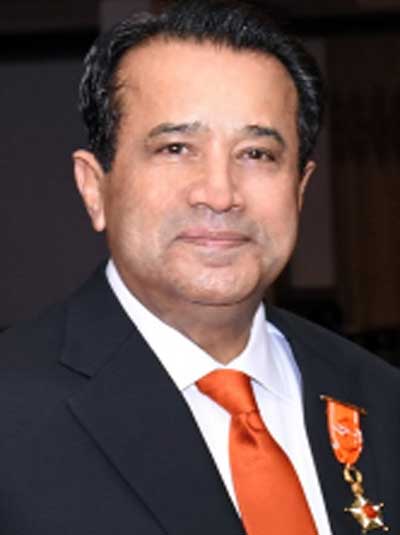
I consider Morocco my second home. Because of my business interests, I travel to Morocco several times a year, and I also have a house there. As Morocco’s Hon. Consul General in Pakistan and Chairman of Pakistan-Morocco Business Council, it is part of my responsibility to promote bilateral trade and strengthen economic relations between the two countries. The annual visits of Pakistani business delegations to Morocco and the organization of a “Biryani Festival” in Morocco to promote the export of Pakistani rice are initiatives undertaken in this regard. These efforts have produced encouraging results. I am pleased that bilateral trade between Pakistan and Morocco has reached approximately $800 million. In recognition of my services, the Government of Morocco conferred upon me its prestigious civilian honour, the Order of Al Alaoui (Wissam Alaoui). This distinction is not only a matter of personal pride for me but also an honour for Pakistan.
It is often said that leaders can change the destiny of nations. King Mohammed VI deserves credit for being the architect of modern Morocco. Morocco’s development is a living example of the fact that the destiny of nations is shaped not merely by resources, but by visionary leadership, continuity of policies and national determination.
For Pakistan, Morocco’s experience carries a clear message: if we rise above political interests, establish long-term national objectives, keep the economy separate from political considerations, strengthen institutions, and make the common citizen the true center of development, there is no reason why Pakistan, too, cannot embark on the path of development and prosperity like Morocco.