KARACHI: In mid-September, the Inter Board Coordination Commission told the National Assembly’s Standing Committee on Federal Education what the investigation into this year’s Cambridge paper leaks had found. The National Cyber Crime Investigation Agency (NCCIA) reported that the leak had not originated in Pakistan, while noting that it has no direct access to servers abroad, limiting its ability to trace the source.
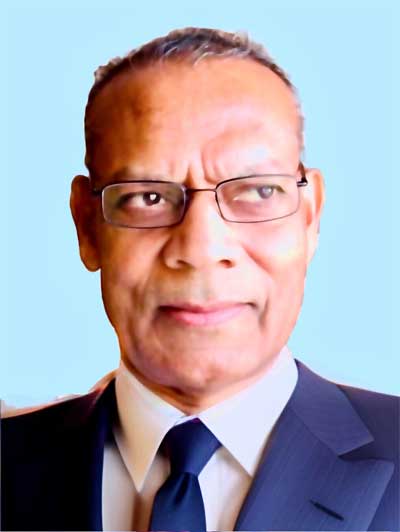
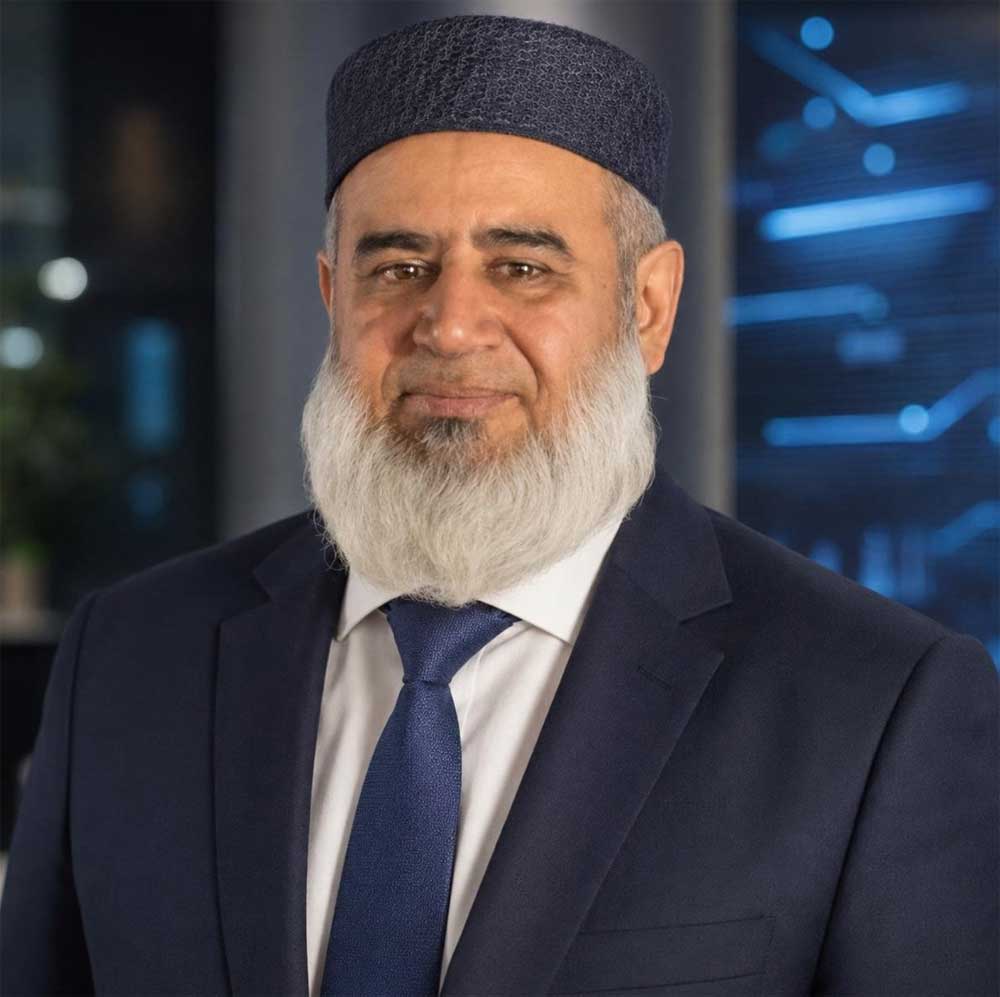
For Shahzad Arif, Chief Executive Officer of AKS iQ, an AI RegTech company serving banks in Pakistan and international markets, that is an honest answer but only the end of one road. Arif writes on technology policy, IT exports, Geopolitics and Pakistan’s digital economy.
He argues that cross-border investigations can be slow and inconclusive, while the 2027 examination series is only months away. If the only protection available to students is a forensic trail that stops at a border, he says, the system needs stronger safeguards. Three questions, in his view, can be settled before the next series.
He argues that cross-border investigations can be slow and inconclusive, while the 2027 examination series is only months away. If the only protection available to students is a forensic trail that stops at a border, he says, the system needs stronger safeguards. Three questions, in his view, can be settled before the next series.
Who pays when a paper leaks?
When an examination paper is compromised and a student must sit a replacement, Arif asks who should bear the cost. He points to the Educational Testing Service, which administers the GRE and TOEFL. Where a test is affected by an irregularity, ETS says it may cancel scores and, where appropriate, offer affected candidates a free retake.
Similarly, after a software fault auto-submitted thousands of digital SAT papers on March 8, 2025, affecting 8,855 international candidates, the College Board refunded fees and provided vouchers for free retakes.
Arif notes that Cambridge has followed the same principle, providing free resits after the 2025 disruption and replacement papers in June 2026 at no charge to students or schools. The problem, he says, is that such remedies have been decided after the event rather than established in advance.
Arif proposes a simple rule: where an examination component is compromised, the student should pay nothing, not a resit fee, administrative charge or, where the original entry is voided, the examination fee itself. Where fault is established, he argues, the cost should fall on the party responsible.
Why the honest candidate loses twice
Arif says students can face a second disadvantage even when a replacement examination is provided.
A replacement paper must be equivalent in difficulty to the original, but evidence demonstrating that equivalence is generally not made public. He cites the 2013 replacement of an Edexcel A Level mathematics paper after the original went missing in transit, when the substitute was widely reported as unusually difficult.
A replacement paper must be equivalent in difficulty to the original, but evidence demonstrating that equivalence is generally not made public. He cites the 2013 replacement of an Edexcel A Level mathematics paper after the original went missing in transit, when the substitute was widely reported as unusually difficult.
An assessed mark presents a different problem, he adds. Because it is derived from a candidate’s performance in other components, it cannot fully reflect the paper that was voided. A student whose strongest performance was in that particular paper has no opportunity to demonstrate it.
Arif suggests a “better-of-two” rule: where a student sits a replacement paper, the final result should be the higher of the replacement result and the assessed mark.
He says the approach would cost an awarding body little while offering greater protection to students who played no role in the breach. Until such a mechanism exists, families who believe a grade is incorrect can ask their schools to file an inquiry about results.
Who regulates the board?
Arif argues that the question of accountability becomes more complicated when the regulatory landscape is examined.
Two awarding organisations within the Cambridge group are regulated by Ofqual, England’s statutory examinations regulator, which has powers to investigate and fine them. In April 2026, Ofqual fined Cambridge OCR £270,000 over errors in AS and A Level physics papers that affected more than 14,000 students, some of whom received incorrect grades.
Two awarding organisations within the Cambridge group are regulated by Ofqual, England’s statutory examinations regulator, which has powers to investigate and fine them. In April 2026, Ofqual fined Cambridge OCR £270,000 over errors in AS and A Level physics papers that affected more than 14,000 students, some of whom received incorrect grades.
In June 2026, it fined Cambridge English £875,000 after automated marking errors produced incorrect IELTS results for tens of thousands of candidates over two years. Ofqual also recorded that more than £6 million had been spent on restitution, compensation and remedial work.
Arif says these cases demonstrate what accountability can look like when an independent regulator has defined powers.
The regulatory position is different for Cambridge IGCSE, O Level and International AS and A Level qualifications. They are not regulated by Ofqual and do not appear on the Register of Regulated Qualifications, according to UCAS. Qualifications Wales, CCEA and SQA Accreditation do not regulate them either.
The regulatory position is different for Cambridge IGCSE, O Level and International AS and A Level qualifications. They are not regulated by Ofqual and do not appear on the Register of Regulated Qualifications, according to UCAS. Qualifications Wales, CCEA and SQA Accreditation do not regulate them either.
This creates what Arif describes as a regulatory gap: a Pakistani student taking IELTS is covered by a regulator with powers to investigate and impose fines, while the same student taking an international A Level examination set by the same wider group is subject to the awarding organisation’s own procedures.
“This is not an accusation against Cambridge,” Arif stresses. “It is a description of an architecture nobody designed on purpose.” He argues that Pakistan has already laid much of the groundwork for addressing this gap.
The Inter Board Coordination Commission Act of 2023 requires foreign examination boards operating in Pakistan to register with and be regulated by the Commission. Its Board of Governors has approved 15 standards, while six boards, including Pearson Edexcel and the International Baccalaureate, have registered.
For Arif, completing that regulatory process and giving those standards enforceable substance is one of the most practical steps Pakistan can take before 2027.
The alternative Pakistan has not scaled
Arif says the broader question is whether Pakistan should continue to depend so heavily on foreign examination boards for internationally recognized qualifications. He points to the Aga Khan University Examination Board (AKU-EB), established in 2003, as an example of a domestic alternative that could play a larger role. The board uses anonymous marking, with candidate identities kept hidden from examiners, and has no publicly recorded paper-security failure. However, Arif notes that AKU-EB currently examines around 26,000 candidates a year, compared with a national examination cohort running into the millions.
In his view, the issue is not the capability of domestic institutions but the scale at which they have been supported and resourced. Arif argues that institutions such as AKU-EB have never been given the resources or policy support needed to expand sufficiently to provide a broader national alternative to foreign examination boards.
He points to other countries that have taken different approaches to balancing international recognition with domestic control. Singapore, he notes, co-owns its qualification with Cambridge, while Hong Kong developed its own diploma and spent years building international recognition for it, with around 270 institutions subsequently updating their admission requirements. For Arif, these examples suggest that Pakistan could also strengthen domestic examination capacity while maintaining international recognition for its qualifications.
The test for 2027
Arif proposes six commitments that, in his view, should be in place before the next examination series begins.
First, every foreign examination board registered with the Commission should operate under published standards that families can access.
First, every foreign examination board registered with the Commission should operate under published standards that families can access.
Second, there should be a clear cost rule: a resit caused by a compromised paper should carry no charge for the student.
Third, boards should be required to promptly notify the Commission of any incident likely to adversely affect Pakistani candidates, together with the corrective measures proposed.
Third, boards should be required to promptly notify the Commission of any incident likely to adversely affect Pakistani candidates, together with the corrective measures proposed.
Fourth, each examination series should disclose how many Pakistani candidates were affected, how assessed marks were calculated and whether the better-of-two rule was applied.
Fifth, breaches should be independently investigated, with findings shared rather than merely summarized, and evidence provided that replacement papers were equivalent in difficulty to the originals.
Sixth, examination security itself should be strengthened through measures such as encrypted delivery released only when an examination begins, statistical analysis of answer patterns to identify compromised questions and, eventually, different but equivalent papers for individual candidates, rather than a single paper for an entire examination hall. That last is the only measure that makes a stolen paper worthless rather than merely traceable.
Arif argues that the final measure would make a stolen paper far less useful rather than simply easier to detect. With candidates increasingly able to use modern AI tools, he says, the value of leaked material can be exploited much faster than in the past.
He points to Pearson’s 2019 pilot of micro-chipped examination packs as evidence that stronger technological safeguards are not merely theoretical.
He points to Pearson’s 2019 pilot of micro-chipped examination packs as evidence that stronger technological safeguards are not merely theoretical.
None of these measures, Arif concludes, requires goodwill once a board is registered. They can become conditions of operating rather than requests made after a breach has occurred.
A leak may cross a border beyond the immediate reach of Pakistani investigators. But the rules determining who carries its cost do not have to. Those rules, Arif says, are within Pakistan’s control and should be settled before the papers for 2027 are printed.