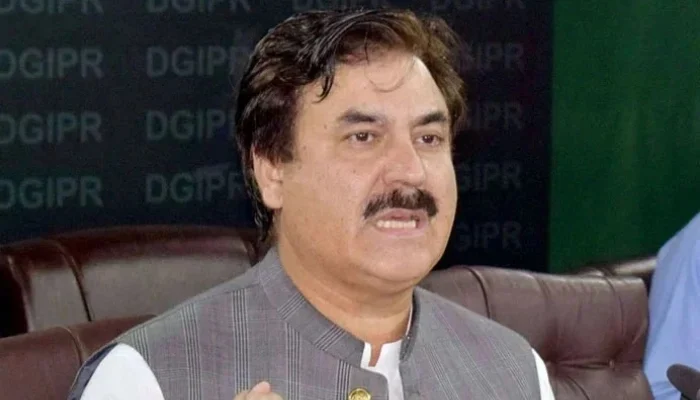
ISLAMABAD: Federal Information Minister Attaullah Tarar said on Wednesday that Pakistan remained committed to peace but would not allow India to “weaponise water”, maintaining that the Indus Waters Treaty (IWT) could not be unilaterally altered, revoked or held in abeyance.
Speaking at the launch of a special report titled Weaponising Waters: Historical, Legal, and Strategic Dimensions of IWT Suspension at the Institute of Strategic Studies Islamabad (ISSI), Tarar said Pakistan would continue to defend its water rights through diplomatic and legal channels.
The minister said the Court of Arbitration’s decisions had strengthened Pakistan’s legal position regarding the continuing operation of the treaty. The Permanent Court of Arbitration’s official case record confirms that the tribunal issued an award on August 31, 2026, concerning the status of the IWT following India’s decision to place the treaty in abeyance, along with an order on interim measures concerning the Ratle hydroelectric project.
Tarar argued that no party could unilaterally change the status of the treaty and said Pakistan had raised the issue with the international community and at relevant international forums.
The dispute intensified after India announced in April 2025 that it was placing the treaty in abeyance following an attack in Indian-administered Kashmir that killed 26 people. India accused Pakistan of involvement, an allegation Islamabad denied. The episode was followed by a military confrontation between the two countries in May 2025.
Tarar recalled Prime Minister Shehbaz Sharif’s position that the Indus Waters Treaty was vital to Pakistan and said Islamabad regarded its water rights as a matter of fundamental national importance.
He described the treaty as an instrument of peace and regional stability and argued that attempts to use water as a source of political pressure were legally and diplomatically unjustifiable.
The information minister also warned of implications beyond Pakistan and India, saying acceptance of unilateral suspension of a binding water-sharing agreement could create a damaging precedent for countries around the world that depend on transboundary rivers and international water treaties.
The IWT, signed by Pakistan and Indiain 1960, regulates the use of the Indus river system between the two countries and contains mechanisms for resolving disputes. The current arbitration concerns the interpretation and application of treaty provisions relating to Indian hydroelectric projects on the western rivers.
Tarar said Pakistan would continue engaging internationally and pursuing its position under international law while defending what it considers its rights under the treaty.