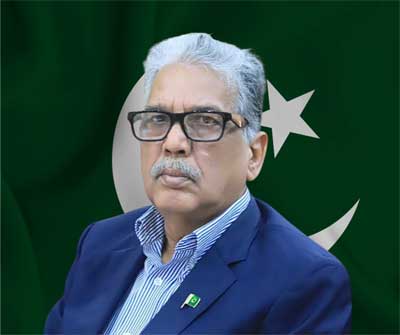
Asad Muzaffar, who has served as a senior member of the Prime Minister’s Special Task Force and as Chief Coordinator for China-Pakistan Economic Corridor (CPEC) Special Economic Zones (SEZs) in Punjab, and previously served as Resident Director of China Railway 17th Bureau Group, says Pakistan is entering a potentially significant phase in its economic diplomacy, with opportunities emerging through deeper engagement with the United States, China, Saudi Arabia and other regional partners.
Muzaffar argues that Pakistan’s relationship with the United States is gradually moving beyond its traditional security-centric framework towards trade, investment and economic cooperation. He believes recent measures to protect Pakistan’s textile exports and diversify international supply chains demonstrate a broader and more strategic approach to economic diplomacy.
He considers the proposed framework agreement with US Exim Bank for deferred-payment imports of US WTI crude particularly important. According to Muzaffar, sourcing crude from the United States could provide Pakistan with an additional option in its energy supply chain, diversify risk and offer potentially more flexible credit arrangements.
He also points to the expanding lending and investment footprint of the US International Development Finance Corporation (DFC) in Pakistan, arguing that increased US financial engagement could strengthen the economic dimension of bilateral ties and provide Islamabad with greater room to safeguard its broader regional interests.
At the same time, Muzaffar believes renewed relations with Saudi Arabia remain important. In his view, changing geopolitical dynamics in the Middle East are creating space for regional countries to assume a greater role in maintaining economic and strategic balance.
Pakistan’s growing engagement with multilateral platforms is another element of what Muzaffar describes as a broader diplomatic shift. He highlights Pakistan’s forthcoming leadership role in the Shanghai Cooperation Organisation (SCO), saying it offers an opportunity to deepen regional interaction, including through cultural and institutional cooperation.
Muzaffar also calls for greater attention to alternative trade and financial mechanisms. He points to China’s experience with structured barter arrangements and argues that Pakistan should explore similar, legally compliant mechanisms to overcome some of the bureaucratic and financial barriers that restrict international trade.
He sees emerging digital-finance regulation, including the establishment of the Pakistan Virtual and Digital Assets Regulatory Authority (PVARA), as part of a wider transition towards a more modern financial ecosystem.
For Muzaffar, however, trade remains the central objective. Pakistan, he argues, must expand exports, diversify its trading relationships and develop mechanisms that make cross-border commerce easier and more competitive. Excessive bureaucratic bottlenecks and rigid policies, he says, can ultimately prevent the country from benefiting from opportunities created by its own diplomatic initiatives.
He believes the government is already playing an important role in establishing the policy framework, but says the private sector must now assume greater responsibility for driving exports, investment and domestic economic growth.
Muzaffar views the emerging landscape with cautious optimism, saying Pakistan is witnessing signs of a more promising economic future after a prolonged period of uncertainty.
The challenge, he argues, is to maintain consistency, avoid policy reversals and convert diplomatic openings into concrete economic gains.
He hopes Pakistan can use the current convergence of regional and global opportunities to strengthen its economy and build a more secure future for coming generations.
“The journey ahead is easy if we do not falter,” Muzaffar says, expressing hope that Pakistan can navigate the changing global order with confidence and secure a stronger position in the international economy.