Report by : Muhammad Umar Waqqas
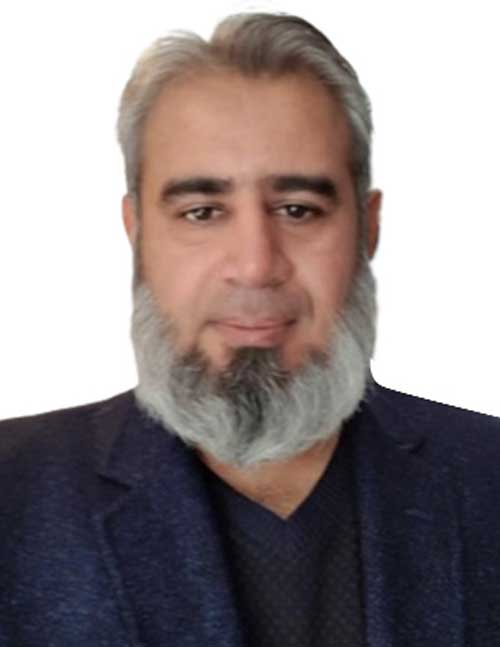
KARACHI: Pakistan has spent the past year strengthening its diplomatic and strategic position, but the country now faces a more difficult task: converting that external goodwill into sustained foreign investment, economic opportunity and improved living standards, according to Shahzad Arif, chief executive officer of AKS iQ.
Arif argues that Pakistan’s recent diplomatic gains and economic indicators tell two very different stories. The first points to a country that has acquired greater strategic relevance; the second points to an economy that is still struggling to persuade international capital to stay.
AKS iQ, led by Arif, is a technology company focused on AI-powered compliance, financial technology and regulatory technology. Its platforms serve banks, financial institutions, and government agencies.
For Arif, the contrast between Pakistan’s diplomatic momentum and its investment performance is the central economic question facing the country.
“Diplomacy opens the door. It does not walk through it,” is the essence of his argument.
Pakistan’s strategic relationship with Saudi Arabia, its emerging cooperation with the United States around critical minerals, developments under the China-Pakistan Economic Corridor and its diplomatic role in regional tensions have all enhanced the country’s international profile. Yet foreign investors ultimately make decisions on more prosaic considerations, Arif says.
They want to know whether contracts will be honoured, whether tax treatment will remain predictable, whether profits can be repatriated without unnecessary friction and what happens when a commercial dispute reaches the courts.
These questions, he argues, matter more to investment committees than diplomatic warmth alone.
From commitments to capital
The challenge is particularly visible in foreign direct investment.
According to the figures cited by Arif, net FDI for the year ending June 2026 stood at $1.637 billion, down 34.3 per cent and equivalent to about 0.39 per cent of GDP. Outflows reached $1.931 billion, their highest level in six years.
Arif argues that the FDI figures highlight an area Pakistan can directly influence: domestic investor confidence. Faster dispute resolution, stable taxation and greater regulatory predictability, he says, are more important to retaining capital than incentives alone.
Security comes first
No economic roadmap, Arif maintains, can ignore Pakistan’s security environment.
The security forces and civilian populations of Khyber Pakhtunkhwa and Balochistan have borne a disproportionate share of the country’s security burden. Cross-border disruptions at Torkham and Chaman have also affected trade and transit, while uncertainty surrounding regional water and geopolitical arrangements has added to the risk assessment facing international businesses.
For foreign investors, these issues do not sit in a separate security file. They form part of the economic assessment itself. “Security is the first page of the economic file,” Arif argues. Improving security therefore produces a double dividend: fewer lives lost and a lower risk premium attached to investment.
The rankings matter but can be changed
Pakistan’s position in major international indices also provides a useful measure of the country’s structural challenges.
The country ranks 168th out of 193 countries on the Human Development Index, 99th out of 139 on the Global Innovation Index and 136th out of 182 on the Corruption Perceptions Index, according to the figures cited by Arif.
Such rankings should not be regarded as permanent verdicts, he says. Countries have moved significantly up international league tables through sustained institutional and policy reforms.
The implication is that Pakistan’s position can change but only if improvements are deliberate, measurable and sustained.
The household ledger
For Arif, however, the most important economic scoreboard is neither an international index nor an investment table. It is the household ledger.
Pakistan has recorded encouraging economic developments. Growth reached 3.7 per cent in FY2026, while the country posted a current-account surplus for the first time in 14 years. Remittances reached a record $41.6 billion. IT exports also continued to expand, reaching $3.8 billion in FY2025 and growing further during the first nine months of FY2026.
But these gains coexist with significant pressures on ordinary households.
Using the World Bank’s revised poverty line cited in his analysis, Arif notes that around 44.7 per cent of Pakistan’s population lives below $4.20 a day. Education spending remains far below Pakistan’s stated four-per-cent-of-GDP commitment, while about 26 million children are estimated to be out of school. Health spending is also low by regional standards.
At the same time, more than 700,000 Pakistanis emigrated for work in 2025, including large numbers of doctors, engineers and other skilled professionals.
The record level of remittances is therefore both an economic lifeline and a reminder of a deeper problem, Arif says.
Pakistan is earning foreign exchange from the people it has been unable to provide sufficient opportunities for at home.
“The most valuable thing we export is still our people,” his argument runs, making the creation of attractive domestic opportunities one of the country’s most important economic objectives.
Compute is becoming strategic infrastructure
The next major opportunity, Arif believes, lies in artificial intelligence. Pakistan’s National AI Policy, approved in July 2025, provides a framework that includes training one million AI professionals by 2030, establishing a national AI fund and allocating significant power capacity for data centres. But policy, he argues, is only the beginning.
The critical constraint is increasingly compute, the processing capacity required to develop and deploy advanced AI systems. While Pakistan possesses a substantial pool of technology talent, its AI infrastructure remains small compared with emerging regional competitors. India has moved rapidly to expand its AI computing capacity, while Saudi Arabia is pursuing investments at an even larger scale.
For Pakistan, Arif sees compute as an infrastructure investment comparable to ports, roads and power plants in earlier phases of economic development.
The issue is not simply technological prestige. It is also about the future of Pakistan’s export model. Much of the country’s technology exports are based on selling professional hours. As AI becomes capable of automating increasingly sophisticated tasks, that model could face pressure.
The alternative, Arif argues, is to move towards products, platforms and intellectual property that Pakistan owns and can sell globally.
The Seven priorities
Arif’s proposed roadmap centres on seven measures.
First, measure investment more rigorously. Pakistan should publish a quarterly investment ledger distinguishing between money that has been pledged, contracted and actually disbursed. A target of net FDI equivalent to one per cent of GDP within three years, he suggests, would provide a measurable benchmark.
Second, make commercial rules predictable. Faster dispute resolution and a stable tax framework would directly address some of the concerns that international investors raise before committing capital.
Third, invest in people. Education spending should move towards the four-per-cent-of-GDP commitment already made by the country, with spending ring-fenced and audited. Without a properly educated population, an AI workforce cannot be built at scale.
Fourth, treat health and the courts as economic infrastructure. A family pushed into poverty by a medical emergency represents an economic loss, just as a company trapped for years in commercial litigation represents lost productivity.
Fifth, use government procurement to create exporters. Pakistani technology companies should be given opportunities to build and prove products domestically before taking those products to international markets.
Sixth, build compute and the infrastructure around it. Competitively priced electricity for data centres and technology parks, stronger international connectivity and completed satellite licensing should become part of the country’s digital infrastructure strategy.
Seventh, focus on implementation rather than slogans. Arif points to Vietnam, Rwanda and Estonia as examples of countries that maintained policy direction, enforced implementation and built institutions capable of delivering measurable results.
Reform closes the deal
The central message of Arif’s analysis is that Pakistan’s recent diplomatic achievements should be regarded not as an end point but as an opportunity.
International relationships can create access. Strategic agreements can create confidence. New trade corridors and mineral opportunities can create potential. But none of them automatically produces investment. That requires institutions capable of converting interest into capital, capital into businesses and businesses into jobs.
For Arif, the ultimate measure of progress is therefore neither the number of diplomatic agreements signed nor the size of an investment pledge. It is whether a school opens, whether a hospital bill destroys a family’s finances, whether a commercial contract is enforced and whether a young engineer in Faisalabad believes that the best career available to her is in Pakistan.
Pakistan, in his view, has already done much of the difficult external work. The next phase is more domestic, less dramatic and largely within the country’s control.
“The conclusion is straightforward: diplomacy may earn Pakistan the meeting, but reform is what closes the deal.” Shahzad Arif, CEO of AKS iQ tells The Financial Daily.