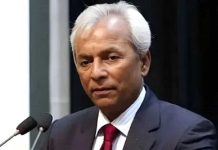
When Donald Trump described Pakistan’s Chief of Army Staff, Field Marshal Asim Munir, as “a great guy” following their meeting in Washington, much of the immediate attention centered on the compliment itself. Headlines highlighted the personal remark, while commentators debated its political significance. Yet the more consequential story may lie not in the words exchanged, but in the strategic circumstances that brought the meeting about.
In international politics, timing often carries greater meaning than rhetoric. Public praise between leaders rarely exists in isolation. More often, it reflects a broader diplomatic context or signals the value both sides attach to maintaining a productive relationship. Viewed through that lens, the meeting between Trump and Munir deserves attention not because of the compliment that followed, but because Washington chose to engage Pakistan’s military leadership at a moment of heightened regional uncertainty.
The meeting came shortly after one of the most serious military confrontations between India and Pakistan in recent years. The United States publicly maintained that it had helped encourage a ceasefire between the two nuclear-armed neighbors, while India rejected claims of third-party mediation, insisting that the cessation of hostilities resulted from direct military communication. The precise role played by external actors remains contested and will likely continue to be debated.
For strategic observers, however, the more significant development was what happened next. Rather than allowing the crisis to fade into routine diplomacy, Washington moved to hold a high-level discussion with Pakistan’s military leadership. That decision suggests that Pakistan had once again become central to broader regional calculations extending beyond the India-Pakistan relationship.
Even before the meeting, Pakistani politician Mushahid Hussain Syed had publicly suggested that discussions would likely focus on three interrelated issues: India, Iran, and Israel. Whether each of those topics featured prominently is known only to the participants. Nevertheless, the expectation itself reflected a wider perception that Pakistan was increasingly being viewed through multiple strategic lenses rather than a single bilateral framework.
That perception has gained relevance as tensions across the Middle East continue to reshape regional diplomacy. Iran’s evolving relationship with the United States and its neighbors has increased the importance of countries capable of maintaining communication with multiple regional actors. Pakistan occupies a distinctive position in this regard. It shares a long border with Iran, maintains longstanding ties with the Gulf States, has an established strategic partnership with China, and continues to engage with Washington on security and regional issues.
These relationships do not automatically make Pakistan a decisive power. They do, however, provide something increasingly valuable in an era of geopolitical fragmentation: access. In a world where many governments find direct communication politically difficult, countries capable of maintaining dialogue across competing blocs often acquire strategic importance disproportionate to their economic or military weight.
Pakistan’s geography reinforces that role. Bordering India, Iran, Afghanistan, and China while overlooking the Arabian Sea places it at the intersection of several of the world’s most consequential security environments. Geography alone does not determine influence, but it can create opportunities that become more valuable as regional crises deepen.
The meeting in Washington can therefore be understood as part of a broader reassessment of Pakistan’s place within an evolving regional order. Rather than signaling a dramatic shift in U.S. foreign policy, it may indicate recognition that Pakistan remains an important interlocutor at a time when stability in South Asia and the Middle East has become increasingly interconnected.
Trump’s own diplomatic style lends further context to the encounter. Throughout his political career, he has emphasized negotiation, personal relationships, and transactional diplomacy. His public praise for Munir is therefore consistent with an approach that values maintaining channels of communication with leaders viewed as important to advancing broader strategic objectives. While personal remarks alone do not define foreign policy, they often accompany efforts to reinforce relationships considered useful for future engagement.
The episode also highlights a broader reality of international affairs: geopolitical relevance is rarely permanent. States rise and fall in strategic importance as the international environment evolves. During the Cold War, Pakistan occupied a critical position within global power competition. After the attacks of September 11, its importance was shaped largely by developments in Afghanistan and the global campaign against terrorism. Today, renewed tensions in South Asia, uncertainty surrounding Iran, and intensifying competition among major powers are producing yet another strategic landscape.
In such an environment, countries capable of facilitating dialogue, managing regional relationships, and preserving channels of communication become increasingly valuable. Their influence lies not only in military capabilities or economic power but also in their ability to help prevent crises from escalating further.
History may ultimately remember Trump’s description of Asim Munir as “a great guy.” Strategic analysis, however, is likely to focus on something more enduring: that at a time when multiple regional crises were converging, Washington chose to reopen a high-level strategic conversation with Pakistan.
The compliment captured the headlines. Pakistan’s renewed strategic relevance is the story that may prove far more significant.