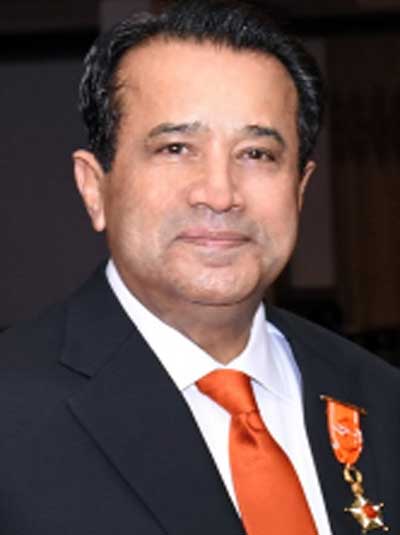
Every year, on the occasion of Pakistan’s Independence Day, individuals who have rendered outstanding services to the country are nominated for civil awards. Like previous years, this year too, on 79th Independence Day, President of Pakistan announced civil awards for individuals who had made significant contributions in various fields. Among the recipients were some government officials and Ministers whose nominations drew criticism, on the basis that government’s responsibility is to confer awards, not receive them, and that if a person holding a government or public office has rendered valuable services, such services are part of their professional responsibilities. However, two individuals on the list received widespread appreciation for their selection. These two Parsi doctors from India, Dr. Jall Ratansi Patel and Dr. Jall Deboo, were personal physicians of Quaid-e-Azam Muhammad Ali Jinnah. During the struggle of independence of Pakistan, they kept information about the Quaid’s serious illness strictly confidential. Their professional discretion is regarded as an extraordinary act that played an important role in the independence of Pakistan.
In 1946, one year before the creation of Pakistan, during a medical examination of Quaid-e-Azam, Dr. Patel and Dr. Deboo informed him that he was suffering from the fatal disease tuberculosis and that his lungs had been severely affected. They told him that he was unlikely to live much longer and advised him to take complete rest. At that time, Quaid requested both doctors to keep his illness completely secret. Respecting their patient’s wishes and their professional obligation of confidentiality, Dr. Patel and Dr. Deboo kept his illness concealed until the creation of Pakistan. Only his sister, Fatima Jinnah, and these two doctors were aware of the Quaid’s illness. The secret was kept so confidential that even British intelligence agencies remained unaware of it. Quaid-e-Azam feared that if his illness became public, his opponents could exploit the information against Pakistan movement. It was because of the Quaid’s patriotism and determination that Pakistan came into being. Unfortunately just after a year later, he passed away. After his death, when details of his illness came to light, a statement attributed to British Viceroy Lord Mountbatten emerged, suggesting that he would have known about Jinnah’s critical illness before Partition, he would have prolonged the negotiations, resulting that the Pakistan movement would weaken after Jinnah’s death.
In Pakistan, civil awards have traditionally been given to individuals who have rendered outstanding services in politics, warfare, diplomacy and other fields. Although Dr. Patel and Dr. Deboo did not perform such conventional national services, their decision to keep Quaid-e-Azam’s illness confidential has earned them a place among the individuals associated with the struggle for Pakistan. Their conduct represents an exceptional example of professional integrity. Government of Pakistan’s decision to honor both doctors posthumously is not merely an award; it is also an effort to highlight their contribution before future generations and convey to the world that Pakistan never forgets its benefactors. Their services are not judged on the basis of religion, race or national borders. Rather, humanity and professional integrity are recognized as forms of national service.
The contribution of Dr. Patel and Dr. Deboo to the struggle for Pakistan teaches us an important lesson: behind major events in national history, there are sometimes silent figures who put professional duty and human responsibility above personal interests, fame or reward. Keeping the highly sensitive information about Quaid-e-Azam’s illness confidential was a manifestation of these doctors’ professional integrity, loyalty and sense of responsibility. There is a need to gather the Quaid’s original medical records, X-rays, physicians’ reports, correspondence, personal memoirs and other relevant historical evidence in one place and publish a comprehensive and authoritative research document. Such research would not only help resolve ambiguities and speculation surrounding Quaid-e-Azam’s illness but would also give Dr. Patel, Dr. Deboo and other medical professionals who stood by the Quaid during the most critical period of his life. Dr. Patel and Dr. Deboo certainly deserve Pakistan’s highest civil award in recognition of this extraordinary service.