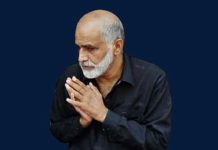
KARACHI: Bishop Sadiq Daniel, who has served since 1981 as a Priest and has been Bishop of Church of Pakistan for nearly two decades in Karachi, his vast portfolio based on 40 years of service is competent to frame the current geopolitical diagram. Bishop has expressed deep concern over the escalating war in the Middle East, urging world leaders to prioritize diplomacy, humanitarian relief, and peaceful dialogue to prevent further devastation in the region.
Speaking during a recent address to church leaders and members of civil society in Karachi, Bishop Daniel described the ongoing conflict as “one of the most alarming humanitarian crises of our time,” warning that continued violence could destabilize not only the Middle East but also the wider international community.
“The Middle East has historically been the cradle of civilization and the birthplace of great religious traditions,” Bishop Daniel said. “It is deeply painful to witness a region with such spiritual and historical significance being torn apart by war, violence, and political divisions.”
According to the bishop, the current crisis has already resulted in immense civilian suffering. Thousands of people have lost their lives, while many more have been injured or displaced as military confrontations intensify across parts of the region. He noted that families have been forced to flee their homes, leaving behind their livelihoods and communities in search of safety.
“The greatest victims of war are always ordinary people,” Bishop Daniel said. “Children lose their parents, families lose their homes, and entire communities are destroyed. These tragedies remind us that war does not simply affect soldiers on the battlefield; it devastates innocent civilians who have no role in political conflicts.”
Bishop Daniel also highlighted the broader global consequences of the Middle East conflict, noting that instability in the region can have serious economic and political repercussions around the world. As one of the world’s most important energy-producing regions, any disruption in the Middle East can influence global oil markets, trade routes, and economic stability.
“When conflicts escalate in such a strategic region, the effects are felt far beyond its borders,” he said. “Rising fuel prices, disruptions to international trade, and economic uncertainty can impact developing countries in particular, placing additional burdens on already vulnerable populations.”
The bishop further warned that prolonged warfare risks deepening political tensions among nations and increasing the possibility of a wider regional confrontation. He stressed that without urgent diplomatic engagement, the situation could spiral into a broader crisis affecting international peace and security.
Despite the gravity of the situation, Bishop Daniel emphasized that faith communities and religious leaders have an important role to play in promoting peace and reconciliation. The Middle East is home to the origins of Judaism, Christianity, and Islam, three major faith traditions that share teachings about compassion, justice, and respect for human life.
“Religion must never be used as a justification for hatred or violence,” he said. “The true message of faith is peace, mercy, and love for humanity. Religious leaders must stand together to promote dialogue and understanding among different communities.”
He also encouraged global faith institutions to increase humanitarian support for those affected by the conflict. Churches, charities, and international relief organizations, he said, should continue providing aid to displaced families and vulnerable populations who are struggling to survive amid the destruction.
“Humanitarian assistance is urgently needed,” Bishop Daniel stated. “Food, shelter, medical care, and psychological support must reach those who are suffering. The international community must work collectively to ensure that aid can reach affected populations without obstruction.”
Looking toward possible solutions, Bishop Daniel called on global political leaders to demonstrate courage and wisdom by choosing diplomacy over military escalation. He emphasized that sustainable peace cannot be achieved through force alone but requires dialogue, negotiation, and mutual respect among all parties involved.
“Lasting peace can only emerge through sincere dialogue that recognizes the dignity and rights of every community,” he said. “Political leaders must work toward ceasefires, humanitarian corridors, and long-term agreements that address the root causes of conflict.”
The bishop also urged citizens around the world not to remain indifferent to the suffering caused by war. He called upon individuals, religious institutions, and civil society organizations to advocate for peace and support humanitarian initiatives.
“In times of crisis, silence is not an option,” Bishop Daniel said. “Every voice raised for peace contributes to building a more just and compassionate world.”
Concluding his remarks, Bishop Daniel expressed hope that international cooperation and moral leadership could eventually lead to reconciliation and stability in the Middle East.
“The future of humanity depends on our ability to choose peace over conflict,” he said. “If nations and communities come together with sincerity and goodwill, it is still possible to build a future where justice, dignity, and peace prevail for all.”
Bishop Daniel reiterated that the global community must remain committed to ending violence and supporting efforts aimed at restoring stability in the Middle East, warning that the cost of continued war would be measured not only in political terms but in human lives.